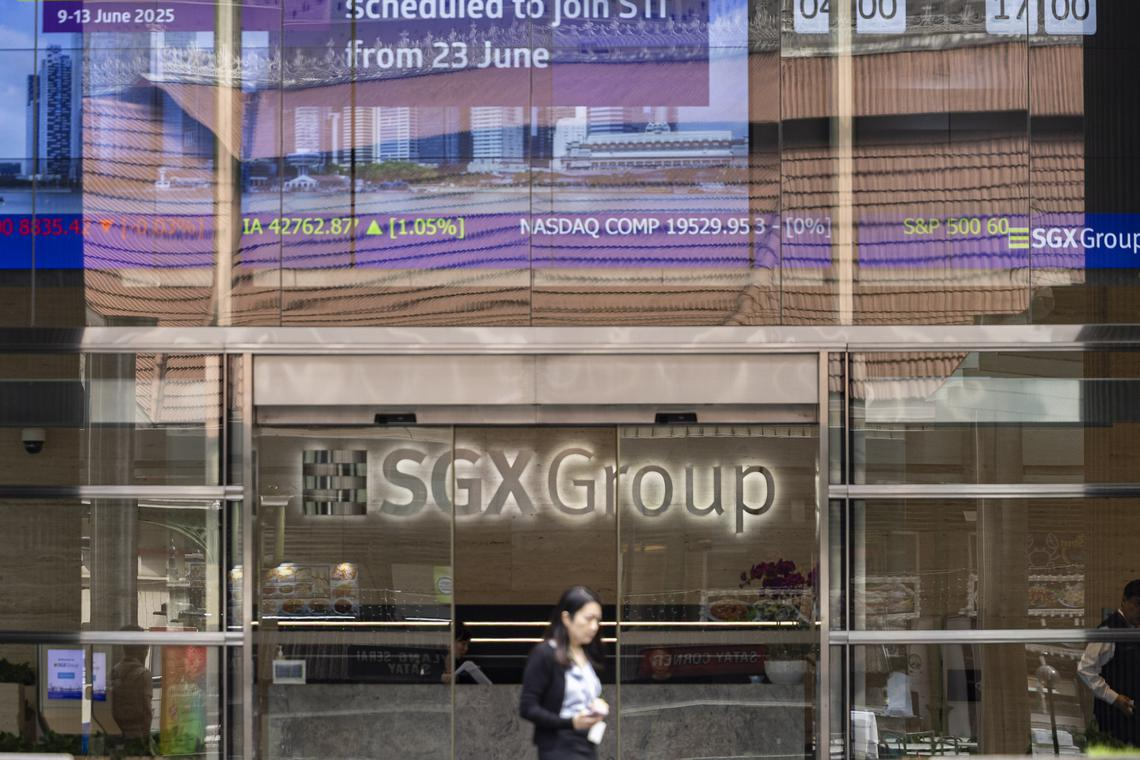
Prolonged Losses for Singapore Shares Amidst Tariff Unease
Singapore’s local stock market has been on edge following the announcement of new US tariffs, which triggered the sixth consecutive day of losses for shares, the longest losing streak since April 9. This climate of unease was a significant factor in the Straits Times Index (STI) declining by 0.5 percent, or 19.94 points, to close at 4,153.83. The negative market sentiment was evident in the market breadth, where a total trade value of $1.7 billion was reported, with losers heavily outnumbering gainers by 340 to 244. This widespread selling pressure across various stocks underscores the depth of investor concern, with the prolonged negative streak highlighting a notable shift in market behavior and a clear reaction to external factors that are creating a cautious investment environment for the foreseeable future.
Financial and Real Estate Sectors Bear the Brunt
The financial and real estate sectors were particularly hard-hit by the market downturn, absorbing a significant portion of the selling pressure. Among the hardest hit was Keppel DC Reit, which emerged as the biggest decliner of the day, with its share price losing 3.4 percent. The negative sentiment also spread to the local banking sector, as all three major banks—DBS, OCBC, and UOB—closed lower, signaling investor apprehension across the board. However, the market was not without its bright spots. Jardine Matheson Holdings was the top gainer, adding 2.7 percent to its share price after it reported a 45 percent increase in its first-half underlying profit. This performance by Jardine Matheson Holdings, which defied the overall market gloom, indicates that company-specific fundamentals and strong earnings reports can still draw investor interest, even during periods of widespread uncertainty.
Broader Market Uncertainty and Investor Hesitation
The downturn in Singapore was not an isolated event but part of a broader trend across the region as investors reacted to the new US tariffs. Major regional stock markets also experienced significant declines, with South Korea’s Kospi leading the sell-off with a nearly 4 percent drop, while Hong Kong’s Hang Seng and Japan’s Nikkei also fell. In a rare counter-trend, Malaysian stocks defied the general gloom and managed to post a 1.3 percent gain, a result likely tied to a more favorable tariff rate. According to Charu Chanana, a chief investment strategist at Saxo Markets, the new tariff announcements, while providing “clarity on paper,” have introduced “uncertainty in practice” due to their “arbitrary rates,” making it difficult for businesses to plan. This sentiment was also reflected in the US market, where Wall Street had already set a subdued tone the previous night, with all major indices closing lower amid rising concerns over inflation and slowing economic growth.