South Africa Prioritizes ASEAN for Expanded Trade and Knowledge Exchange
The continent’s southernmost nation, South Africa, views the ASEAN region as a profoundly important market and is keen on significantly increasing both trade and investment flows with the ten-member bloc, according to the nation’s President, Matamela Cyril Ramaphosa.
He expressed a strong commitment to both learning from and sharing knowledge with ASEAN countries to advance key sectors, particularly technology and infrastructure development.
Ramaphosa emphasized that the relationship with ASEAN is vital, stating that his nation has much to share, while simultaneously recognizing the spectacular developmental progress achieved by ASEAN members in modernizing their economies.
This developmental success includes significant advancements in technology and infrastructure, which South Africa is eager to study and adapt.
Speaking at the ‘Leader Fireside Chat’ panel during the ASEAN Business and Investment Summit (ABIS) 2025, the President highlighted the mutual benefits of this engagement.
His participation at the summit, held alongside the 47th ASEAN Summit in Kuala Lumpur, signals a serious intent to elevate the economic partnership between the African nation and the dynamic Southeast Asian region, moving beyond traditional trade to include deep knowledge transfer and collaborative development, cementing ASEAN’s importance for the future of the South African economy.
Focusing on Value Addition and Attracting Foreign Direct Investment
A central theme of President Ramaphosa’s address was the shared goal of enhancing value addition to goods, an area where South Africa believes it can both contribute and learn.
He praised ASEAN for its ability to successfully add value to various raw materials through sophisticated manufacturing and technological transformation processes.
In turn, South Africa possesses its own distinct strengths, particularly in its rich mineral resources and robust food production sector.
The President underscored the opportunity for mutual learning, stating that his nation seeks to gain expertise in value addition to optimize the economic return from its natural endowments.
Furthermore, his official visit to Malaysia, which includes attendance at the 47th ASEAN Summit as the Guest of the Chair, provides a crucial platform for engaging with a vast network of business leaders.
Ramaphosa made it clear that a primary objective of his diplomatic trip is to actively attract foreign direct investment (FDI) to South Africa.
He expressed deep satisfaction at the invitation to participate, viewing the continuous engagement with the regional business community as essential for securing the partnerships and capital necessary for his country’s economic growth and industrial modernization.
Strengthening Bilateral Ties and Future Cooperation
President Ramaphosa’s presence at the high-profile ASEAN meetings is a strategic move to solidify bilateral relations within the region, building on strong existing economic ties.
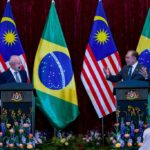
The invitation to attend the 47th ASEAN Summit was extended by Prime Minister Datuk Seri Anwar Ibrahim, making Ramaphosa the Guest of the Chair for the event.
His schedule includes delivering remarks at the 20th East Asia Summit and attending a gala dinner, all of which provide opportunities for high-level diplomatic and business networking.
The foundation for this heightened engagement is already robust; in 2024, South Africa was ranked as Malaysia’s largest trading partner across the entire African continent.
Bilateral trade between the two nations reached an impressive RM7.82 billion (US$1.71 billion), demonstrating a significant flow of goods, with exports and imports being almost evenly balanced.
This historical trade volume provides a strong economic base for the President to push for greater collaboration in new areas, such as the defense industry, which may be one of the topics of discussion with the Malaysian Prime Minister.
By actively participating in the ASEAN forum, South Africa is reaffirming its commitment to Southeast Asia as a critical partner for trade, investment, and collaborative knowledge sharing.