Malaysia Deepens Economic Ties with China Under Belt and Road Initiative
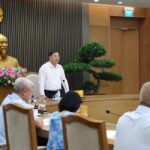
Malaysia remains fully committed to strategically strengthening its comprehensive economic partnership with China under the framework of the Belt and Road Initiative (BRI), according to a statement by Deputy Finance Minister Lim Hui Ying.
She emphasized that the BRI has consistently delivered tangible and measurable results since its initial inception, effectively driving robust trade growth and providing crucial support for Malaysia’s ongoing transformation under its own domestic economic agenda, known as the MADANI economy framework, with the bilateral partnership continuing to generate significant and long-lasting benefits for both nations involved.
The Deputy Minister specifically highlighted that the BRI, which Malaysia has openly and actively supported since its very beginning, aligns seamlessly and perfectly with the nation’s vision for the MADANI economy.
Over the past twelve years, cooperation under the BRI has demonstrated concrete, measurable progress.
This success is clearly reflected in the trade figures between Malaysia and China, which have dramatically expanded from one hundred eighty one billion Malaysian ringgit in two thousand twelve to an impressive four hundred eighty four billion ringgit in two thousand twenty four, a trajectory that confirms China’s position as Malaysia’s largest and most important trading partner.
This sustained and growing commercial relationship is a direct testament to the value and efficacy of the strategic cooperation fostered by the Belt and Road Initiative, promising continued mutual prosperity.
Major Infrastructure and Trade Facilitation Drive Long-Term Benefits
The success of the Belt and Road cooperation is visibly manifested in major infrastructure projects that are transforming Malaysia’s economic landscape, with the East Coast Rail Link (ECRL) serving as a powerful example.
Spanning an impressive six hundred sixty five kilometers, the ECRL is a key initiative that clearly illustrates how BRI cooperation generates long-term, structural economic benefits beyond simple trade volume.
The presence of this vital rail corridor is set to provide businesses operating in manufacturing, logistics, and industrial parks along its route with enhanced access to crucial new markets, an expanded talent pool, and significant investment opportunities, thereby creating new centers of economic activity.
Furthermore, looking ahead, Malaysia is actively working to strategically expand the scope of its cooperation with China into high-value and advanced industries.
These target sectors include electronics, semiconductors, automotive manufacturing, and aerospace technology.
Malaysia sees itself as uniquely well-positioned to serve a dual role as both a sophisticated production hub and a strategic springboard, facilitating market access into wider global markets for jointly developed products.
Complementing these efforts is the Regional Comprehensive Economic Partnership (RCEP), under which Malaysia and China have worked to harmonize financial service rules, thereby making bilateral financial cooperation more efficient, more transparent, and significantly less burdensome for all participating businesses involved in the expansive trade facilitated by the Belt and Road network.
New Frontiers for Cooperation: Green Finance and Digital Innovation
Significant and growing opportunities for future cooperation between Malaysia and China are now emerging in the critical and high-potential fields of green finance, the transition to renewable energy sources, and advanced digital innovation.
These areas are where both nations can strategically combine their respective expertise, technological capabilities, and investment capital to achieve shared goals in line with the global energy transition.
The Belt and Road Initiative offers a powerful and comprehensive platform that can be effectively utilized to rapidly scale up crucial investments in cutting-edge solar panels, the development and production of electric vehicles (EVs), sophisticated battery storage solutions, and advanced clean transport infrastructure.
Notably, Chinese companies are already playing an increasingly active and influential role within Malaysia’s renewable energy ecosystem, bringing with them advanced technologies and expertise that directly support local economic growth, knowledge transfer, and the realization of Malaysia’s national sustainability objectives.
Lim Hui Ying stressed that leveraging the platform provided by the Belt and Road is essential for these next-generation sectors, as it allows for the swift deployment of capital and technology needed to make a substantial and lasting contribution to a greener and more technologically advanced future for both nations, securing the mutual benefits of this longstanding partnership.