


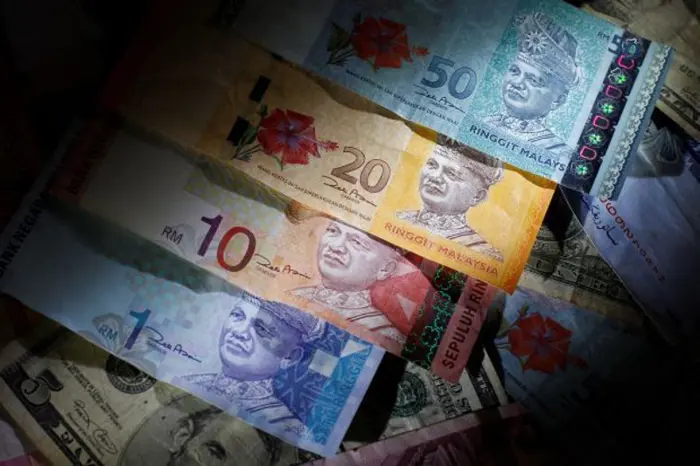
Malaysian Ringgit Nears Four-Year High Amid Strong Economic Momentum
The Malaysian Ringgit, currently recognized as Asia’s top-performing currency this year, is rapidly approaching a significant four-year high, a trend strongly supported by the nation’s strengthening economic momentum.
This positive shift, combined with a noticeable easing of global trade tensions, is successfully drawing offshore investors back to the local debt market.
Leading financial institutions, including BNY and Malayan Banking Bhd., are projecting that the Ringgit is poised to strengthen past the key level of 4.1 per dollar, which would potentially mark its highest valuation since May 2021.
This optimistic forecast is underpinned by the central bank’s decision to maintain steady interest rates, signaling confidence in the economy’s resilience, even amid persistent global economic headwinds.
According to Bloomberg-compiled data, foreign investors have channeled a substantial amount of nearly $4 billion into Malaysian bonds this year alone, providing a strong anchoring effect for the currency and boosting its stability.
Malaysia’s export-driven economy is now reaping the benefits of a significant rebound in global demand, evidenced by third-quarter growth figures that surpassed market expectations.
This resurgence in exports is a primary factor driving the renewed foreign interest in the Ringgit and local assets, a trend that reflects the successful navigation of global market volatility.
Positive Sentiment Fueled by Trade Thaw and Corporate Liquidity
Investor sentiment surrounding the Malaysian Ringgit has shown considerable improvement, a development largely attributable to the recent thaw in trade relations between the US and China.
As Malaysia’s two largest export markets, the de-escalation of tensions between these two economic giants has spurred renewed confidence and driven increased foreign interest across local asset classes.
Maybank strategists, headed by Saktiandi Supaat, issued a note to clients emphasizing that the Ringgit sentiment continues to remain positive, a key takeaway for the regional financial market.
They further highlighted that significant momentum has been building up, noting the existence of a “wall of cash that can still be converted,” specifically referencing the large corporate foreign currency deposit holdings that could soon be converted into the Ringgit.
Despite this overwhelmingly positive long-term outlook, the Ringgit saw relatively little change, trading near 4.13 per dollar in early Thursday trade.
The central bank’s recent decision earlier this month to keep interest rates unchanged further reinforces this narrative of economic stability and resilience.
The Ringgit has already climbed by more than 8% this year, showcasing its robust performance relative to its Asian peers and confirming the market’s favorable view on Malaysia’s economic trajectory and disciplined monetary policy.
Near-Term Technical Indicators and Long-Term Valuation Appeal
While the long-term outlook for the Malaysian Ringgit remains robustly positive, some technical indicators suggest that the currency’s sharp rally may experience a temporary cooling in the near-term.
According to the median estimate derived from a Bloomberg survey of strategists, a brief period of weakness is forecasted, with the currency potentially dipping to 4.18 per dollar by year-end.
However, this anticipated weakness is viewed as purely transient, as the strengthening trend is widely expected to fully resume in 2026, building on the solid economic foundation being established this year.
Wee Khoon Chong, a senior strategist at BNY in Hong Kong, confidently stated that the impressive performance of the Ringgit “can continue.”
He pointed out that even after the significant rally observed in 2025, the currency’s current valuation remains “attractive,” especially when considering the heavily “sold Ringgit” status it endured from 2021 to 2023.
This assessment suggests that the current appreciation is more of a market correction towards fair value rather than an over-extension, providing further conviction for long-term investors.
The strong rebound from a previously oversold position, coupled with improving macro fundamentals and easing global trade dynamics, collectively positions the Ringgit for continued upward trajectory and sustained investor interest throughout the coming year and beyond.
Financial Analyst Commentary: Capital Inflows, Export Competitiveness, and Monetary Autonomy
The ongoing strength of the Malaysian Ringgit (MYR), outperforming Asian peers, signifies more than just favorable trade winds; it reflects a critical re-rating of Malaysia’s macro-financial stability and is fundamentally altering the domestic yield curve dynamics.
The $4 billion in foreign bond purchases year-to-date is primarily being driven by the narrowing of the US Treasury (UST) and Malaysian Government Securities (MGS) yield differential, particularly as markets price in potential future US Federal Reserve rate cuts alongside Bank Negara Malaysia’s (BNM) firm commitment to maintaining its Overnight Policy Rate (OPR) at 2.75%.
This divergence creates an attractive carry trade opportunity for foreign fixed-income investors, driving up demand for MYR-denominated assets and pushing the currency higher.
However, the continued appreciation presents a double-edged sword for the economy.
While a stronger Ringgit reduces the cost of imports (benefiting domestic consumers and manufacturers reliant on imported inputs) and enhances Malaysia’s purchasing power, it simultaneously pressures the competitiveness of the nation’s key export-oriented sectors, particularly the electrical and electronics (E&E) segment and commodity producers.
Maintaining export market share in a higher currency environment will require these firms to accelerate value-chain upgrading and productivity gains to offset the relative price increase for foreign buyers.
Critically, the Ringgit’s resilience and BNM’s non-interventionist stance reinforce the central bank’s monetary autonomy, allowing it to set the OPR based purely on domestic inflation and growth dynamics, rather than being forced to raise rates to defend the currency.
This policy independence is a long-term structural positive that enhances financial stability and investor confidence in the management of the economy.