


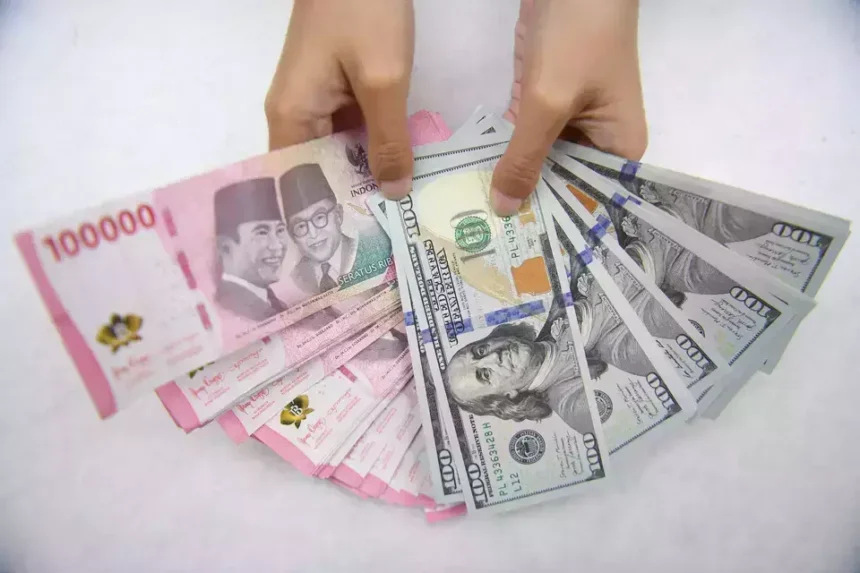
The Prolonged Path to Rupiah Redenomination
The Governor of Bank Indonesia (BI), Perry Warjiyo, has delineated the comprehensive steps required for the redenomination of the rupiah— the process of simplifying the currency by reducing three zeros, from Rp1,000 to Rp1— stressing that the entire process will be protracted.
Perry estimated that achieving full implementation of the currency simplification could span approximately five to six years.
This timeline encompasses the entirety of the necessary actions, starting with the crucial passage of a dedicated Rupiah Redenomination Law and extending through all final preparatory stages leading up to the complete rollout across the economy.
Perry conveyed this estimate to the Parliament on Monday, emphasizing the need for synchronized execution: “All stages must proceed in parallel. From the law’s enactment to completion, it will take approximately five to six years.”
The initial and foundational step for this ambitious monetary policy initiative is the formal issuance of the Redenomination Law, which is indispensable as the legal basis for the entire program.
Without this specific legislation, the plan to simplify the rupiah cannot legally proceed.
Following this, the government is tasked with preparing stringent regulations focused on ensuring absolute price transparency across all goods and services throughout the Indonesian archipelago.
This regulatory phase is critical to guarantee that the public maintains a crystal-clear understanding of pricing during the transitional phase and, crucially, to preempt any misperception that the redenomination constitutes a change in the actual economic value or purchasing power of those goods.
Perry pointed out that current practices in displaying prices are inconsistent— often appearing as “Rp25,000,” “Rp 25 thousand,” or “25K”— making the push for clarity paramount during the transition to avoid confusion.
Sequential Steps for Currency Simplification
Beyond the initial legislative and pricing clarity phases, the implementation of redenomination involves several complex sequential steps that require extensive coordination and time.
The central bank must dedicate substantial effort to the subsequent design and printing of the new, simplified currency notes.
This phase mandates careful time management and close collaboration across multiple governmental and specialized agencies to ensure security, quality, and adequate supply of the new money.
Furthermore, a highly crucial stage in the planned five to six-year timeline is the establishment of a defined transition period.
During this period, both the old rupiah notes (with the current larger denominations) and the new, simplified notes (post-redenomination) must be allowed to circulate simultaneously within the economy.
Governor Perry clarified the practical reality of this dual circulation phase, stating, “During this period, purchases can be made using either the old or new money, and the value remains the same.”
This simultaneous circulation period is necessary to allow the public, businesses, and automated systems (like ATMs and cash registers) ample time to adjust to the new currency structure without disrupting daily commerce.
The government’s preparation of price transparency regulations is highly relevant here, ensuring that businesses accurately display prices in both the old and new denominations side-by-side, reinforcing that the process is purely a denominational change and not a form of currency devaluation or inflation.
The successful management of this transition is vital to building public trust and ensuring a smooth, non-disruptive shift to the new currency standard across Indonesia’s vast and diverse economy.
The Economic Rationale and Public Trust
The overall strategy and lengthy timeline for redenomination underscore the government’s cautious approach, prioritizing public trust and systemic stability over speed.
While the primary objective is to simplify transactions and improve the perceived value of the currency internationally, the inherent risk lies in public confusion, which could mistakenly interpret the removal of zeros as inflation or devaluation—a scenario the price transparency regulations are specifically designed to mitigate.
The passage of a dedicated law elevates the redenomination process, giving it clear national importance and regulatory authority, which helps instill confidence.
Moreover, the decision to allow a long five-to-six-year implementation window, with a transition period where old and new currencies coexist, reflects a commitment to minimizing economic friction.
This extended timeline acknowledges the logistical challenge of updating accounting systems, retail point-of-sale equipment, and public financial literacy across thousands of islands.
By carefully managing each step—from legislation to simultaneous circulation and public education—BI aims to ensure the process remains purely technical.
This technical simplification is expected to modernize the currency structure, making Indonesian financial data and cross-border trade easier to process and communicate, aligning the currency with many global counterparts that have previously undergone similar denominational adjustments.
The ultimate success of the program rests on maintaining this public trust throughout the implementation, proving that the change is cosmetic and beneficial for the long-term integrity and efficiency of the rupiah.
Capital Market and Regional Financial Implications
From a financial analyst’s perspective, the mere inclusion of the redenomination bill in the Ministry of Finance’s strategic plan signals a long-term commitment to enhancing the integrity of Indonesia’s capital markets, even if implementation is several years away.
The most immediate and critical impact will be felt on the Indonesia Stock Exchange (IDX), which faces significant technical challenges in adjusting its entire pricing structure.
For instance, removing three zeros will result in many actively traded stocks falling below the IDX’s minimum nominal price, necessitating a comprehensive revision of trading rules, potential implementation of decimal pricing, and major overhaul of trading, clearing, and custody systems.
This technical shake-up will trigger substantial capital expenditure (CapEx) across the banking and financial technology sectors, temporarily weighing on profitability but ultimately forcing a necessary modernization of core banking software, which has long relied on extensive strings of zeros.
Regionally, a successful redenomination—implemented under conditions of low, stable inflation as Indonesia currently enjoys—would significantly enhance the rupiah’s global credibility.
This move would remove the psychological barrier that comes with having the largest nominal value per dollar among major Southeast Asian currencies, simplifying accounting for multinational corporations and foreign fund managers and potentially increasing the attractiveness of Indonesian assets, including sovereign bonds and equity.
However, the market will remain acutely sensitive to any policy missteps that could cause the public to confuse redenomination with sanering (devaluation), an outcome that could trigger capital flight and immediately undermine financial stability, highlighting why BI’s five-to-six-year, cautious approach is prudent and stability-focused.