Maharani Freeport Launch Set to Transform Malaysia’s Logistics Landscape
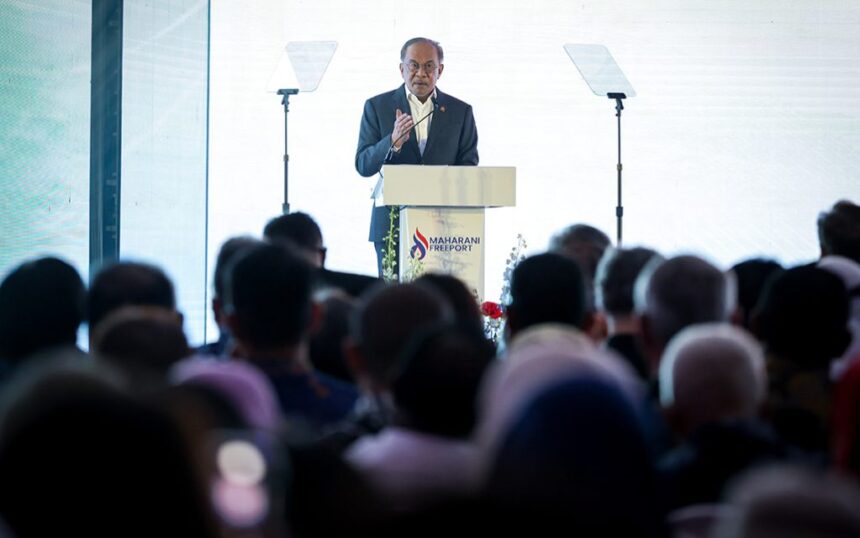
The highly anticipated launch of Maharani Freeport is expected to be a major catalyst for Malaysia’s economic growth, creating tens of thousands of job opportunities and significantly boosting the nation’s maritime logistics competitiveness and supply chain resilience, according to Prime Minister Datuk Seri Anwar Ibrahim. This transformative project, framed as a “from-the-people, for-the-people” initiative, is forecasted to generate a minimum of 45,000 new employment opportunities, while also attracting vital supporting industries and opening accessible doors for small and medium enterprises (SMEs) to actively participate in international commerce.
Through the strategic implementation of Maharani Freeport, the government’s primary objective is to strengthen these foundational pillars of the national Economy by substantially expanding Malaysia’s overall maritime capacity, enhancing its current logistics competitiveness, and deepening its critical participation within complex global supply chains. Strategically situated in Tanjung Emas, the facility is designed to serve as an essential logistics and Investment gateway, effectively linking the East and West through its prime location along the vital Straits of Melaka.
This positioning is expected to greatly improve supply reliability for international partners and simultaneously reduce shipping and operational costs. The Straits of Melaka is one of the world’s busiest maritime arteries, witnessing the passage of approximately 100,000 vessels annually, which carry close to a quarter of the world’s seaborne oil trade and a substantial share of global commerce, highlighting the intrinsic value of developing Maharani Freeport at this crucial choke point.
Strategic Freeport Status Attracts Global Investment with Tailored Incentives
With its newly designated freeport status, the state-of-the-art Maharani Freeport mega development is poised to offer world-class connectivity and operational advantages specifically engineered to attract global Investors seeking efficiency, flexibility, and strategic access to Asia’s fastest-growing markets. To ensure the success and rapid development of this crucial Business hub, the government has already approved a comprehensive suite of targeted tax incentives through the Finance Ministry.
These incentives are designed to spur major Investment across several key operational areas, involving the master developer and companies undertaking critical activities such as energy hub operations, deep-sea port development, and extensive trade-related services. Beyond the core logistics sector, tailored incentives are also being extended to boost growth in select high-potential sectors, including data centers, infrastructure and utilities development, green technology adoption, medical tourism, and hospitality services, ensuring a diversified and robust Economic ecosystem around the freeport.
The overall project is expected to create significant ripple effects across the Economy, stimulating widespread growth not only in core logistics and shipping but also in ancillary sectors like shipbuilding, specialized education, and large-scale urban development. By integrating green technologies, adopting renewable energy systems, and implementing digital innovation, Maharani Freeport was meticulously planned with sustainability at its core.
This commitment to environmentally sound practices is designed to minimize emissions and vastly improve operational efficiency, ensuring the freeport’s long-term Economic viability. The official launch signals a clear invitation from Malaysia to global partners and Investors, offering not just opportunities but also stability, integrity, and a commitment to genuine partnership in one of the world’s most strategic trading regions.
Financial Analyst Commentary: Freeport Status and Regional Logistics Competitiveness
The gazetting of Maharani Freeport status and free zones on November 28 marks the operational initiation of a major Investment policy designed to structurally enhance Malaysia’s position in the competitive ASEAN logistics matrix. The core financial advantage of this freeport designation is its ability to exempt goods from customs duties, tariffs, and certain taxes while they are stored, processed, or assembled within the zone, offering significant Cash Flow and operational Finance benefits to global trading firms.
This move directly challenges the established dominance of nearby regional transshipment hubs, providing an alternative, highly efficient, and politically stable gateway at a critical juncture of global trade. The aggressive target of 45,000 jobs and a diversified incentive package extending beyond maritime operations to include data centers and green technology reflects a sophisticated Economic development strategy aimed at creating high-value employment and a modern Business ecosystem, rather than simply expanding port capacity.
The integration of sustainability and digital innovation into the master plan introduces a future-proofing element, reducing long-term operational costs and appealing to multinational corporations (MNCs) with stringent Environmental, Social, and Governance (ESG) mandates. By leveraging the immense daily vessel traffic through the Straits of Melaka, Maharani Freeport is positioned not just to capture transit volumes but to significantly enhance its regional logistics competitiveness, thereby creating a long-term, high-quality stream of foreign direct Investment (FDI) and strengthening Malaysia’s overall national Finance position in global trade.
Regional Market Impact: Intensifying the Straits of Melaka Transshipment Contest
The launch of Maharani Freeport in Tanjung Emas introduces a significant geopolitical and Economic variable into the highly concentrated Straits of Melaka transshipment corridor, placing direct competitive pressure on established mega-hubs like Singapore’s PSA and Malaysia’s own Port Klang. Specifically, this development aims to address the capacity constraints and rising operating costs that are common challenges in mature port environments, offering global shipping lines a new, uncongested option with the added advantage of its strategic mid-Straits location and extensive tax exemptions, which provide a compelling Finance incentive for regional distribution centers.
The success of Maharani Freeport hinges not just on physical capacity, but on the speed of digital integration—specifically, how rapidly it can achieve port call optimization and seamless Customs clearance compared to its technologically advanced neighbors. A shift in even a small percentage of the nearly 100,000 annual vessel movements could translate into billions in new Business revenue and thousands of jobs, potentially altering the regional logistics dominance within ASEAN.
Furthermore, the focus on non-maritime sectors like data centers and green technology reflects a deliberate strategy to attract high-value, non-cyclical foreign direct Investment (FDI), mitigating the risk associated with reliance solely on volatile global trade volumes and cementing the Freeport’s role as a diversified regional Economic engine. The Investment thesis for supporting industries in Johor is also strengthened, as companies can anticipate reliable, tax-advantaged access to global supply chains, fueling secondary Economic benefits in local manufacturing and specialized services.