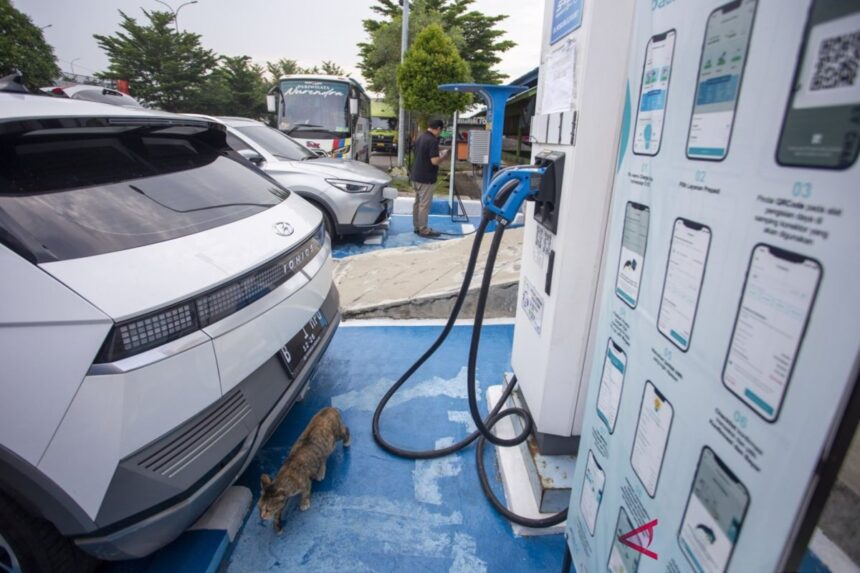
Accelerating Transition Within The Indonesian EV Market
The rapid expansion of the Indonesian EV market has become a central pillar of the nation’s industrial strategy since the implementation of Presidential Regulation No. 79 of 2023. By establishing a clear legal framework and offering significant fiscal incentives, the government has successfully transformed a niche sector into a thriving mainstream industry within the first sixty words of the policy’s enactment.
Senior officials have noted that the sheer scale of adoption is unprecedented, with sales skyrocketing from a modest 17,000 units at the close of 2023 to an impressive 103,000 units by the end of 2025. This sixfold increase reflects a fundamental shift in consumer behavior and a growing confidence in electrified transportation as a viable alternative to traditional internal combustion engines.
Beyond just sales figures, the regulatory environment has served as a powerful magnet for global capital, drawing in major international players who see Southeast Asia’s largest economy as a strategic hub for future production. The success of this transition is rooted in the government’s ability to synchronize demand with industrial capacity, ensuring that the growth of the electric vehicle market is supported by a robust local manufacturing base and a comprehensive network of charging infrastructure.
Industrial Localization And Diversification Of Consumer Choices
One of the most profound impacts of the recent policy shift is the dramatic increase in manufacturing competition and the resulting variety of products available to the public. Before the current regulations were introduced, the EV market was significantly constrained by a lack of diversity, with only two manufacturers active in the domestic space.
Today, that landscape has been completely transformed, with at least ten major automakers now operating locally and several others finalizing their plans to establish production facilities on Indonesian soil. This influx of participants has driven the market share of localized vehicles to roughly 65 percent, a staggering leap from the previous 12 percent baseline.
Such deep localization is critical because it fosters a resilient supply chain and reduces the nation’s vulnerability to global logistics disruptions while simultaneously creating high-skilled jobs for the local workforce. Furthermore, the number of available models has surged from 30 to over 100, spanning various price points and vehicle segments to meet the specific needs of diverse consumer groups.
Ecosystem Synergy And Long Term Energy Security Goals
The overarching goal of the current legislative framework is to activate a self-sustaining domestic ecosystem that aligns market growth with long-term national development objectives. Industry experts emphasize that the growth of the EV market is not an isolated phenomenon but rather a concrete step toward strengthening national energy security by reducing the country’s heavy reliance on imported fossil fuels.
By transitioning to a transport model powered by domestically generated electricity, Indonesia can better insulate its economy from the volatility of global oil prices while making significant strides toward its carbon neutrality commitments. The synergy between demand, manufacturing, and supporting infrastructure is being carefully managed to ensure that the grid can handle the increased load and that consumers have reliable access to energy wherever they travel.
This holistic approach encourages cross-sector collaboration between technology firms, energy providers, and automotive engineers, creating a fertile ground for innovation in battery storage and smart grid integration. As the supply chain continues to strengthen nationwide over the coming years, the focus will likely shift toward maximizing the value of Indonesia’s vast nickel reserves to produce high-performance batteries locally.
Strategic Analysis Of Regional Supply Chain Integration And Economic Resilience
The data regarding the Indonesian electric mobility sector highlights a significant structural shift that extends far beyond simple retail sales growth. From a professional financial perspective, the leap in localized market share to 65 percent suggests that Indonesia is successfully capturing a larger portion of the automotive value chain, which is essential for mitigating the middle-income trap often associated with developing economies. This transition is anchored by a sophisticated regulatory framework that prioritizes value-added industrialization, specifically leveraging the country’s strategic mineral wealth to attract high-tech manufacturing.
We interpret the 500 percent increase in model variety as a clear signal that the domestic market has reached a critical mass, where economies of scale are starting to lower the total cost of ownership for end-users. This price parity is a key psychological threshold that, once crossed, typically leads to an exponential adoption curve, further stabilizing the sector against short-term economic headwinds. Furthermore, the regional market impact of this policy cannot be overstated, as Indonesia is effectively positioning itself as the primary manufacturing hub for the ASEAN region, creating a template for neighboring nations.
By harmonizing domestic standards with global trends, the government is creating a more integrated regional supply chain for battery components and vehicle assembly. We observe that the shift toward electric mobility provides a unique hedge against currency fluctuations tied to oil imports, thereby improving the national trade balance and fiscal stability. From an investment standpoint, the increased participation of at least ten global automakers indicates that the perceived sovereign risk is being outweighed by the massive growth potential of the Indonesian consumer base.
As the infrastructure matures, we project that the focus will transition from initial adoption to the development of a secondary market for used electric vehicles and battery recycling, which will complete the circular economy loop. This strategic alignment ensures that the electric vehicle sector contributes not only to environmental sustainability but also to the broader industrialization and technological advancement of the nation, securing a prosperous future for the next generation of Indonesian motorists. The resulting economic resilience will likely serve as a benchmark for other emerging markets looking to decouple transport needs from fossil fuel volatility.