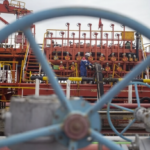
Historic Surges In Global Gas And Shipping Markets
The international energy landscape is currently facing an unprecedented crisis as the costs associated with gas and shipping have reached historic peaks following severe military disruptions in the Middle East. Within the first few days of this escalation, the strategic corridor of the Strait of Hormuz has essentially transformed into a restricted zone, leading to a nearly 20% reduction in the global oil trade and causing massive ripples across the maritime logistics industry.
Industry sources reported on Tuesday that the Iranian government has officially declared the waterway closed, a move that has effectively stalled a significant portion of the worlds energy transit. This development is particularly alarming because the waterway serves as a vital artery connecting the production hubs of the Middle East to global consumers, making any interruption a direct threat to international economic stability.
As maritime traffic dwindles, the scarcity of available routes has forced a dramatic realignment of logistics, pushing the expenses for gas and shipping to levels that were previously thought impossible. The immediate consequence of this blockade is a sharp jump in international prices for both crude oil and European natural gas, as the market reacts to the sudden disappearance of reliable supply lines. With tankers unable to pass safely through the region, the world is now bracing for a prolonged period of energy scarcity and logistical gridlock.
Strategic Disruptions And The Escalation Of Tanker Charter Rates
The volatility in the Middle East has created a secondary crisis within the logistical infrastructure as the pricing for gas and shipping services reflects the extreme risks now associated with navigating the Persian Gulf. Following military strikes between the United States, Israel, and Iran, the Islamic Revolutionary Guard Corps has intensified its rhetoric, threatening to set fire to any vessel attempting to breach the blockade.
This has led to a total suspension of many oil and gas operations, including a notable shutdown by QatarEnergy, which cited safety concerns after its facilities in Ras Laffan were targeted. Consequently, the cost of chartering vessels has exploded; for instance, the rate for a CCX tanker transporting crude from the Middle Eastern Gulf to China soared by more than 80% in a single day, reaching a record-breaking W419.56.
In the European market, natural gas futures rose by 35%, marking the highest levels seen in over a year. The intersection of these soaring freight costs and the physical unavailability of fuel has created a perfect storm for the gas and shipping industry, where even the most seasoned analysts are struggling to predict the duration of the current stalemate. As Thailand and other Asian nations rely on Qatar for 80% of their energy needs, the suspension of production represents a systemic shock that could lead to widespread industrial slowdowns.
Market Volatility And Supply Shock Risks
From a professional financial analyst’s perspective, the current convergence of military conflict and energy market disruption represents the most significant tail risk to global GDP since the start of the decade. We analyze that the 10% climb in Brent crude futures and the 40% surge in European LNG prices are direct manifestations of a massive supply shock that is currently being compounded by the rising costs of gas and shipping logistics.
From a B.I.F.E. standpoint, the closure of the Strait of Hormuz is not merely a regional security issue but a fundamental threat to the global currency and trade equilibrium. We observe that the ability of the international community to sustain energy supplies depends heavily on whether Iran can maintain its blockade in the face of a massive military counter-response. While the United States claims to have neutralized several Iranian warships, the threat remains a potent weapon.
We project that a sustained closure of this maritime corridor will necessitate a radical reallocation of national energy budgets, as governments move to subsidize the extreme costs of gas and shipping to prevent a domestic inflationary spiral. Analysts should focus on the performance of the logistics and energy sectors as leading indicators of how long the global economy can absorb these record-high prices. Ultimately, the synergy between geopolitical resolution and the restoration of maritime safety will be the only factor capable of stabilizing the energy value chain.
Market Equilibrium Disruption And Regional Energy Security Analysis
The blockade of the Strait of Hormuz has initiated a fundamental decoupling of the regional energy equilibrium, where the scarcity of available maritime routes is driving a permanent shift in the risk-adjusted valuation of gas and shipping assets. We analyze that the collapse of the primary energy corridor for Asian manufacturing hubs will likely trigger an immediate contraction in industrial productivity, as the cost of energy inputs exceeds the marginal utility of production. From an expert B.I.F.E. perspective, the 80% spike in tanker charter rates serves as a definitive signal that the global logistics sector is pricing in a long-term transition to more expensive, alternative supply lines that bypass the Persian Gulf.
This structural pivot is particularly critical for nations like Thailand and Vietnam, where the heavy reliance on Middle Eastern liquefied natural gas creates a vulnerability in the power generation sector. We observe that as QatarEnergy halts production, the resulting supply vacuum will force a sharp increase in the spot market demand for American and Australian gas. This shift will inevitably lead to a reallocation of trade finance toward the Pacific corridor, further straining the capital reserves of regional energy importers. The ability of the private sector to absorb these overheads without passing them entirely to the consumer will be the primary determinant of social and economic stability during this period of kinetic warfare.
Furthermore, we project that the integration of strategic energy reserves and the expansion of domestic coal or renewable capacity will become the new focal points for national security planners across the ASEAN region. Investors should prepare for a period of heightened volatility in the consumer staples and industrial materials sectors, as the inflationary pressure from gas and shipping costs trickles down the global value chain. The resilience of the international trade system depends on the establishment of a secure maritime bridge that can operate independently of Middle Eastern geopolitical shifts. Ultimately, the transition to a decentralized energy model will be the most effective long-term defense against the unpredictable nature of traditional global trade routes.