Strategic Government Intervention to Stabilize Vietnam’s Fuel Price
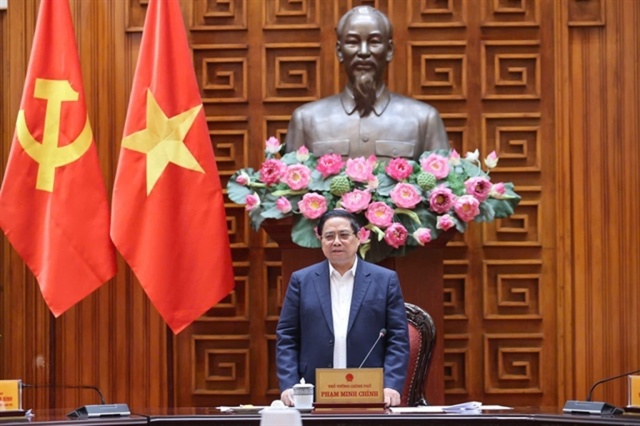
Prime Minister Pham Minh Chinh has recently approved a groundbreaking proposal to advance state budget funds to the national fuel price stabilization fund to protect the economy from global volatility. This decision, finalized during a high-level government meeting on March 20, 2026, comes at a critical juncture as geopolitical tensions in the Middle East continue to disrupt the global energy market. The Prime Minister emphasized that ensuring domestic energy security is an absolute priority, leading to the issuance of urgent directives that mandate flexible and effective measures to prevent any potential shortages. Throughout the early months of 2026, the Vietnamese leadership has been proactive on the international stage, with the Prime Minister engaging in diplomatic phone calls and sending official letters to global leaders and foreign ambassadors to safeguard consistent energy supplies.
Following these strategic directives, various ministries and sectors have already begun utilizing the existing stabilization fund and adjusting specific taxes on petroleum products to mitigate the impact of rising costs on the general public. Furthermore, major state-owned corporations have been instructed to ramp up the production and supply of coal, electricity, and gas to support the broader economy. This multi-pronged approach also includes a strong push for an energy transition, where new sustainable products are gradually introduced to replace traditional fossil fuels. To ensure these policies reach the citizens effectively, the government has strengthened inspections and enforcement mechanisms to crack down on smuggling, hoarding, and speculative profiteering that often plague the energy sector during times of international instability.
The government’s commitment to maintaining a stable fuel price is rooted in the understanding that energy costs are a fundamental driver of inflation. By utilizing every available administrative tool, from tax breaks to diplomatic negotiations, Hanoi is signaling to both domestic investors and the international community that it will not allow external shocks to derail its industrial growth. This level of state intervention is characteristic of the nation’s managed market approach, providing a safety net for small and medium-sized enterprises that are particularly vulnerable to sudden overhead spikes. As the global situation remains fluid, the continued emphasis on saving practices and diversified energy sources will be paramount in building long-term national resilience.
Fiscal Measures and State Budget Integration for Energy Security
In his concluding remarks, the Prime Minister stressed that the top priority remains the prevention of energy or fuel shortages under any circumstances, as disruptions could severely impact macroeconomic management and supply chain continuity. While current policies have been effective, the rapidly evolving nature of the global energy crisis necessitates the preparation for worst-case scenarios where the existing fuel price stabilization fund might face a liquidity shortage. To address this, the Prime Minister agreed in principle to use surplus revenue from the 2025 state budget to bolster the fund, ensuring it remains robust enough to absorb international price shocks.
This policy is designed as a temporary intervention, with a clear roadmap for the fund to reimburse the state budget once global market conditions return to a state of normalcy. The Ministry of Finance has been assigned the lead role in coordinating with the Ministry of Industry and Trade to finalize the necessary legal frameworks for this implementation. This intervention is expected to be active until at least April 15, 2026, with the possibility of an extension if the actual market conditions remain volatile. By grounding policy management in real-world data and the unique characteristics of Vietnam’s socialist-oriented market economy, the government aims to provide a predictable environment for businesses and households alike.
The strategic use of the state budget to maintain a stable fuel price acts as a vital shield against imported inflation, allowing local industries to maintain their production schedules without the constant fear of sudden overhead spikes that could lead to widespread business failures. Furthermore, this fiscal support allows for a more controlled adjustment of the consumer price index, preventing the sharp peaks that often trigger social unrest or a dramatic drop in consumer confidence. By leveraging the 2025 revenue surplus, the state is effectively recycling its economic gains to protect its future growth, showcasing a sophisticated level of treasury management during a period of global fiscal tightening.
Regulatory Oversight and Long-term Market Management Goals
Effective management of the domestic market requires a delicate balance between maintaining a competitive fuel price and ensuring that rates do not diverge so significantly from neighboring countries that they encourage cross-border smuggling. Prime Minister Chinh highlighted that all measures should follow an appropriate roadmap to avoid abrupt economic shocks, focusing instead on gradual adjustments that reflect both people’s livelihoods and the operational needs of enterprises. To streamline this process, specific responsibilities have been delegated to Deputy Prime Ministers to ensure that the state’s management scope is comprehensive and responsive to sudden shifts in the global landscape.
Beyond immediate price controls, the government is also encouraging a national shift toward energy-saving practices and the acceleration of fossil fuel replacement projects. These long-term goals are intended to reduce Vietnam’s sensitivity to global fuel price fluctuations over the coming decade. By fostering an environment of transparency and data-driven decision-making, the administration is building a resilient energy framework that supports sustainable development. The ongoing monitoring of the global oil market remains a cornerstone of this strategy, as the government stands ready to report and adjust its tactics to protect the national interest.
Ultimately, these integrated efforts reflect a sophisticated understanding of how energy stability serves as the bedrock for social stability and continued economic prosperity in an increasingly interconnected global trade system. The focus on a data-grounded approach prevents the typical pitfalls of populist pricing, ensuring that the eventual transition back to market-driven rates is handled with precision. As Vietnam continues its ascent as a global manufacturing powerhouse, the ability to decouple its domestic productivity from the volatility of the Middle East will be a defining factor in its competitive edge within the Southeast Asian region.
Macroeconomic Displacement and Institutional Capital Allocation Analysis
The 2026 fiscal injection into the Vietnamese energy sector represents a critical inflection point in the regional financial landscape, signaling a transition toward a high-intervention domestic trade model. We analyze that the strategic advance of state budget funds to the stabilization fund is not merely a reactionary measure, but a structural effort to preserve the nation’s sovereign credit rating amidst global energy warfare. From a professional financial perspective, the government’s willingness to leverage 2025 revenue surpluses indicates a high degree of treasury liquidity and a proactive stance toward mitigating imported inflationary pressures. This suggests that the Vietnamese market is currently operating with a stability premium compared to regional peers who rely solely on market-based pricing during supply-side shocks.
Furthermore, we project that the current fuel price management strategy will act as a localized catalyst for a re-valuation of the manufacturing and export-oriented logistics sectors. For institutional investors, this state-backed liquidity provides a unique entry point into Vietnamese equities, as the cooling of input cost volatility allows for more predictable corporate earnings and dividend yields. We observe that the market is already beginning to price in a resilience factor for industrial zones that maintain high levels of state-supported energy security. The ability of the Ministry of Finance to orchestrate such a large-scale fiscal maneuver during a period of global interest rate uncertainty proves that the institutional framework of Vietnam’s energy trade has reached a level of maturity that is highly attractive to long-term foreign direct investment.
The long-term impact on the regional market will manifest as a structural stabilization of the Vietnamese Dong, as the state reduces the currency’s sensitivity to fluctuations in the global petroleum market. This transition toward a more resilient and state-supported development model reduces the risk of stagflation and provides a more stable environment for equity markets related to infrastructure and heavy industry. As corporate governance is strengthened through the alignment of state-led price initiatives with regional security interests, we expect a narrowing of the yield gap between Vietnamese and more established metropolitan commercial assets. The proactive financial stance taken by the administration today sets a new regional standard for how a developing economy can transform global energy uncertainty into localized institutional stability.