Strategic Acceleration Of The Masela Abadi Gas Project
The Indonesian government has recently reached a landmark agreement with Japanese partners to significantly accelerate the development of the Abadi Field gas project located in the Masela Block, Maluku. This decision comes at a critical juncture as global energy markets face heightened uncertainty due to ongoing geopolitical tensions in West Asia involving the United States, Israel, and Iran. During a high profile state visit to Japan, President Prabowo Subianto, accompanied by the Minister of Energy and Mineral Resources, Bahlil Lahadalia, emphasized the strategic importance of the Masela project in fortifying national energy security.
The Head of the Special Task Force for Upstream Oil and Gas Business Activities, Djoko Siswanto, confirmed on Monday that all parties have reached a consensus to expedite the operational timeline. Discussions regarding the block’s development are reportedly proceeding smoothly, with consistent progress being recorded across all technical and administrative workstreams. This diplomatic mission highlights the deep seated commitment between Jakarta and Tokyo to transform potential energy cooperation into concrete, large scale agreements that benefit both nations.
As the global transition toward cleaner energy sources gains momentum, the natural gas reserves found within this region are increasingly viewed as a vital bridge fuel for the future. The administration is focused on ensuring that this massive investment of approximately 20 billion dollars materializes into a sustainable energy hub for the archipelago. By prioritizing this project, Indonesia is signaling its intent to remain a dominant player in the regional liquefied natural gas market while simultaneously addressing domestic industrial needs.
Economic Drivers And Regional Development In Eastern Indonesia
The acceleration of the Masela Block is widely regarded as a transformative economic catalyst for the Eastern Indonesian region, promising to unlock vast industrial potential in Maluku and its surrounding provinces. Minister Bahlil Lahadalia recently met with the CEO of Inpex Corporation, Takayuki Ueda, to finalize the milestones required to push the 20 billion dollar investment agreement into its next active phase. This project is expected to become a primary source of gas supply for national industries, fostering the growth of petrochemical plants and other energy intensive manufacturing sectors.
Beyond its industrial output, the development of the Abadi Field is anticipated to create thousands of specialized jobs and stimulate the local economy through infrastructure upgrades and service sector expansion. The Indonesian Ambassador to Japan, Nurmala Kartini Sjahrir, noted that the agreement represents a major milestone for national energy security, particularly as the country seeks to reduce its reliance on imported energy products. The Indonesian Embassy in Tokyo is actively facilitating the coordination required for the Front-End Engineering and Design phase to ensure it remains on track for completion.
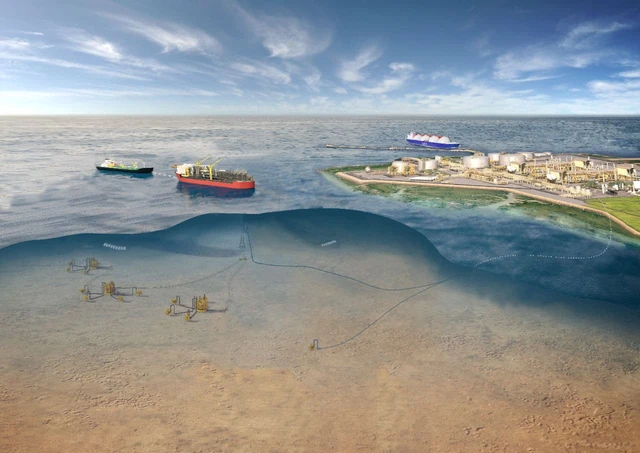
Currently, the project has achieved approximately 25% progress, reflecting a disciplined approach to project management and stakeholder engagement. The goal is to establish a robust energy corridor that connects remote extraction sites with major industrial zones across the country. This effort aligns with the broader national vision of decentralizing economic growth and ensuring that the benefits of natural resource wealth are distributed more equitably across the eastern islands. By integrating advanced technology and international expertise, the project is setting a new standard for upstream oil and gas operations in deepwater environments.
Timeline Targets And Technical Milestones For Energy Security
To ensure the production targets of 2029 to 2030 are met, the government has set a rigorous schedule for the Masela project, specifically focusing on the transition to the next technical stages. Minister Lahadalia has expressed his target for the Abadi Field to progress to the Front-End Engineering and Design stage by the second or third quarter of 2026. This timeline is crucial as it allows for the parallel execution of the Engineering, Procurement, and Construction tenders, thereby saving significant time in the overall development cycle.
The strategic focus on the Masela Block ensures that the necessary technical specifications and environmental safeguards are integrated early in the design process to avoid future delays. National energy security remains the top priority, with the Ministry of Energy and Mineral Resources working tirelessly to ensure that opportunities for cooperation translate into tangible infrastructure on the ground. The successful completion of the design phase in 2026 will provide the blueprint for one of the most complex energy projects ever undertaken in Southeast Asia.
As global energy demand continues to evolve, having a reliable and massive gas supply from the Maluku region will provide a significant buffer against international price volatility. The government’s prudent approach involves constant monitoring of global developments while maintaining a steady pace of domestic industrialization. By achieving these specific milestones, Indonesia is reinforcing its reputation as a stable and attractive destination for long term energy investments. The synergy between government oversight and private sector expertise is expected to drive the project toward its final investment decision with high levels of transparency and efficiency.
Strategic Analysis Of Deepwater Gas Economics And Geopolitical Resilience
The expedited development of the Abadi Field represents a sophisticated strategic pivot within the 2026 B.I.F.E. landscape, where sovereign energy independence has become a primary metric of national stability. From a macro financial perspective, the 20 billion dollar capital allocation into the Maluku region functions as a hedge against the volatile energy prices triggered by the ongoing conflicts in West Asia. We analyze that this project serves to recalibrate the regional gas balance, positioning Indonesia as a key alternative supplier to North Asian markets that are currently seeking to diversify away from politically sensitive energy corridors.
The utilization of a parallel tender process for the engineering and construction phases indicates an expert level of project de-risking, as it minimizes the traditional wait time between technical design and physical implementation. This administrative agility is essential for maintaining the project’s internal rate of return, especially in an environment characterized by fluctuating credit costs and high technical complexity. Furthermore, the concentration of Japanese capital and technical expertise in this project solidifies a long term bilateral trade synergy that goes beyond mere extraction.
For institutional investors, the 25% progress milestone provides a credible baseline for valuing the upstream assets of the participating entities, suggesting a maturing project lifecycle that is moving toward its peak capital intensity. We project that the successful integration of the Masela gas reserves into the national grid will provide the necessary base load power to support the high tech manufacturing clusters currently expanding in Java and Sulawesi. For market analysts, the primary success indicator will be the timely completion of the front end engineering phase in 2026, which will act as a trigger for subsequent foreign direct investment inflows.
This strategic realignment confirms that the administration understands the critical intersection between physical resource management and regional geopolitical leverage. By securing a dominant gas position in the Arafura Sea, the nation is effectively ensuring its industrial autonomy for the next several decades while contributing to the overall stability of the ASEAN energy market. The long term fiscal impact will likely manifest as a significant improvement in the national trade balance as domestic gas replaces expensive liquid fuel imports. This comprehensive approach to deepwater resource monetization establishes a global benchmark for emerging economies seeking to leverage their natural wealth for systemic industrial transformation.