Exchange Rate Volatility And Middle East Geopolitical Risks
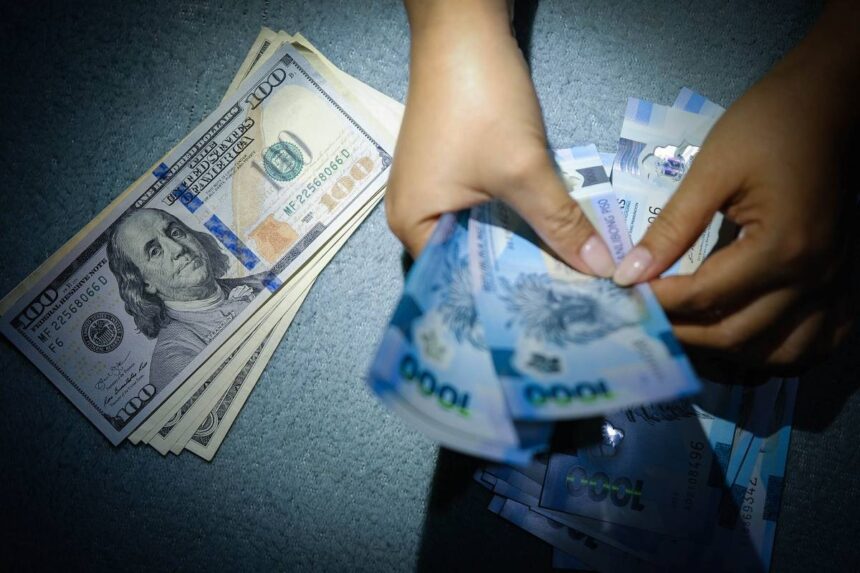
The ongoing conflict in the Middle East has created significant downward pressure on the Philippine Peso, which remains highly vulnerable to external oil price shocks. Financial analysts from the research arm of Mitsubishi UFJ Financial Group Inc. have raised concerns that if the regional instability persists, the local currency could weaken beyond the P61 threshold against the US dollar. This forecast is particularly alarming given the recent historical performance of the exchange rate, which has already touched several record lows since the onset of the US-Israeli conflict in late February. While the base case scenario assumes a gradual de-escalation of tensions, the high degree of uncertainty surrounding the Strait of Hormuz continues to weigh heavily on investor sentiment and currency valuation.
The Philippines maintains a deep dependence on imported fuel, a structural factor that MUFG Research highlights as a primary driver of this current weakness. Although the currency regained some ground just before the Holy Week break, closing at P60.1, the broader trend remains skewed toward further depreciation. Interestingly, Bangko Sentral ng Pilipinas Governor Eli Remolona Jr. has indicated that there is currently no immediate need for aggressive intervention. From the perspective of the central bank, a weaker currency can actually serve as a stabilizer for the current account deficit by making exports more competitive on the global stage. However, the psychological and inflationary impact of crossing the P61 mark cannot be ignored, as it influences everything from import costs to the purchasing power of Overseas Filipino Workers returning funds to their families.
Energy Dependency And The Ripple Effect On Supply Chains
A critical component of the current economic anxiety in the Philippines is the country’s overwhelming reliance on the Middle East for approximately 95% of its crude oil requirements. This high level of energy dependency means that any sharp increase in global crude prices, potentially reaching $120 to $140 per barrel, would directly translate into a steeper decline for the Peso and a rise in the domestic cost of living. Beyond the immediate pain at the gas pump, higher energy costs create a massive ripple effect that filters through every major sector of the economy, including food production, manufacturing, and electricity generation.
For instance, rising oil prices often lead to higher fertilizer costs, which in turn drive up the price of essential agricultural products and complicate the national food security strategy. MUFG Research warns that a binding energy shortage would have a catastrophic impact on regional supply chains, potentially pushing inflation well beyond the government’s established targets. The local currency is essentially at the mercy of these global commodity cycles and the strategic stability of regional Asian refineries. If oil prices average $100 per barrel or higher for a sustained period, the inflationary pressure could become so acute that it breaches the central bank’s 4.0% ceiling.
The interconnectedness of energy prices and industrial output means that the Philippine economy is essentially importing inflation from abroad, leaving the domestic market with limited tools to counteract the rising costs of production and logistics. The decline in the value of the Peso further complicates this, as the cost of importing the same volume of fuel increases in local currency terms, creating a feedback loop of depreciation and inflation.
Monetary Policy Challenges And Inflationary Projections
The Bangko Sentral ng Pilipinas faces a complex policy dilemma as it attempts to balance economic growth with the need to contain rising inflation expectations. Currently, the Monetary Board has kept the policy rate unchanged at 4.25%, but the door remains open for future tightening if the Peso continues its downward trajectory. Analysts suggest that the risk is heavily biased toward at least one rate hike this year to manage the volatility of the local currency and keep inflation within a manageable range.
The central bank has already revised its inflation projections upward to 5.1% for the current year, which is significantly above the target range of 2.0% to 4.0%. This adjustment reflects the growing uncertainty surrounding global energy markets and the potential for a more hawkish stance from the Federal Reserve in the United States. A stronger US dollar, combined with increased risk aversion among global investors, typically leads to a flight from emerging market currencies, further straining the Philippine Peso and its domestic stability. While the BSP may prefer to hold off on rate hikes to support a relatively weak starting point for economic growth, the necessity of price stability often takes precedence in the long run.
The strategic realignment of monetary policy will likely focus on mitigating the second-round effects of oil price spikes, such as wage hikes and transportation fare increases. As we move into the final months of 2026, the market expects the exchange rate to eventually settle around P59.5, provided that a meaningful de-escalation in the Middle East occurs. However, until that stability is achieved, the Philippine financial landscape will remain in a state of high alert, with every move in the global oil market being closely watched by policymakers and private sector leaders alike.
Regional Energy Vulnerability And Fiscal Autonomy
The current volatility within the Philippine foreign exchange market represents a sophisticated case study in the intersection of structural energy dependency and regional geopolitical risk. From a professional analytical perspective, the projected weakening of the Peso beyond P61 is not merely a speculative forecast but a direct reflection of the country’s thin margin for error regarding energy imports. We analyze that the structural decoupling of domestic production from energy security has created a permanent geopolitical premium on the local currency. This premium is exacerbated during times of conflict in the Strait of Hormuz, as the market prices in the potential for physical supply disruptions alongside price appreciation.
Furthermore, the strategy of the Bangko Sentral ng Pilipinas to allow for a natural depreciation as a tool for export competitiveness is a double-edged sword. While it may alleviate the current account deficit in the short term, it simultaneously erodes the real income of a population heavily reliant on imported staples and utilities. The regressive nature of oil-driven inflation means that the most vulnerable segments of the economy bear a disproportionate share of the adjustment cost. We project that if oil prices sustain an average above the $100 mark, the resulting supply-side inflation will necessitate a pivot toward more aggressive contractionary monetary policy, regardless of the impact on short-term consumption growth.
The defining metric of success in the 2026 fiscal year will be the stability of the inflation-adjusted exchange rate and its impact on sovereign debt servicing costs. The synergy between fiscal planning and central bank execution must focus on protecting the most productive sectors from the direct impact of energy-driven price spikes. This strategic realignment confirms that the Philippine industrial landscape is in a period of forced adaptation. The winners in this environment will be firms capable of optimizing energy efficiency while navigating the complexities of a fragmented global trade landscape. As the interest rate cycle in the United States remains uncertain, the focus for the BSP must stay on maintaining a domestic environment that balances the need for liquidity with the imperative of price stability.