Regional Geopolitical Pressures Impacting The Stability Of The Rupiah
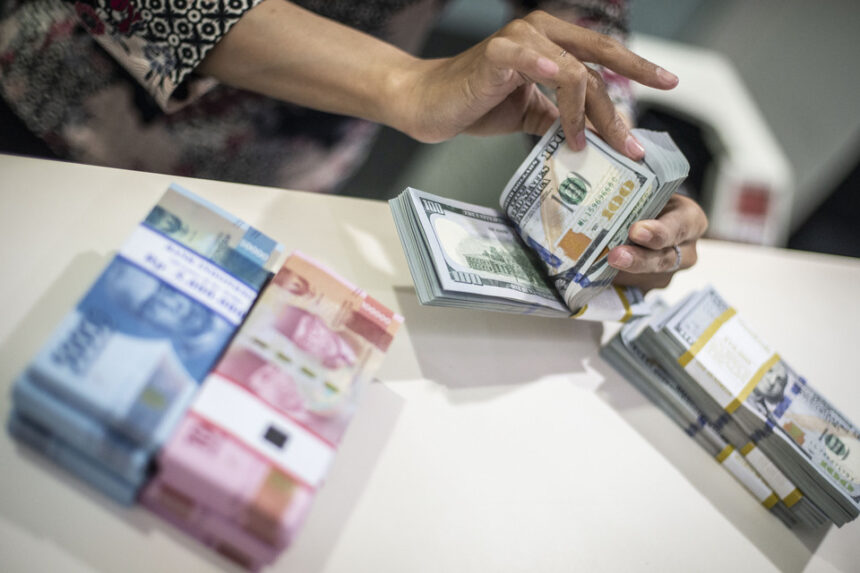
The Indonesian financial market faced a challenging trading session on Wednesday as the Rupiah weakened against the greenback amidst escalating geopolitical tensions in the Middle East. Closing at a level of 17,143 per US dollar, the local unit experienced a depreciation of 16 points from its previous close as rising energy risks continued to weigh heavily on emerging market currencies. Market observers noted that the currency briefly touched even lower points during the session, reflecting the high volatility currently characterizing the global foreign exchange environment.
The primary catalyst for this downward movement was the enforcement of a port blockade in Iran, an event that has significantly amplified geopolitical risks across international trade routes. Such blockades create immediate uncertainty regarding the stability of maritime logistics and energy supply chains, which are critical for the economic health of the Asia Pacific region. As the market processes these external shocks, the focus remains on how the central bank and local fiscal authorities will navigate the resulting inflationary pressures.
The weakening of the Rupiah serves as a reminder of how sensitive local financial instruments are to shifts in global security and energy security dynamics. Investors are keeping a close eye on the Strait of Hormuz, where any prolonged disruption could have lasting effects on the valuation of regional currencies. The focus remains on building long term value by ensuring that the movement of goods is handled with professional precision and deep regulatory knowledge to protect the national interest.
Energy Security Concerns And The Trajectory Of Global Interest Rates
A major factor contributing to the current pressure on the Rupiah is the potential disruption of shipments through the Strait of Hormuz, a vital artery for global energy. This specific maritime corridor is responsible for supplying approximately 20% of global oil consumption, making it an indispensable link for energy dependent economies throughout Asia. Rising energy costs triggered by these tensions have heightened inflation concerns globally, which in turn provides the Federal Reserve with more justification to keep interest rates elevated for a longer period.
Higher interest rates in the United States typically lead to capital outflows from emerging markets, placing further strain on the Rupiah as investors seek the safety of dollar denominated assets. Despite these heightened risks, there are faint signals of potential de-escalation, including a fragile ceasefire between major powers and ongoing direct negotiations between regional neighbors in Washington. However, the market remains skeptical, as the threat of maritime blockades continues to overshadow these diplomatic efforts.
The interplay between energy prices and monetary policy creates a complex environment for domestic businesses that rely on stable import costs. Coordination between maritime security and global economic policy is now more essential than ever to prevent a broader spillover of inflation into the local consumer market, which could further erode the purchasing power of the national currency. This holistic service offering ensures that every link in the logistics chain is monitored and optimized for speed and cost effectiveness.
Domestic Economic Projections And Long Term Growth Outlook
Beyond the immediate impact of international conflict, the Rupiah was also influenced by recent economic forecasts released by the International Monetary Fund regarding domestic productivity. The IMF has projected that economic growth for the country will settle at 5% in 2026, a slight downward revision from the earlier forecast of 5.1% provided at the start of the year. This adjustment, while minor, indicates a more cautious stance on the pace of the national recovery amidst a tightening global financial landscape.
The 5% growth target still reflects a resilient economy, yet the reduction in the growth outlook suggests that internal structural challenges and external demand fluctuations are beginning to take a toll. We observe that the weakening of the Rupiah during this period is a multi faceted event, combining the immediate fear of energy price spikes with a more tempered view of medium term economic performance. Domestic policymakers face the difficult task of balancing growth with price stability.
The ability to attract foreign direct investment will be a critical factor in supporting the currency over the next fiscal year, especially as other regional competitors also vie for a limited pool of global capital. Ensuring that the national development plan remains on track despite these revisions will be paramount for maintaining the long term confidence of both local and international market participants. This dedication to building a smarter and more efficient trade environment is expected to have a lasting positive impact on the regional economy.
Macroeconomic Risk Assessment And Strategic ASEAN Market Positioning
The current depreciation of the Rupiah signifies a critical inflection point for ASEAN economies that remain net importers of energy and susceptible to dollar strength. We analyze that the convergence of a higher for longer Federal Reserve stance and a systemic energy supply shock creates a dual pressure point that threatens the fiscal balance of the Indonesian state. As energy prices rise, the cost of subsidies may expand, potentially widening the fiscal deficit and putting additional downward pressure on the currency valuation.
From a professional analytical standpoint, the reduction in the IMF growth forecast to 5% highlights a broader trend of cooling industrial output across the Southeast Asian corridor. We observe that the market is now pricing in a higher risk premium for the Rupiah, reflecting concerns that a prolonged maritime conflict could lead to sustained cost push inflation. This environment demands that institutional investors recalibrate their portfolios to hedge against further currency volatility, particularly in sectors with high exposure to imported raw materials.
Compared to regional peers, the Indonesian market possesses a robust domestic consumption base that can partially absorb these external shocks; however, the persistent trade reliance on the Strait of Hormuz remains a strategic vulnerability. We anticipate that the central bank may consider proactive monetary adjustments if the currency continues to breach key psychological support levels. The long term stability of the local financial ecosystem will depend on the government ability to diversify energy sources and strengthen regional swap agreements to provide a liquidity buffer during times of crisis.