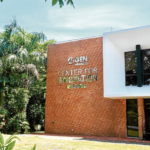
Strategic Performance and Dividend Resilience at OCBC
The recent annual general meeting for OCBC served as a critical platform for leadership to address shareholder concerns regarding market valuation and the long term sustainability of dividend payouts. During the event, which drew over 1,800 attendees, the board highlighted that the bank successfully breached the 100 billion dollar market capitalization milestone in early April 2026, with share prices hitting record highs above the 22 dollar mark. Chairman Andrew Lee addressed direct questions regarding dividend yields, firmly defending the bank’s distribution strategy by pointing out that total shareholder returns have increased by 2.5 times over a five year period and 7.5 times over two decades.
This performance is particularly notable given the complexities of the current global economic landscape, where high interest rates and shifting trade policies have created a volatile environment for financial institutions. The bank’s management remains focused on maintaining a balanced payout policy that rewards investors while ensuring the institution retains sufficient capital to weather potential economic downturns. By prioritizing a disciplined approach to capital management, the organization aims to provide consistent value even as external market pressures fluctuate.
The commitment to a 50% payout ratio after completing current capital redistribution plans signals a robust outlook for the future. Shareholders were assured that every dollar invested is backed by a strategy that prioritizes long term stability over short term gains, reinforcing the bank’s position as a cornerstone of the regional financial sector. The bank is positioning itself to be a leader in the next phase of Asian economic growth by maintaining a fortress balance sheet while staying lean enough to capitalize on emerging opportunities in wealth management and digital banking.
Navigating Global Macroeconomic Volatility and Supply Chain Risks
The leadership team provided a detailed analysis of the external risks currently influencing the regional banking sector, emphasizing that the institution has been proactively flagging global threats since 2023. These challenges include the ongoing impacts of international conflicts which have disrupted vital food supply chains and contributed to persistent global inflationary pressures. Furthermore, recent policy shifts and the introduction of new tariffs in early 2025 have added layers of complexity to global trade flows, particularly affecting the relationship between major economic powers.
One of the most significant concerns discussed was the escalation of tensions in the Middle East, which has increased the risk of energy shocks due to potential disruptions in the Strait of Hormuz. Despite these headwinds, the exposure to the Middle East remains relatively small, accounting for only about 2% to 3% of total loans, which mitigates direct credit risk. The bank is actively conducting stress tests at various levels to determine the potential indirect impacts of stagflation, a scenario characterized by slow economic growth coupled with high inflation.
This rigorous risk management framework allows the bank to prepare for various incoming storms by ensuring its balance sheet remains liquid and resilient. The decision to defer large scale capital expenditures, such as the 5 billion dollar redevelopment of its central headquarters, was highlighted as a prudent move that preserved capital for dividends and share buybacks. By avoiding excessive cargo during uncertain times, the bank maintains the agility needed to pivot its strategy in response to rapidly changing market conditions and emerging geopolitical hotspots across the globe.
Expanding Footprint and Growth Opportunities in the ASEAN Region
Looking ahead, the executive team expressed strong confidence in the continued growth of the Asian markets, despite the intricate global environment. The rise of trade and investment flows across Southeast Asia presents a wealth of opportunities for integrated financial services, especially as mega trends like digitalization and artificial intelligence reshape the industry. The bank is committed to deepening its investments in key ASEAN markets, including Indonesia and Malaysia, while leveraging its established hubs in Singapore and Hong Kong to capture cross border wealth flows.
Sustainability and shifting demographics, such as the aging population in Singapore, are also being integrated into the bank’s long term product development and service strategy. The successful integration of specialized insurance arms has further strengthened the group’s position as a holistic financial provider, contributing significant profits to the overall bottom line. Management emphasized that the focus remains on building a ship that is technically advanced and capable of navigating both calm and turbulent waters.
This involves continuous investment in infrastructure and technology to better serve a diverse customer base with varying needs across different jurisdictions. The strategy of maintaining a strong capital return plan through 2026 reflects a deep belief in the underlying strength of the Asian economy and the bank’s ability to capture a larger share of the regional banking market. By fostering a culture of discipline and long term thinking, the institution is well positioned to lead the next phase of financial evolution in the region. The focus on high value sectors and emerging technologies will likely drive productivity and support a more balanced economic recovery.
Regional Banking Stability and Dividend Strategies
The recent annual meetings of Singapore’s major financial institutions provide a comprehensive look into economic resilience amidst a fragmented global trade landscape. We analyze that the focus on high dividend payouts and capital buybacks is a tactical response to maintain investor confidence during periods of heightened geopolitical risk. From a professional analytical perspective, the decision by these banks to defer major property redevelopments in favor of returning capital to shareholders reflects a capital preservation first mindset that is essential in a high interest rate environment. We observe that the total shareholder return figures cited by management serve as a critical benchmark for evaluating the effectiveness of long term compounding in the regional banking sector.
Furthermore, the strategic expansion into Indonesia and Malaysia via major acquisitions signals a shift toward capturing the emerging middle class and digital banking segments in Southeast Asia. We analyze that the successful integration of these consumer banking businesses will be the primary driver of non interest income growth over the next three years. However, the rise in non executive directors’ fees and the debate over performance based remuneration highlight an increasing level of shareholder activism regarding corporate governance. Professional analysts suggest that the emphasis on maintaining a sustainable balance sheet is a direct response to the potential for stagflation, which could lead to a rise in non performing loans among small and medium enterprises.
We anticipate that as global trade flows continue to realign, the banks that successfully leverage AI and digital infrastructure will achieve superior operational efficiency. The long term stability of the region will ultimately depend on how these institutions manage their exposure to international hotspots while continuing to provide the liquidity necessary for ASEAN’s economic expansion. This period of transition is a significant test of the sector’s agility and its capacity to adapt to a world where fiscal discipline is the only path to sustained prosperity. Ultimately, the ability of these banks to maintain dividend floors while funding regional expansion will determine their relative valuation against global peers who are facing similar structural headwinds in 2026.