Strategic Market Expansion and Industrial Growth with Hoa Phat
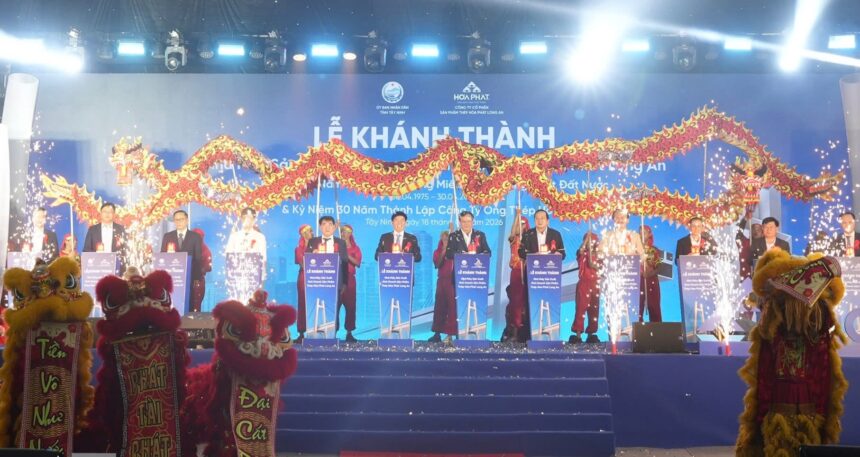
The Vietnamese industrial landscape experienced a significant milestone on April 18 as the leading industrial giant Hoa Phat inaugurated its newest steel pipe manufacturing facility in Tay Ninh. This state of the art plant represents a critical move in the group’s broader strategy to consolidate and expand its market share within the highly competitive construction and infrastructure sectors.
By establishing a presence in this strategic gateway, Hoa Phat is perfectly positioned to connect the bustling economic hub of Ho Chi Minh City with the vital provinces of the Mekong Delta, ensuring a seamless supply chain for high quality materials. The facility specializes in a diverse range of products, including black steel pipes, galvanized coils, and specialized extra large steel pipe products that are essential for large scale technical infrastructure and industrial applications.
Covering an expansive area of 15 hectares and backed by an investment of 2 trillion dong, the plant is equipped with modern production lines capable of churning out 400,000 tonnes of steel per year. This massive increase in capacity allows the group to better serve the surging demand in the southern region while simultaneously boosting its export potential to international markets. The inauguration ceremony was attended by local government officials who lauded the group’s ability to complete such a complex project on schedule.
Technological Innovation and Sustainable Production Standards
Beyond merely scaling up its physical production footprint, the strategic vision for the new facility integrates advanced technological standards and a firm commitment to environmental stewardship. The group has integrated a massive rooftop solar power system with a capacity of 10 MW into the plant’s design, which successfully meets over 50% of the facility’s total energy requirements.
This move aligns perfectly with the national government’s sustainable development goals and showcases how Hoa Phat is leading the transition toward a greener industrial sector in Vietnam. By utilizing renewable energy to power heavy industrial processes, the company not only reduces its carbon footprint but also improves its long term operational efficiency and cost structure.
The plant’s director emphasized that these strong investments in both technology and human resources are part of a broader commitment to maintaining the reputation of the brand across nationwide construction projects. The current production capacity of the group has now reached an impressive 1.2 million tonnes per year, a figure that solidifies its leadership in the domestic steel pipe sector where it already holds a commanding 35% market share.
Performance Analysis and Regional Economic Impact
The financial performance of the group in the first quarter of 2026 provides clear evidence that the expansion strategy is already yielding substantial returns. The group recorded total sales of 241,000 tonnes of steel pipe products during this period, representing a robust 30% increase compared to the previous year.
Particularly impressive is the contribution of the southern market, which accounted for 70,000 tonnes in the first quarter alone, signaling a strong reception for the new plant’s output even in its early stages of operation. In March, monthly sales reached 45,000 tonnes, which serves as a highly positive lead indicator for the facility’s future utilization rates and overall profitability.
We analyze that this surge in volume is a direct result of the strategic positioning in Tay Ninh, which reduces logistics costs and shortens delivery times for major construction projects in the southern economic zone. For the broader ASEAN region, the emergence of such a high capacity and energy efficient producer suggests a shift in trade dynamics, as Vietnam becomes increasingly self sufficient in heavy construction materials.
Market Integration and the Future of Southeast Asian Heavy Industry
The operational success of the new facility carries significant implications for the integration of Southeast Asian heavy industry and the evolution of cross border infrastructure development. We analyze that as domestic producers like the group reach such high levels of capacity and technical sophistication, the reliance on imported steel for major regional projects is likely to diminish, leading to improved trade balances and localized economic resilience. This shift is particularly important in the context of the ASEAN Economic Community, where standardized manufacturing and sustainable practices are becoming the prerequisite for participation in large scale multilateral projects.
The emphasis on extra large steel pipe products specifically targets the needs of high pressure gas pipelines, water treatment facilities, and bridge construction, which are all pillars of regional connectivity. We observe that the ability of a domestic firm to meet these high end technical requirements at a competitive price point provides a significant advantage to local construction firms, allowing them to bid more effectively on regional tenders. Furthermore, the commitment to meeting 50% of energy needs through solar power serves as a hedge against global energy price volatility, ensuring that production costs remain stable even during periods of international market instability.
This forward thinking approach to risk management and resource efficiency is what defines modern industrial leadership in the steel sectors. We anticipate that the increased supply of high quality steel will act as a catalyst for further industrial clusters in the Mekong Delta, as peripheral businesses and manufacturers are drawn to the reliable availability of essential raw materials. The creation of such a robust industrial base is essential for supporting the next phase of national development, characterized by higher value added manufacturing and sophisticated urban infrastructure. Ultimately, the growth of the group is not just a corporate success story but a foundational element of the regional economic architecture.
By consistently delivering on its expansion goals and sustainability mandates, the firm ensures that Vietnam remains a central hub for industrial excellence in Southeast Asia. This localized strength provides a secure foundation for future growth, attracting further foreign direct investment and fostering a more integrated and prosperous regional economy. As the global construction market evolves toward more stringent environmental and quality standards, the early adoption of these principles by leading domestic players ensures their continued relevance and competitiveness on the world stage. The plant’s 2 trillion dong valuation is a clear indicator of the aggressive capital allocation strategies required to maintain dominance in a rapidly industrializing nation.