Strategic Industrial Transformation In The Heart Of An Giang
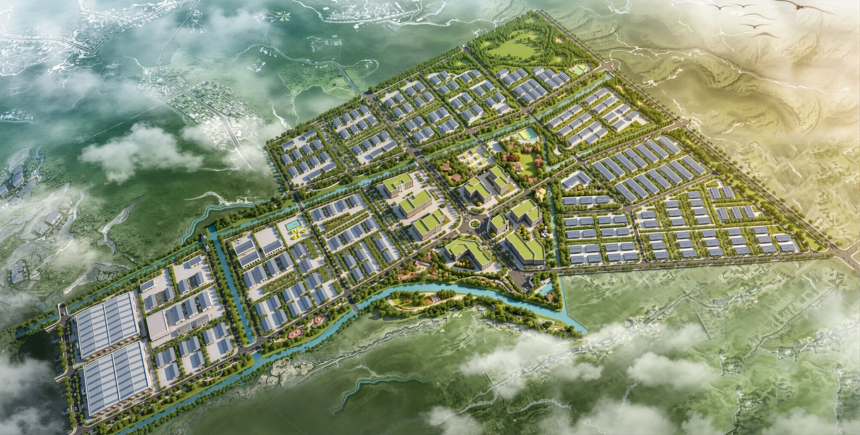
The recent announcement regarding the Vam Cong Industrial Park highlights a massive leap forward for the regional economy of An Giang, where a 199.2-hectare venture is set to redefine the southeastern gateway of Long Xuyen city. This ambitious project, spearheaded by the T&T Group, is strategically positioned to leverage a highly advanced multimodal transportation network that connects the province to the broader Mekong Delta and beyond. By being situated only 3.5 kilometers from the Western North-South Expressway and offering direct access to the critical Chau Doc – Can Tho – Soc Trang Expressway, the park opens up vital transport corridors leading to major economic hubs like Ho Chi Minh City and the emerging Tran De Port.
The integration of road, waterway, and air connectivity ensures that this concentrated industrial zone will serve as a crucial link in the regional supply chain, facilitating the seamless movement of goods and raw materials. Furthermore, its proximity to My Thoi Port and Can Tho International Airport enhances its logistics capabilities, making it an attractive destination for investors seeking high efficiency. As An Giang transitions from a traditional agricultural base to a modern industrial powerhouse, this project stands as a symbol of high-value-added growth. The local government and private stakeholders are aligned in their vision to create a facility that not only meets international standards but also respects the unique geographical advantages of the Mekong Delta.
This development is expected to be a game-changer for the local community, providing a stable foundation for long-term economic prosperity and regional integration. The strategic alignment of these resources indicates a significant shift in how the province views its role within the national economy. By focusing on infrastructure that bridges the gap between rural production and global markets, the locality is effectively future-proofing its industrial base. This holistic approach to development ensures that the benefits of globalization are distributed more evenly across the southern provinces of Vietnam.
The ECOTECH 21 Model And Sustainable Economic Growth
A defining feature of this new venture is its adherence to the pioneering ECOTECH 21 model, which represents a sophisticated blend of 21st-century high technology and ecological sustainability within An Giang. This new-generation industrial park model aims to foster a green, multi-functional environment that prioritizes industries with low environmental impact but high economic output. By focusing on sectors such as information technology, electrical and electronics, and food processing, the park aligns itself with global economic trends and the specific development advantages of the Mekong Delta.
The emphasis on agriculture and fisheries processing is particularly relevant for the local context, as it allows for the upgrading of traditional exports into high-value processed goods. Logistics, garment manufacturing, and building material production are also slated for development, ensuring a diverse and resilient industrial ecosystem that can withstand market fluctuations. The deputy general director of T&T Group, Nguyen Anh Tuan, has noted that this project is a key pillar of their regional strategy, designed to enhance the efficiency of linkages between production and distribution.
This modern logistics center will play a vital role in restructuring the local economy, moving away from low-margin primary production toward a more sophisticated manufacturing profile. The implementation of the ECOTECH 21 philosophy ensures that industrial progress does not come at the expense of the environment, setting a new benchmark for sustainable development in the province. As An Giang attracts more high-tech secondary investors, the ripple effects will be felt across the entire supply chain, fostering innovation and elevating the region’s overall competitiveness.
Socioeconomic Impact And Long Term Provincial Development
From a socioeconomic perspective, the Vam Cong Industrial Park is destined to become a primary engine for job creation and community development throughout An Giang. With an estimated capacity to provide employment for approximately 7,800 workers, the project addresses the urgent need for local career opportunities and helps to curb the migration of talent to more distant urban centers. Ho Van Mung, the Chairman of the An Giang People’s Committee, has emphasized that the initiative is perfectly in line with the provincial socioeconomic development plan for 2025-2030 and beyond.
This project concretizes federal directives aimed at building integrated and modern industrial zones that can act as a catalyst for broader regional growth. When fully operational, the park will create a new impetus for economic expansion, attracting a diverse range of secondary investors who will bring additional capital and expertise to the region. The focus on human resource development and the improvement of local living standards is a core component of the state’s vision for a prosperous Mekong Delta.
By enhancing the competitiveness of An Giang on a national level, the project ensures that the province remains at the forefront of Vietnam’s industrial evolution. The synergy between government planning and private sector execution provides a robust framework for success, ensuring that the infrastructure built today will serve the needs of future generations. This strategic realignment of the provincial economy toward high-tech manufacturing and modern logistics is the surest path to achieving sustainable, inclusive growth that benefits all stakeholders in the local community.
Expert Analysis Of Regional Industrial Realignment And Capital Flow
The launch of the Vam Cong Industrial Park in An Giang represents a sophisticated recalibration of the Mekong Delta’s role within the global value chain. From a professional perspective, this project is not merely an infrastructure development but a strategic play to capture shifting manufacturing flows moving away from saturated tier-one cities. We analyze that the selection of the ECOTECH 21 model is a calculated move to satisfy increasingly stringent ESG requirements from international institutional investors, who are now prioritizing sustainable industrial real estate. The proximity to the Chau Doc – Can Tho – Soc Trang Expressway is the critical financial lever here as it reduces the logistics cost-to-revenue ratio for manufacturers.
Furthermore, the sectoral focus on electronics and IT indicates that An Giang is positioning itself to benefit from ongoing global supply chain diversifications, where multinational corporations seek secondary manufacturing hubs in Southeast Asia. We project that this industrial park will trigger a significant appreciation in local land values and stimulate a surge in the regional services sector, from professional catering to technical maintenance. The government decision to align this with Decision No.890/QD-TTg provides the regulatory certainty that is essential for large-scale capital commitment. By integrating agriculture and fisheries with high-tech processing, the park creates a unique circular economy moat that protects the local economy from global commodity price volatility.
For market analysts, the key metric to watch over the 2026 fiscal year will be the absorption rate of the initial 199.2 hectares. A rapid uptake by high-tech firms would signal a permanent shift in the economic identity of An Giang, moving it from a rice bowl to a tech corridor. This strategic realignment confirms that the province is undergoing a fundamental structural transition, leveraging its multimodal connectivity to become a dominant logistics hub in the Indochina region. As secondary investment filters into the locality, the resulting increase in provincial tax revenue will likely be reinvested into further human capital development, creating a virtuous cycle of high-value growth.