A Bold Strategic Vision for MIK Group and International Urban Development
The landscape of Vietnamese real estate is undergoing a profound transformation as MIK Group officially launched its Partnership Summit 2026 at the Fairmont Hanoi, signaling a new era of global collaboration. Under the ambitious theme of One Vision. Bolder Moves, the organization gathered the world’s leading experts in urban development and project management to outline a future defined by sustainability and international excellence. Within the first phase of this expansion, the firm emphasized that its core strategy for the year 2026 is built upon the integration of global values with a distinct Vietnamese identity. This approach is not merely about aesthetic harmony but represents a fundamental shift in how large-scale projects are conceived and executed across the region.
Deputy CEO Nguyễn Dũng Minh highlighted that the group is moving away from traditional project-by-project collaborations in favor of deep-rooted, long-term partnerships that begin at the earliest stages of planning. By engaging world-renowned entities like Turner International and the Urban Land Institute from the outset, the developer ensures a level of consistency and quality that spans the entire value chain—from initial architectural design and landscaping to construction and final operations. This methodology is designed to improve execution efficiency while selectively integrating top-tier global standards into the local market. The summit served as a strategic dialogue platform, providing critical updates on global trends and establishing a roadmap that will guide the organization through its next high-growth phase, ultimately aiming to set a new benchmark for urban living environments in Southeast Asia.
The emphasis on long-term partnerships suggests a pivot toward institutionalized development processes that mitigate the risks of project delays and budget overruns. By securing commitments from top-tier international consultants and operators, the conglomerate is effectively future-proofing its assets against shifts in consumer preferences and technological advancements. This proactive stance is essential in a market like Vietnam, where rapid urbanization demands not just more housing, but smarter, more resilient infrastructure that can stand the test of time.
Operational Excellence and the Expansion of Strategic Global Networks
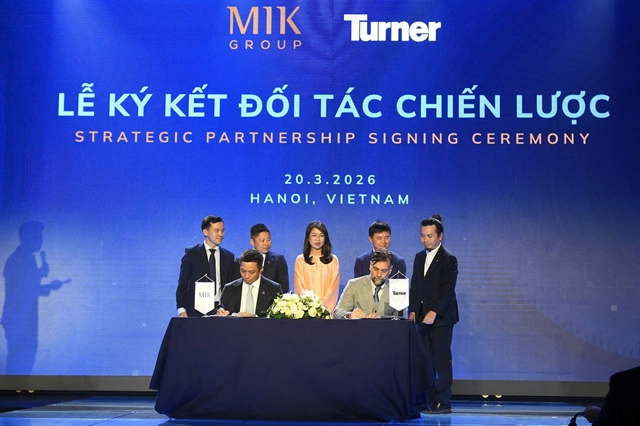
Central to the ongoing success of MIK Group is its ability to curate an elite network of partners that bring over a century of collective experience to the table. The recent announcements of cooperation agreements with Turner for international project management and Accor for hospitality operations demonstrate a clear commitment to raising the bar for residential and commercial developments. Furthermore, the involvement of the Urban Land Institute provides the group with access to a global network of nearly 50,000 members, offering unparalleled insights into urban research and standardized partnership networks.
These collaborations are complemented by strong ties with leading domestic contractors such as Coteccons and Ricons, ensuring that international designs are realized through high-quality local execution. The summit also saw participation from iconic architectural firms including Gensler, KPF, and Benoy, whose expertise in creating landmark structures will be instrumental as the developer rolls out its new product lines. This strategic pillar of strengthening partnerships is intended to meet a rising market demand for higher development standards and long-term operational capability.
By involving these partners across the entire development lifecycle, the organization can ensure that every square meter of its projects reflects a commitment to stability and reliability. This holistic view of the real estate landscape allows for the optimization of mobility and community connectivity within integrated urban developments. As the firm prepares to manage a land bank of approximately 1,400 hectares, the focus remains on creating environments that are not only functional but also sustainable, catering to the genuine housing needs of a rapidly urbanizing population while maintaining proven long-term efficiency.
Innovative Product Portfolios and Market Penetration for the Next Decade
As MIK Group moves forward, it is refining its product portfolio to cater to diverse lifestyle needs through three new-generation high-rise apartment lines: the M Series, I Series, and K Series. These offerings range from premium, iconic developments to products specifically designed for families seeking high-quality, practical housing solutions. The group’s growth strategy is underpinned by three distinct pillars: scaling up operations, optimizing efficiency, and fortifying global alliances. In practice, this means the rollout of more than 20 key projects comprising over 171,000 apartments and approximately 13,700 low-rise units.
Geographically, the developer is strengthening its presence in traditional strongholds like Hà Nội while making a significant strategic entry into the HCM City market. A notable milestone for 2026 includes the launch of the new-generation Imperia line in the south, featuring projects such as Imperia Sensa Park and a landmark development in Cần Giờ. Beyond the primary metropolitan hubs, the expansion extends to high-potential localities including Hưng Yên, Bắc Ninh, Hải Phòng, and Quảng Ninh. This widespread presence ensures that the brand remains at the forefront of the country’s economic growth drivers.
At the Partnership Summit, the organization also took the time to honor its top-performing partners and sales agents through the launch of the MIK Millionaire Club, a program dedicated to recognizing excellence within its professional ecosystem. By prioritizing stability over mere speed of expansion, the developer is positioning itself as a reliable architect of the nation’s future skyline. This commitment to quality and innovation ensures that every new development contributes to a broader vision of a modern, interconnected, and prosperous Việt Nam, where international standards and local heritage coexist in perfect equilibrium.
Macroeconomic Displacement and Institutional Capital Allocation Analysis
The 2026 strategic realignment by the group represents a critical inflection point in the Vietnamese financial landscape, signaling a transition toward a high-transparency institutional trade model. We analyze that the aggressive push for long-term global partnerships is not merely an operational shift, but a structural effort to enhance the nation’s real estate credit appeal by mitigating governance-related risks often associated with rapid market expansion. From a professional financial perspective, the endorsement of international standards in project management indicates a strong consensus that the Vietnamese property market must evolve into a meritocratic environment to compete for global capital. This suggests that the local market is currently entering a phase of institutional re-rating, where the removal of fragmented development practices will likely lead to more stable listing environments and a narrowing of the valuation gap compared to regional peers like Singapore or Thailand.
Furthermore, we project that the introduction of these tenure-focused partnership safeguards will act as a localized catalyst for a re-valuation of the residential and hospitality sectors. For institutional investors, this regulatory clarity and operational consistency provide a unique entry point into Vietnamese equities, as the improvement in project execution reduces the likelihood of supply-side volatility. We observe that the market is already beginning to price in a governance premium for firms that lead the way in adopting these integrated partnership models. The ability of the group to orchestrate such a fundamental shift in urban oversight proves that the institutional framework of the Vietnamese capital markets has reached a level of sophistication that is highly attractive to long-term ESG-focused funds.
The long-term impact on the regional market will manifest as a structural stabilization of the financial services industry related to property lending, as standardized project management gains the institutional credibility required to facilitate larger cross-border capital flows. This transition toward a more transparent and accountable development model reduces the concentration of power among traditional localized developers and provides a more predictable environment for equity markets related to infrastructure and technology. As corporate governance is strengthened through the alignment of local interests with global regulatory mandates, we expect a narrowing of the risk premium for assets listed in major Vietnamese hubs. The proactive financial stance taken by the developer today sets a new regional standard for how a developing market can transform execution uncertainty into localized institutional stability.