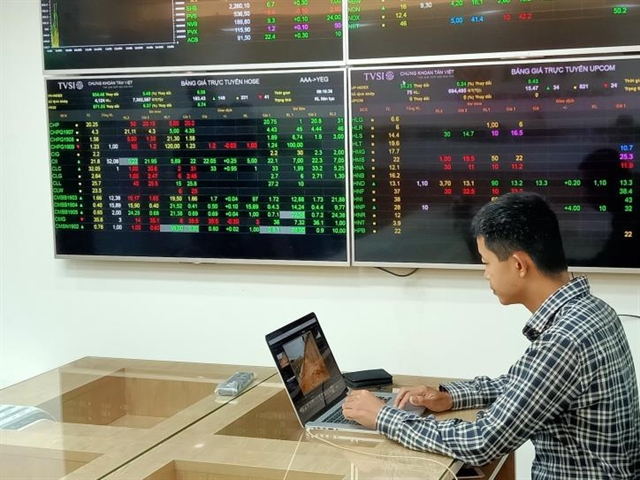
Surpassing Major Milestones In Domestic Stock Accounts Growth
The Vietnamese financial landscape has achieved a historic breakthrough as the total number of registered domestic stock accounts surged past the 12 million mark by the end of January 2026. This impressive growth was fueled by the opening of nearly 245,000 new registrations in a single month, signaling a massive wave of retail interest in the local equity market. According to official data from the Vietnam Securities Depository and Clearing Corporation, the total figure now stands at approximately 12.1 million, reflecting a robust increase of 244,370 compared to the close of the previous year.
Within this vast pool of investors, approximately 12 million stock accounts are held by individual retail participants, while institutional domestic entities account for a smaller but vital portion of 19,301 registrations. This rapid expansion in the investor base has occurred much sooner than policymakers anticipated, effectively shattering the government’s long-term target of 11 million registrations originally set for 2030. The overwhelming participation of the domestic population suggests a structural shift in how Vietnamese citizens manage their personal wealth, moving away from traditional savings toward more dynamic market instruments.
As more individuals navigate the complexities of the exchange, the sheer volume of active stock accounts provides a stable foundation of liquidity that helps the market absorb external shocks. This democratization of finance is a testament to the improving financial literacy across the nation and the increasing accessibility of digital trading platforms. These digital tools allow users to manage their portfolios with ease, further encouraging the younger demographic to enter the fray as long-term wealth builders.
Market Performance And Enhanced Trading Activity Levels
The surge in participation has translated into a dynamic trading environment where the VN-Index successfully closed January at a high of 1,829.04 points, representing a healthy 2.5% gain for the period. While specific indices like the VNAllshare and VN30 saw marginal declines, the overall sentiment remains overwhelmingly positive as the high density of stock accounts drives daily engagement to new heights. On the Hochiminh Stock Exchange, average daily trading volume reached a staggering 1.09 billion shares, with the average daily trading value exceeding 34.7 trillion dong, which is roughly equivalent to 1.3 billion dollars.
These figures represent a massive jump of over 40% in volume and nearly 47% in value when compared to the final month of 2025. Such intense activity demonstrates that the newly opened stock accounts are not merely stagnant numbers but represent active capital flowing into various sectors of the economy. This level of liquidity is crucial for price discovery and provides the necessary depth for larger institutional players to enter and exit positions without causing extreme price volatility.
The interplay between retail enthusiasm and institutional strategy is creating a more sophisticated market ecosystem where information is processed rapidly. Even as domestic participation reaches record levels, the presence of foreign investors continues to grow, with over 50,000 international registrations currently active. This blend of local and global capital ensures that the Vietnamese market remains a key point of interest for emerging market portfolios.
Navigating Foreign Sell Offs And Sectoral Shifts
Despite the record-breaking number of domestic stock accounts supporting the market, foreign investors exerted significant pressure through substantial net sell-offs exceeding 5.5 trillion dong on the HoSE during the month of January. This selling trend was notably concentrated in heavyweight sectors such as real estate, consumer goods, and financial services, which often serve as the primary targets for international capital.
However, the depth provided by the 12.1 million active stock accounts allowed the market to maintain its upward trajectory, effectively absorbing the liquidity released by exiting foreign funds. This resilience marks a turning point for the Vietnamese securities market, as it proves that domestic demand can now act as a powerful counterweight to global capital movements. The government’s developmental strategy is bearing fruit earlier than expected, providing a reliable framework for both retail and institutional investors to navigate these fluctuations.
Analysts suggest that the selling pressure from abroad may be a result of profit-taking or portfolio rebalancing rather than a lack of confidence in the underlying economic fundamentals of the country. As the market transitions into the next quarter, the focus will remain on sustaining this high level of engagement and ensuring that the infrastructure can support the increasing load. The maturity of the domestic investor base is a positive indicator for future sovereign credit ratings and the potential for a market status upgrade.
Expert Analysis Of Retail Resilience And Regional Capital Displacement
The recent milestone of 12.1 million domestic stock registrations represents a structural paradigm shift in the Southeast Asian financial hierarchy, marking Vietnams transition from a frontier-style market to a high-liquidity retail powerhouse. From a professional financial analyst’s perspective, the fact that retail participants now control the vast majority of stock accounts indicates a significant displacement of traditional institutional influence over daily price action.
We observe that the 46.9% surge in trading value within a single month is not merely a cyclical spike but a reflection of deep-seated capital reallocation by the domestic middle class. This retail-led liquidity acts as a formidable buffer against the 5.5 trillion dong foreign net sell-off, suggesting that the Vietnamese market has reached a level of internal maturity where it can maintain its 1,829.04 point level without relying on external capital inflows. The speed at which the 2030 government target was surpassed implies that the current infrastructure must undergo rapid technological scaling.
On a regional basis, Vietnams competitive positioning is being bolstered by this unprecedented domestic participation rate, which exceeds several neighboring ASEAN peers in terms of population percentage engagement. The focus on expanding the number of stock accounts has created a self-reinforcing loop where high liquidity attracts more retail interest, which in turn provides the exit liquidity required for institutional sector rotations. We anticipate that as the 2026 fiscal year progresses, the concentration of selling in real estate and finance by foreign entities will create value opportunities.
This transition of ownership from international to domestic hands strengthens the national economic sovereignty and reduces the vulnerability to global interest rate cycles. Furthermore, the robust daily turnover of 1.3 billion dollars places the Hochiminh Stock Exchange in a prime position for an official upgrade to emerging market status. The synergy between government policy and public enthusiasm is effectively de-risking the Vietnamese investment thesis for long-term holders.
Ultimately, the 2026-2030 period will likely be defined by the professionalization of these millions of individual traders through the rise of local asset management and advisory services. This shift will likely lead to a higher demand for diverse financial products beyond simple equities, such as derivatives and corporate bonds. The ability of the local market to sustain a daily volume of over one billion shares underscores the technical robustness of the underlying exchange systems, providing a clear path for future growth and international integration.