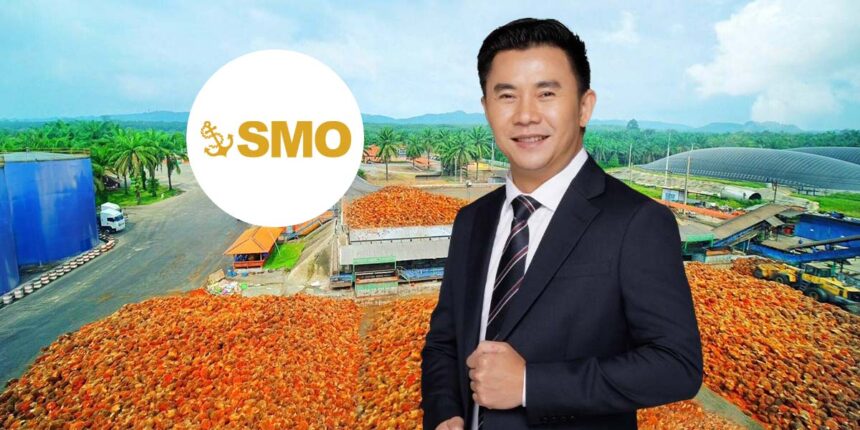
Strategic Growth Targets And Market Performance Of SMO
The stock price of Smothong Group Public Company Limited, known as SMO, experienced a significant upward trend today as investors reacted positively to the company’s ambitious financial targets for the coming year. Trading at THB 3.82 per share with a notable increase of over six percent, the market sentiment reflects a high level of confidence in the management’s vision to reach a revenue milestone of THB 10 billion by 2026.
This optimism is primarily anchored in a substantial expansion of production capacity, which is projected to rise by thirty percent as new facilities come online. The Chief Executive Officer has articulated a clear roadmap that focuses on the crude palm oil plant located in Surat Thani Province, where operations are expected to scale up significantly in the first quarter of 2026.
By increasing the processing rate of fresh palm fruit per hour, the organization is positioning itself to capture a larger share of the agricultural market and stabilize its long term earnings potential. This strategic movement for SMO highlights a proactive approach to industrial scaling, ensuring that the company can meet rising demand while maintaining high operational standards and financial health.
Operational Efficiency And Industrial Capacity Expansion Plans
To sustain its growth trajectory, the group is implementing a multi-year expansion plan that involves the construction of new crushing mills and the modernization of existing machinery. This industrial upgrade is essential for managing the increased volume of fresh palm fruit, which is expected to reach a total processing capacity of approximately 315 tons per hour within the next two years.
The company’s internal projections suggest that these enhancements will not only boost volume but also improve the extraction efficiency of crude palm oil, which remains a vital commodity in the regional energy and food sectors. As SMO integrates these new facilities, it is also preparing for a secondary phase of growth scheduled for 2028 to accommodate future market fluctuations.
This long term perspective is supported by current price levels for crude palm oil, which remain at a favorable height to bolster the company’s financial performance and revenue streams. By aligning its production schedule with the natural harvest cycles in Southern Thailand, the organization can optimize its output and reduce the overhead costs associated with seasonal supply shifts.
The focus on specialized crushing technology and efficient collection yard management allows SMO to maintain a competitive edge, providing a reliable outlet for local farmers while maximizing the throughput of its industrial assets. These steps are crucial for ensuring the company remains a dominant player in the agricultural processing sector while delivering value to its shareholders through increased sales.
Regulatory Oversight And Agricultural Market Stability Measures
The Department of Internal Trade has recently intensified its monitoring of the palm oil sector to ensure that the large supply expected in the coming months does not lead to market congestion or price instability. Authorities have visited production hubs in Surat Thani to coordinate with milling operators and collection yards, emphasizing the importance of advanced machinery maintenance and efficient queue management.
These administrative measures are designed to protect the interests of farmers by ensuring that purchasing processes remain fair and transparent, with prices for oil palm fruit closely aligned with international crude palm oil benchmarks. SMO plays a critical role in this ecosystem, as its expanded capacity helps absorb the influx of fresh fruit and prevents bottlenecks in the regional supply chain.
Furthermore, the provincial industrial office is leveraging digital technology by developing applications that provide real-time data on plant closures and processing availability, helping farmers plan their sales more effectively. Currently, purchase prices remain at a healthy level, ranging between THB 6.50 and THB 7.70 per kilogram depending on the oil quality.
By adhering to these regulatory safeguards and maintaining a minimum price floor during periods of surplus, the government and private sector partners like SMO are working together to foster a sustainable and profitable agricultural economy. This collaboration ensures that the entire value chain remains resilient against external shocks and internal production peaks, supporting long-term regional stability.
In-Depth Analysis Of Local And Regional Market Impacts
The capacity surge initiated by SMO represents a significant structural shift in the Southern Thai palm oil market, specifically by consolidating Surat Thani as the primary industrial hub for oilseed processing. From a financial analysts perspective, the aggressive expansion to 310 tons per hour creates an economy of scale that effectively lowers the marginal cost of production, allowing the firm to maintain profitability even if global crude palm oil prices face downward pressure.
This localized industrial concentration reduces transportation costs for regional farmers, which in turn increases their net disposable income and stimulates secondary economic activity within the province. Furthermore, the strategic focus on the first quarter of 2026 for new capacity allows the company to front-run the anticipated rise in domestic demand for biodiesel as Thailand transitions toward stricter environmental mandates.
The regional impact is further amplified by the companies role in stabilizing the agricultural price floor through its high-volume purchasing power, which acts as a deterrent against speculative volatility. We observe that the integration of digital tools for queue management and maintenance scheduling is a critical innovation that mitigates the risk of systemic bottlenecks during peak harvest periods in April and May.
This technological adoption, coupled with the groups capital expenditure on new factories, signals a maturation of the Thai agricultural sector toward an Industry 4.0 model where data and physical capacity are perfectly synchronized. For investors, this reduces the traditional risk associated with agricultural stocks, as the company is no longer purely reliant on crop cycles but on institutionalized processing efficiency and regulatory alignment.
The regional market is also likely to see an influx of secondary logistics and warehouse investments to support the high-throughput environment created by the groups expansion. Ultimately, the successful execution of the 2026 revenue target will likely trigger a re-rating of the sector, as SMO demonstrates that agricultural processing can be a high-growth, technology-driven business rather than a cyclical commodity play.
This evolution strengthens Thailands competitive position within the ASEAN palm oil market, potentially challenging the dominance of larger regional neighbors by offering more consistent quality and more reliable supply chain integration. The long-term synergy between private expansion and government price controls provides a robust framework for regional fiscal health, ensuring that the wealth generated from palm oil remains an engine for local development.