Strategic Management Of The National State Budget Deficit
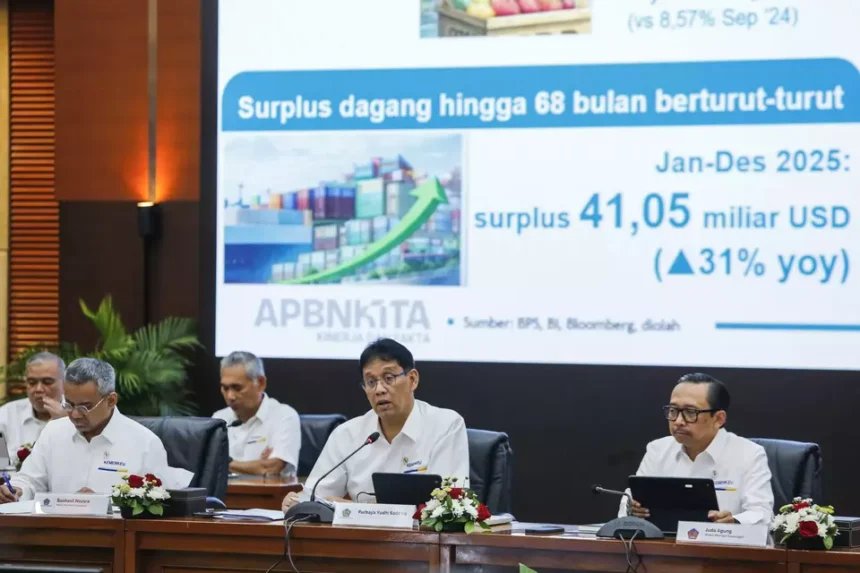
The Indonesian government has initiated the fiscal year with a focus on stability, reporting that the state budget recorded a deficit of 54.6 trillion rupiah as of the end of January 2026. This figure represents approximately 0.21% of the national gross domestic product, a level that remains well within the predefined regulatory corridors. Finance Minister Purbaya Yudhi Sadewa emphasized during a recent press conference in Jakarta that the current fiscal trajectory is designed to act as a critical shock absorber for the economy.
By prioritizing strategic spending in the first month of the year, the administration aims to insulate the domestic market from global volatility while fostering sustainable growth across various sectors. The total revenue for the period reached 172.7 trillion rupiah, which was balanced against a total expenditure of 227.3 trillion rupiah. This managed gap in the state budget is considered a deliberate move to jumpstart priority programs and maintain public purchasing power during the first quarter.
Furthermore, the primary balance recorded a relatively modest deficit of 4.2 trillion rupiah, suggesting that the underlying fiscal health of the nation remains prudently managed. The financing realized by the end of January totaled 105.1 trillion rupiah, which provides the necessary liquidity to safeguard financial market stability. This anticipatory approach to funding ensures that the government can meet its obligations without causing undue stress on the broader economic framework.
Robust Revenue Performance And Tax Collection Efficiency
A detailed look at the income side reveals a significant surge in tax performance, which continues to be the primary engine driving the state budget toward its annual goals. Total tax revenue for January reached 138.9 trillion rupiah, a figure composed of 116.2 trillion rupiah in direct taxes and 22.6 trillion rupiah from customs and excise duties. On an annual basis, overall state revenue grew by 9.5%, with tax collections specifically jumping by a remarkable 30.7% compared to the same period in the previous year.
This substantial increase in the state budget intake signals a dual victory for the government: a strengthening underlying economy and vastly improved efficiency in tax collection mechanisms. While customs and excise saw a contraction of 14%, the strength of non-tax state revenue, which contributed 33.9 trillion rupiah, helped offset these fluctuations. The Finance Ministry views these results as an indicator of rising corporate and individual compliance, as well as a more vibrant commercial environment.
This influx of capital is essential for maintaining the momentum of national development projects and social safety nets. By securing a high volume of revenue early in the year, the government gains greater flexibility in managing its debt and interest obligations. The strategic allocation of these funds ensures that the 2026 fiscal plan can adapt to changing market conditions without sacrificing the core objectives of economic inclusion and infrastructure expansion.
Accelerated Government Spending And Regional Transfers
On the expenditure side, the government has moved aggressively to deploy capital, with total spending rising 25.7% compared to the start of 2025 to support the state budget objectives. The total outlay of 227.3 trillion rupiah was split between 131.9 trillion rupiah in central government spending and 95.3 trillion rupiah in transfers to regional governments. Within the central government’s portion, 55.8 trillion rupiah was allocated specifically to ministries and agencies, while 76.1 trillion rupiah covered non-ministry expenses.
This acceleration of spending at the beginning of the year is an intentional strategy to ensure that priority programs are fully funded and operational from the outset. By front-loading these expenditures, the government can more effectively support purchasing power and drive economic growth in the first quarter. Regional transfers play an equally vital role, ensuring that local administrations have the resources necessary to implement essential services and infrastructure improvements at the grassroots level.
This holistic approach to the state budget ensures that the benefits of national fiscal policy are felt across the entire archipelago, rather than being concentrated in the capital. The Finance Minister noted that this measured and anticipatory financing is crucial for safeguarding liquidity while the government pursues ambitious social and economic targets. As the year unfolds, the administration will continue to monitor global economic indicators to ensure that the fiscal deficit remains under control while keeping the economy on an upward trajectory.
Fiscal Multiplier Analysis And Macroeconomic Market Impact
The January 2026 fiscal performance demonstrates a sophisticated application of counter-cyclical policy aimed at optimizing domestic growth amidst shifting global trade patterns. From a professional financial analyst’s perspective, the 0.21% deficit is not a sign of fiscal distress but rather a strategic utilization of the balance sheet to stimulate early-year demand. The 30.7% surge in tax revenue is particularly noteworthy, as it suggests that the elasticity of collection has improved following recent administrative reforms, providing a significant buffer that de-risks the sovereign credit profile.
We observe that the 25.7% increase in state spending acts as a vital liquidity injection into the real economy, supporting consumption at a time when private investment may be cautious. On a regional basis, the ability to maintain a primary balance deficit of only 4.2 trillion rupiah while aggressively funding regional transfers sets a high bar for fiscal discipline within the ASEAN corridor. The strategic decision to realize 105.1 trillion rupiah in financing early in the year is a prudent anticipatory move that mitigates the risk of potential market tightening in the second half of 2026.
By securing liquidity ahead of time, the government effectively manages its interest expense and ensures a stable environment for the domestic bond market. We anticipate that the multiplier effect of this front-loaded spending will manifest in higher GDP growth figures, potentially leading to a narrowing of the deficit as the year progresses. The integration of non-tax revenue and the resilience of the tax base provide a credible path toward long-term sustainability. Ultimately, the 2026 narrative is one of managed expansion, where the state serves as a reliable anchor for economic activity while maintaining a transparent approach to deficit management.