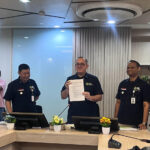
Indonesia Nears Deal with Freeport on Final Divestment for Majority Stake
Indonesia is planning to conclude negotiations with Freeport-McMoRan Inc. on a fresh round of divestment of its local unit by early October.
This significant move is strategically aimed at substantially boosting state control over one of the world’s most lucrative copper and gold mines.
Energy and Mineral Resources Minister Bahlil Lahadalia announced on Friday that talks with the US-based miner are entering their final and most crucial stretch.
The government is actively seeking to raise its ownership stake in Freeport Indonesia (PTFI) to a majority position exceeding 61 percent.
The state currently holds 51 percent ownership through the mining holding company Mineral Industri Indonesia, widely known as MIND ID.
Bahlil told reporters in Jakarta, “I plan, maybe in early October, we will hold final negotiations with Freeport.”
He clarified the targeted size of the additional share acquisition, stating, “The figure hasn’t been finalized, but it will be above 10 percent.
God willing, closer to 12 percent.”
This impending additional divestment is a non-negotiable condition for Freeport’s request to extend its mining license for the massive Grasberg operation beyond its current expiration in 2041.
A regulation issued in 2024 requires the company to sell at least 10 percent of new, undiluted shares to Indonesian state entities as a prerequisite for securing the long-term renewal of its operational rights, a process that is now culminating in the final talks with Freeport.
Accelerating License Extension to Ensure Production Continuity
The government is concurrently preparing to extend Freeport’s mining permit for a full 20 years, to 2061, a necessity driven by the long preparation times required for sustained exploration and underground mining, with President Prabowo Subianto pushing for an expedited resolution.
Minister Bahlil stressed the urgent need to settle the divestment agreement quickly so that Freeport can immediately continue its long-term exploration and extensive underground mining projects.
These complex projects typically demand a substantial preparation timeline, often requiring between 10 to 16 years of work before full production can commence.
Without securing this extension, Bahlil issued a stark warning that Grasberg’s output would likely peak around 2035, before experiencing a sharp and inevitable decline.
Such a scenario would severely erode state revenues, lead to job losses, and significantly harm regional growth in Papua.
To proactively avert this negative economic outcome, the Indonesian government is preparing the necessary framework to extend Freeport’s mining permit by two decades, lasting until 2061.
The urgency of the matter is underscored by the instruction from President Prabowo Subianto to officials to accelerate the negotiation process and finalize the divestment terms promptly.
Bahlil also indicated that the valuation of the new shares would be “very cheap,” arguing that Freeport’s book value of assets has already been largely depreciated over decades of operation.
Historical Context and Economic Nationalization Efforts
Indonesia’s sustained efforts to significantly expand its stake in the Freeport operation follow decades of intense tension and negotiations over the company’s role and the equitable distribution of benefits from the lucrative resource extraction in the Papua region.
The historical relationship began in 1967 when the company first signed a contract granting it exclusive mining rights, which was subsequently extended in 1991 to run until 2021.
Amid mounting public and political criticism over the limited state benefits derived from the operation, Jakarta intensified its efforts, pushing for fundamental contract changes starting in 2009.
These efforts culminated in a landmark 2018 deal that legally compelled Freeport to divest majority ownership, with the state purchasing its 51 percent stake for $3.85 billion, and committed the company to building essential processing facilities or smelters within the country.
The current round of negotiations aims to raise the state’s ownership further, securing greater national control and maximizing economic returns.
Bahlil stated his intention: “I want it to be given at the lowest possible price to the government, in this case Papua’s BUMD and MIND ID,” indicating a clear desire to allocate part of the future stake to Papua’s regional-owned companies starting in 2041, further decentralizing and nationalizing the economic benefits of the Freeport operation for the long term.
This push is part of a broader national strategy to gain more control over key mineral assets.