Singapore’s MetaOptics Set for SGX Debut, Betting on Scalable Metalens Technology
When Mark Thng first launched MetaOptics Technologies’ operations in June 2021 from a minuscule office in Roxy Square, the rent was a mere S$300 a month, yet the space could barely accommodate him and his deputy chief executive officer, Aloysius Chua.
Thng, now the CEO and executive chairman of the semiconductor optics startup he founded, described those early days as “very difficult” in a recent interview.
Despite such humble beginnings, MetaOptics quickly succeeded in carving out a specialized and valuable niche for itself.
Thng asserts that even as a modest player from the “small red dot” of Singapore, the company possesses what the global technology market critically needs: metalenses—and, more importantly, the proprietary ability to manufacture them at scale.
This capability has become the company’s defining competitive advantage.
Metalenses are revolutionary, ultra-thin optical devices that offer a wide and diverse range of applications, including integration into smartphones, advanced bio-imaging equipment, wearables, and displays for augmented reality (AR) and virtual reality (VR) systems.
The company’s name itself reflects this core product focus.
Thng explained that “MetaOptics” was carefully chosen as a generic yet representative term for its technology, and the brand identity is further strengthened by a distinctive logo inspired by the actual structure of a metalens, which is composed of countless microscopic cylinders of varying diameters.
Now four years into its operation, the startup has not yet achieved profitability but is nevertheless set to make its public debut on the Singapore Exchange’s (SGX) Catalist board.
Thng is confident in the move, stating, “We have certain capabilities that the stock exchange and others are looking for.”
He believes MetaOptics is currently the sole company in Singapore dedicated to the development of metalenses.
IPO Strategy and Backing from Key Industry Players
MetaOptics is pursuing its initial public offering (IPO) to secure essential funding for its next phase of growth and to gain credibility, with the goal of turning profitable within the next two years, leveraging strong industry backing.
The startup aims to raise a total of S$6 million in gross proceeds from its IPO, which will involve the issuance of 30 million placement shares at a fixed price of S$0.20 each.
The formal offer document was officially registered on Monday, September 1, with trading expected to commence shortly thereafter on September 9.
Once listed, the company will have more than 235 million outstanding shares, translating to an estimated market capitalization of about S$47.2 million.
Zico Capital is managing the process as the sponsor, issue manager, and placement agent for the IPO.
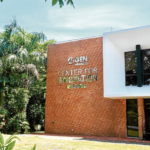
MetaOptics operates from the JTC LaunchPad, benefiting from critical support provided by government agencies such as the Agency for Science, Technology and Research (A*STAR)— which notably holds a 6 per cent stake in the company— and Enterprise Singapore.
Despite its ambitions, the company maintains a lean team, consisting of just two metalens designers, one system designer, a software engineer, Chief Financial Officer Chu Wee Liat, Deputy CEO Chua, and CEO Thng himself.
However, the startup benefits from strong financial and industry backing.
Its current shareholders include MMI, a Singapore-based producer of hard-drive components, and Metasurface Technologies, a precision-engineering company listed in Hong Kong.
The loss-making company posted a net loss of S$2.3 million on revenue of S$79,440 for the 2024 financial year (FY2024), with its net loss standing at S$706,391 for the first quarter of FY2025.
Thng projects that it may take two more years for MetaOptics to achieve true profitability, though the IPO is expected to generate profits indirectly by unlocking new opportunities.
Innovation, Miniaturization, and Future Expansion Plans
The company’s strategic shift to chip-making processes has allowed it to capitalize on miniaturization, a core strength that positions its metalenses as essential components for the exponential growth projected in the AR and VR markets.
Thng explained that the decision to go public was primarily driven by the need to establish corporate credibility and secure access to greater resources.
He and Chua had considered an IPO from the very beginning, even exploring a listing on Nasdaq in the United States, but ultimately chose Singapore to remain close to their home base, local networks, and support system.
Thng views the local investment scene as a major challenge, lamenting that the lack of asset managers willing to support startups limits opportunities for sponsors and investors, potentially affecting the broader equities market.
“We hope… the listing will give us a lot more leverage to raise funds,” he said, adding that being listed will enable the company to collaborate with a wider range of partners, and importantly, strengthen its governance and operational oversight.
MetaOptics intends to use the IPO proceeds primarily for product development, crucial research and development (R&D) efforts, and establishing strategic partnerships.
Between 20 to 30 per cent of the funds will be allocated towards overseas expansion, though Thng declined to specify the locations, confirming only that the focus will be on the high-growth Asia-Pacific region.
The MetaOptics journey began with the idea of developing a customized direct laser writer to offer a cost-effective way for companies to enter the industry.
However, in its second year, the company made a strategic pivot to producing metalenses through a standard chip-making process.
The maturity and reliability of this manufacturing method allow the company to produce higher-quality products more efficiently, including a fisheye lens with a 4 mm diameter and various other lenses ranging from 0.5 mm to about 1 mm in diameter.
Thng highlights “Miniaturisation is our strength,” explaining that a metalens is a form of semiconductor optics that allows miniaturization far beyond what conventional, polymer-based lenses can achieve.
Unlike polymers, which are prone to degradation and heat sensitivity, semiconductor optics are significantly more durable and heat-resistant, making them the ideal choice for integration into a wide range of advanced devices.
With exponential growth expected in the AR and VR markets over the next two years, MetaOptics is strategically positioning its metalenses for integration into these next-generation devices, which is actively shaping the company’s future market profile.