Evolving Malaysian Tourist Trends in Southern Thailand
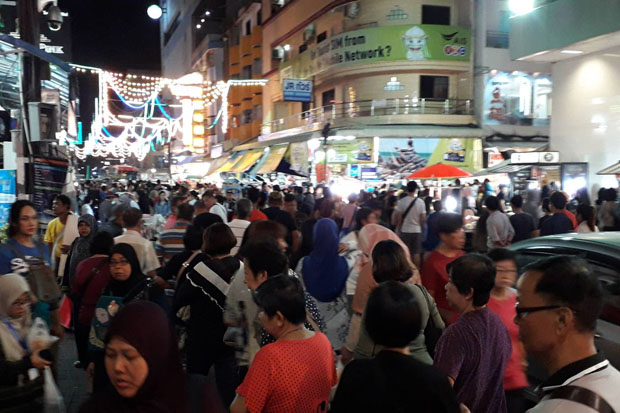
While Hat Yai city has traditionally been a consistent magnet for Malaysian holidaymakers during peak periods, travel industry experts are now observing a distinct and accelerating shift as more visitors explore new and diverse destinations throughout Southern Thailand.
Travel industry executives have noted that Malaysian tourists visiting the region are increasingly looking beyond the familiar offerings of Hat Yai, which traditionally centered on services like massage centers, local food stalls, and other conventional tourist activities.
Aida Oujeh, president of the Thailand-Asean Halal Trade and Tourism Association, shared with the New Straits Times that a growing number of Malaysians are now arriving in Southern Thailand with their families, and they are actively seeking out different, more adventure-oriented leisure activities suitable for a family-based holiday experience.
She was quoted as saying, “If before the focus was only on food and massage centres, today the trend is family-based tourism, with choices centred on leisure activities,” reflecting a significant evolution in travel preferences.
The change is steering visitors toward destinations that offer unique experiences, rather than just the standard fare.
Typical entry points and destinations for Malaysians visiting Southern Thailand have historically included Hat Yai district in Songkhla province and Sungai Kolok in Narathiwat province, but this concentration is now dispersing.
This behavioral shift is prompting local operators to diversify their offerings to capture this new wave of tourism demand, moving away from relying solely on established city centers.
New Destinations and the Rise of Independent Travel
The demand for fresh experiences is driving Malaysian travelers toward new, adventure-focused destinations, while a move towards independent travel methods is fundamentally changing how visitors explore Southern Thailand.
Aida Oujeh cited several emerging destinations that are gaining traction with Malaysian families seeking adventure beyond the traditional hotspots of Southern Thailand.
These include the picturesque Khao Kram waterfall in Phatthalung province, where tourists can engage in thrilling all-terrain vehicle (ATV) rides, and the coastal province of Satun, which offers opportunities to pedal kayaks along serene rivers and explore natural attractions.
This shift underscores the tourists’ growing desire for direct engagement with Thailand’s diverse landscape and natural beauty.
In parallel with the change in location, there is also a major transformation in travel logistics.
Witthaya Lim, a guide and founder of the Songkhla Guide Association, informed the Bangkok Post that an increasing proportion of Malaysians are visiting Thailand as independent tourists.
This transition is largely enabled by digital technology; modern travelers no longer feel the need for traditional services from guides and tour agencies because they can efficiently book their accommodation and make their own arrangements online.
This allows for greater flexibility and the ability to craft personalized itineraries that include unique locations throughout Southern Thailand.
The Ministry of Tourism and Sports has confirmed the importance of this market, noting that Malaysians have constituted the largest group of foreign visitors to Thailand so far this year, slightly surpassing the number of tourists from China.
Economic Impact and Continued Market Dominance
The sheer volume of Malaysian visitors, particularly during long holidays, continues to generate a significant economic boost for Southern Thailand, confirming the country’s position as a dominant and essential source market for the regional tourism economy.
The Malaysian travel flow is heavily concentrated around Southern Thailand, with the vast majority of travelers entering the country through the southern checkpoints located in provinces like Songkhla and Narathiwat.
This pattern of arrival highlights the sustained economic reliance of the southernmost provinces on this essential neighbor.
The recent period, which included a long holiday encompassing a school break and Malaysia Day on September 16, was anticipated to generate a massive influx of tourists.
Pol Lt Col Sakarin Anusamansakul, deputy chief of the Tourist Police Region 7 Office, estimated that approximately 200,000 visitors from Malaysia would travel to Southern Thailand during this week-long celebratory period, according to reports from the Bernama news agency.
This substantial number translates directly into a massive injection of revenue into the local economy.
Sitthipong Sitthiphataraprabha, president of the Hat Yai Songkhla Hotel Association, provided a concrete measure of this impact, stating that at least 60,000 Malaysians had chosen Songkhla for their stay over the single week.
These visitors were collectively expected to spend a minimum of 300 million baht during their vacation, demonstrating the immense and immediate economic benefit that Malaysian tourism provides to the local hotels, restaurants, and leisure operators throughout the region.