Minister Purbaya Confident in Achieving Indonesia’s 5.5% Growth Target
Finance Minister Purbaya Yudhi Sadewa recently expressed strong confidence and unwavering optimism that Indonesia’s economic growth is firmly anticipated to reach a robust 5.5 percent by the end of 2025, a crucial goal significantly underpinned by positive performance across various key sectors, with a particular focus on the rebounding property market.
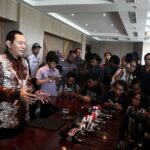
Speaking to journalists at the Indonesian Presidential Palace on Tuesday, September 30, Minister Purbaya confidently affirmed his outlook, stating that “growth is happening across the board.”
He specifically highlighted that a guaranteed factor driving this momentum will be a rapid surge in public spending, which he believes will ensure the property sector performs exceptionally well and acts as a central catalyst for the economy.
To actively facilitate this expected outcome and stimulate the flow of capital, the government has strategically encouraged banks to lower credit and financing interest rates by injecting a substantial Rp200 trillion (approximately US$11.9 billion) in government funds sourced from Bank Indonesia into five major state-owned financial institutions: Bank Mandiri, BNI, BRI, BTN, and BSI.
The minister is highly confident that this massive liquidity injection will incrementally find its way into the property sector.
“I believe this will gradually flow into the property sector, where there’s a clear guarantee when people borrow. It hasn’t reached the sector yet, but I don’t think it will be long before it does,” Minister Purbaya stated, emphasizing the expected speed of impact.
This move is designed to create optimal financial conditions for borrowers and developers alike.
Targeted Liquidity Injection to Stimulate Property Demand
The calculated placement of government funds is a precise, targeted strategy intended to stimulate lending and borrowing, which will directly energize the property market and, in turn, generate increased demand across a wide range of related sectors, thereby broadly accelerating national economic growth.
Minister Purbaya elaborated on the vital “multiplier effect” that the government expects to be triggered once the large disbursed funds fully permeate the property sector.
He anticipates that the resulting surge in credit and a higher volume of real estate transactions will immediately lead to a sharp increase in the purchase of building materials, most notably cement, which serves as a major indicator of construction activity.
In addition, he projects that household consumption, specifically within the high-volume food and beverage sectors, will also experience a corresponding and significant rise as overall economic activity intensifies.
The minister stressed that his approach is to initiate a holistic, system-wide stimulus.
He clarified his non-selective method, saying, “So, all sectors should experience faster growth. This is what we’re trying to integrate into the system. It’s not selective; it’s up to the banks and the market to decide.”
The role of Finance Minister Purbaya, he explained, is not to dictate specific market outcomes but to create the most conducive regulatory and financial environment possible.
“I’m not as smart as the economic actors when it comes to determining what works best for them. What I do is create conditions that allow them to optimize the resources and pursue the businesses they want,” he explained.
This philosophy of facilitating favorable conditions through targeted liquidity and lower interest rates is a foundational driver for reaching the national growth target.
Coordinating Minister Highlights Positive Fiscal Momentum
The optimistic forecast and strategic rationale shared by Minister Purbaya were strongly reinforced by Coordinating Minister for Economic Affairs, Airlangga Hartarto, who separately highlighted parallel positive trends in government spending, investment inflows, and the release of substantial fiscal stimulus.
In a separate session held at the Presidential Palace, Coordinating Minister Airlangga Hartarto voiced his own firm optimism regarding the favorable economic trend expected to materialize by the close of 2025.
He outlined a trilogy of specific factors that buttress this positive forecast, confirming the coherent nature of the government’s economic strategy.
“First, we see that government spending will be positive, which is good,” Hartarto stated, emphasizing the continuous role of public expenditure as a stable demand driver.
“Second, we’re continuing to monitor the inflow of investments as planned,” he added, pointing to the crucial contribution of both foreign and domestic capital formation to the country’s GDP.
The third, and most immediate, factor cited by the Coordinating Minister was the deliberate injection of significant short-term stimulus into the economy.
“Third, the stimulus released in the fourth quarter amounted to nearly US$2 billion, or around Rp30 trillion (approximately US$1.79 billion), which will certainly be very helpful,” the minister noted.
This decisive fiscal stimulus, coupled with the structural liquidity measures championed by Minister Purbaya and the enduring focus on attracting high-quality investment, constitutes a comprehensive governmental strategy designed to ensure that the Indonesian economy confidently meets its ambitious 5.5 percent growth target before the year concludes.