New Southern Metropolis Aims for $114 Billion Economic Powerhouse Status
The newly formed metropolis, created by the strategic merger of Ho Chi Minh City, Bình Dương, and Bà Rịa–Vũng Tàu, is projecting a formidable Gross Regional Domestic Product (GRDP) of VNĐ2.97 quadrillion (US$114 billion) in 2025.
This aims to firmly establish the southern metropolis as an aspiring regional powerhouse with significant global influence.
Experts have aptly described this consolidation as uniting “three complementary economic engines” that collectively form a dynamic and self-sustaining urban ecosystem in the South of Vietnam.
Ho Chi Minh City anchors the massive region by serving as the indispensable financial and commercial hub, housing major banks, leading securities firms, large insurance companies, and a diverse range of professional service providers essential for a global city.
Supplementing this financial core, Bình Dương contributes a strong base of advanced manufacturing capabilities and a proven track record of successfully attracting substantial foreign direct investment (FDI).
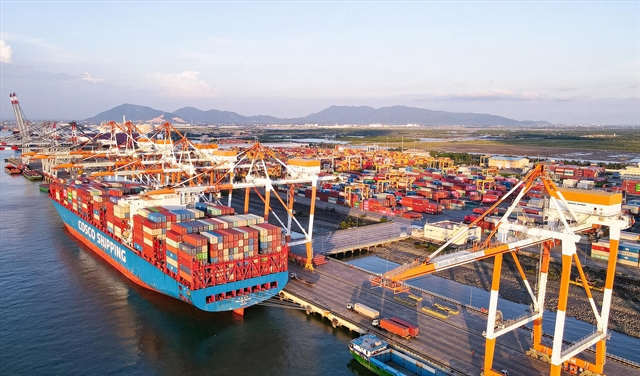
Completing the strategic triangle, Bà Rịa–Vũng Tàu provides world-class deep-sea port infrastructure, a diverse and reliable energy portfolio spanning oil, gas, and renewables, and significant coastal tourism potential.
According to Trần Thị Mỹ Xuân from Thủ Dầu Một University, this powerful merger is designed to create a strategic “urban–service–innovation triangle” vital for propelling economic growth across the entire Southern region of Vietnam.
This ensures that the southern metropolis can compete effectively with major cities across Southeast Asia.
Addressing Structural Bottlenecks and Logistics Inefficiencies
Despite the immense economic potential inherent in uniting these three growth engines, structural bottlenecks pose a significant threat to the region’s ambitious goals of luring major foreign investors, multinational corporations, and large financial groups.
A primary concern raised by experts is the issue of fragmented urban planning following the merger, which has led to overlapping functions and a disjointed spatial development pattern.
This lack of cohesion directly undermines regional connectivity, diminishes logistics efficiency, and prevents synergy among critical assets like ports, industrial zones, and transport networks.
The resulting inefficiencies are starkly reflected in the high national logistics costs, which consume an estimated $16-17$ per cent of Vietnam’s GDP.
This figure dramatically exceeds the costs seen in regional competitors, such as $11$ per cent in Japan, $8$ per cent in Singapore, $13$ per cent in Malaysia, and $13$ per cent in Indonesia.
Furthermore, the limited development of multimodal transport links—spanning sea, road, rail, and air—coupled with the low level of digitalization across supply chains, severely exacerbates these existing inefficiencies.
Persistent traffic congestion and overburdened infrastructure further erode the competitive edge of the southern metropolis.
A severe shortage of highly skilled workers in cutting-edge fields such as big data, artificial intelligence (AI), international finance, and Logistics $4.0$ also significantly hampers the region’s ability to achieve high-quality growth and acts as a deterrent to foreign investment.
Three Core Breakthroughs for Mega-City Transformation
Achieving the coveted status of a Southeast Asian mega-city and securing a spot among the world’s top $100$ most livable urban centers hinges on strategic breakthroughs across key sectors.
Cao Minh Nghĩa from the Ho Chi Minh City Institute for Development Studies emphasizes the necessity of profound advances in finance, banking, insurance, e-commerce, luxury tourism, logistics, health care, and education.
The ongoing digital transformation and the Fourth Industrial Revolution offer the southern metropolis unprecedented opportunities to develop advanced digital services, fintech, e-commerce, and other high-tech sectors, including AI, blockchain, and the Internet of Things (IoT).
With a combined seaport capacity projected to reach $32.7$ million TEUs annually once all planned projects are completed, the newly formed region is poised to rival major regional ports, including Singapore’s $37$ million TEU capacity.
This will solidify its indispensable role in global value chains, particularly in areas like IT outsourcing, cross-border financial services, logistics, and supply chain management.
Experts recommend focusing on three core breakthroughs: comprehensive institutional and policy reform to streamline governance, significantly enhanced infrastructure connectivity to dissolve bottlenecks, and the development of a diversified, high-quality service ecosystem.
Major projects already underway, such as the new Terminal T3 at Tân Sơn Nhất International Airport, the Long Thành International Airport in neighbouring Đồng Nai province, and the completion of Ring Roads 3 and 4, are set to generate huge growth momentum.
These projects will define the path of the southern metropolis to global mega-city status, with the world-class Cái Mép-Thị Vải port complex serving as its maritime anchor.