

HCM City Aims to Become a Premier International Shopping Destination
HCM City, Việt Nam’s primary economic engine, is actively rolling out an ambitious and multi-faceted plan designed to transform itself into a premier international shopping destination by 2030.
As the country’s crucial gateway for trade, finance, and innovation, the city aims to leverage its inherently dynamic retail market, its robust and strategic logistics network, and its vibrant tourism sector to firmly anchor its service economy.
This strategic move is intended to help HCM City compete directly with established regional shopping powerhouses like Bangkok, Singapore, and Kuala Lumpur.
Trade and services collectively remain the city’s foundational economic pillars, currently accounting for approximately 60 percent of its entire economy.
Despite prevailing global challenges, such as a noticeable slowdown in international demand and a highly volatile logistics situation worldwide, the domestic market in HCM City has shown impressive and sustained resilience.
In the first nine months of 2025 alone, the total value of retail sales and services in the city saw a significant rise of 15.3 percent year-on-year, with the full-year growth projection expected to reach an even higher 18 percent.
The city’s Department of Industry and Trade forecasts that the total turnover for the full year will be around VNĐ1.68 quadrillion (US$66.4 billion).
The consumption mix reflects the evolving demographics: food, beverages, and essential goods account for roughly 31 percent of consumption, while household equipment and electronics make up over 21 percent, a clear sign of the rising spending power among the city’s young, digitally-aware, and tech-savvy population.
Strengthening Supply Chains and Integrating Transport Networks
Local firms in HCM City have demonstrated remarkable adaptability by quickly adjusting to post-COVID supply disruptions.
They have achieved this by strategically diversifying their import sources, making significant investments in advanced cold-chain logistics, and aggressively expanding their e-commerce capabilities.
Major retail powerhouses operating in the region, such as Saigon Co.op, Wincommerce, AEON, Central Retail, and MM Mega Market, are actively broadening their physical and digital networks.
Concurrently, they are collaborating closely with city authorities to implement strategies to stabilize prices and guarantee a steady supply of essential goods.
Through strengthening the critical links between producers and distributors, the city aims to reinforce its entire supply chain infrastructure, vigorously promote domestic products, and secure a sustainable base for future economic growth.
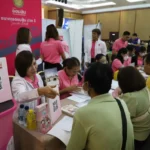
The city’s long-running Price Stabilisation Programme, now successfully running in its 23rd year, remains a vital tool for maintaining market balance, especially during major shopping seasons like the Lunar New Year.
In 2025, more than 5,000 retail outlets, supermarkets, and convenience stores are participating, collectively offering substantial 20–50 percent discounts on over 40,000 products.
This program is instrumental in stabilizing prices for essential goods like rice, cooking oil, meat, vegetables, and dairy, thereby easing inflationary pressure and providing necessary support to low-income households.
Beyond traditional promotions, HCM City is strongly encouraging green and responsible consumption by promoting the use of biodegradable packaging, advocating for a reduction in plastic waste, and urging the adoption of eco-friendly logistics practices by all retailers.
Connecting Commerce with Transit and Building a World-Class Ecosystem
Tourism and transport development are now primary drivers behind the retail expansion in HCM City.
The city has set ambitious targets, aiming to attract 10 million international and 40 million domestic visitors this year, with tourism revenues projected to achieve sustained double-digit annual growth.
Shopping experiences are increasingly being woven directly into official tour packages, and high-end malls are actively cooperating with travel agencies to design tailor-made “shopping tours” for affluent tourists.
Iconic downtown streets such as Đồng Khởi, Nguyễn Huệ, and Lê Lợi are currently undergoing upgrades to seamlessly blend modern retail, dining, and diverse entertainment options.
Furthermore, new commercial centers are rapidly emerging in surrounding areas like Thủ Đức City and along major arteries such as Nguyễn Văn Linh and Phạm Văn Đồng boulevards, effectively decentralizing and expanding shopping zones beyond the traditional downtown core.
A central element of HCM City’s vision is the strategic connection of the retail sector with the public transport network to vastly enhance access for both local residents and international visitors.
The impending completion of Metro Line No 1, which will link the historic Bến Thành Market with Suối Tiên Theme Park, is considered pivotal in shaping the city’s future urban commerce landscape.
The plan involves integrating metro stations directly with nearby shopping complexes, public plazas, and pedestrian areas to craft seamless retail experiences.
Major stations like Bến Thành, Opera House, and Thảo Điền are expected to be transformed into “transit shopping hubs,” allowing passengers to effortlessly combine commuting with leisure shopping in a single trip.
This transit-oriented development model, which is a global trend, is anticipated to reduce congestion, cut carbon emissions, and promote efficient land use by concentrating high-density, mixed-use zones around key transport corridors.
The city is also upgrading its financial, IT, healthcare, and logistics infrastructure, emphasizing that success requires balancing high-end retail with the modernization of traditional markets like Bến Thành to preserve local identity.