Indonesian Government Postpones Minimum Wage Announcement for New Framework
The Indonesian government has made the decision to postpone the announcement of the 2026 minimum wage, a declaration originally slated for Friday, November 21, as required by existing regulatory mandates.
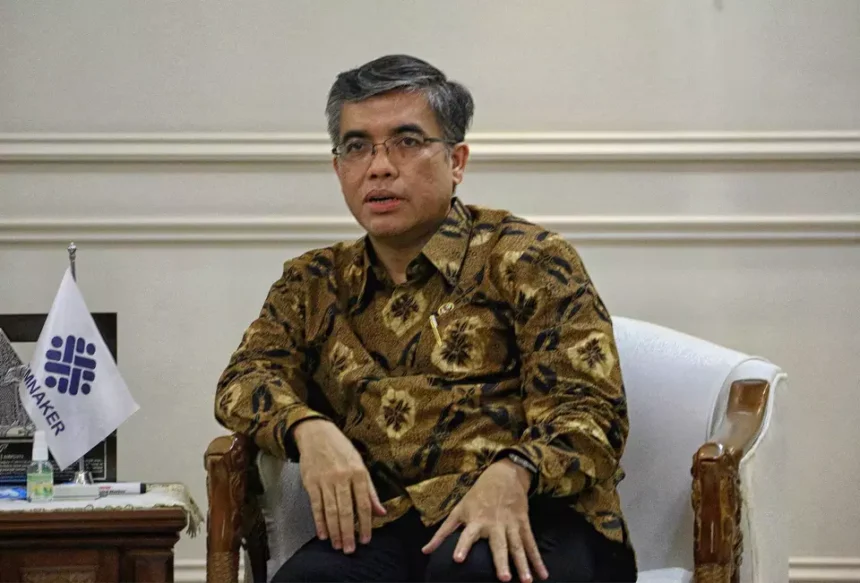
This significant delay, announced by Minister of Manpower Yassierli on Thursday, stems from the government’s dedicated effort to prepare a completely new wage-setting framework.
This upcoming framework will prioritize the establishment of a genuinely fair and decent compensation standard for workers nationwide, in direct compliance with a recent mandate issued by the Constitutional Court.
Minister Yassierli confirmed that a specialized team is being formed to undertake the complex task of rigorously formulating and estimating the specific criteria that define a “decent living” across Indonesia’s diverse regions.
The forthcoming revised regulation will eliminate the long-standing November 21 deadline for the determination of the minimum wage for the subsequent year, allowing the government the necessary time to establish a more equitable and sustainable system.
The Manpower Ministry has already established a special team explicitly tasked with defining these new standards and accurately estimating the comprehensive cost of achieving a decent living standard across different provinces.
This replaces the outdated Government Regulation No. 36/2021 on Wages, which had been criticized for its rigid approach.
This policy shift is intended to be a foundational change, moving the wage-setting process toward a more responsive and regionally appropriate model, thereby enhancing social economy stability.
Decentralization and Fair Compensation: The Core of the New Wage Policy
A central feature of the forthcoming regulation is the significant increase in authority granted to regional wage councils.
These councils will now possess greater power to issue formal and influential recommendations directly to their respective governors during the final minimum wage decision-making process.
Consequently, future wage adjustments will fundamentally no longer rely on a single, uniform national reference figure, which often failed to reflect localized economic realities.
Instead, the revised minimum wage will be determined based on a more granular assessment of the specific economic conditions, inflation rates, and growth levels prevailing within each individual province, city, and regency.
Minister Yassierli elaborated that this decentralization is essential, stating that the new government regulation on wages “is expected to become an important instrument to achieve a more equitable wage structure and one that is responsive to regional circumstances.”
This policy transformation is a direct attempt to resolve long-standing issues of wage disparities.
It aims to ensure that the minimum wage in high-cost urban centers accurately reflects the required cost of living, while simultaneously ensuring that adjustments in lower-cost areas remain sustainable for local businesses and continue to guarantee a decent living standard for workers across the archipelago.
The Ministry is effectively shifting the approach from a one-size-fits-all model to one that acknowledges Indonesia’s vast economic heterogeneity, which is crucial for fostering sustainable and fair labor practices in the country’s diverse Economy.
Addressing Wage Disparities and Ensuring Decent Living Standards Nationally
Minister Yassierli emphasized that the overarching goal of this pivotal policy shift is twofold: to systematically address the long-standing wage disparities that have affected the Indonesian workforce and to provide absolute certainty regarding the achievement of decent living standards for workers in every region nationwide.
By giving greater weight to the recommendations of regional wage councils and decoupling the wage determination from a singular national formula, the government is moving towards a more targeted and nuanced approach to labor Economy.
The previous system often led to the minimum wage being either insufficient for workers in expensive cities or overly burdensome for small and medium enterprises in regions with lower economic output.
The new framework seeks to harmonize the interests of labor and industry by grounding wage decisions in verifiable local data pertaining to the cost of decent living and regional economic capacity.
This comprehensive method ensures that the final minimum wage determination is not only fair for employees but also financially sustainable for businesses, supporting overall job creation and economic growth.
This commitment to decentralization and data-driven policymaking is positioned as a key instrument in fostering a more equitable wage structure, reinforcing the government’s dedication to enhancing the welfare of its vast working population while maintaining economic stability.
Market Impact and Investment Implications of Wage Policy Uncertainty
The postponement and the intention to implement a new decentralized minimum wage framework introduce short-term uncertainty for the Indonesian Business sector, particularly for labor-intensive industries like textiles, manufacturing, and retail.
These industries operate on thin margins and rely on predictable labor costs.
While the long-term goal of fair and decent compensation is positive for domestic consumption, the interim period creates a policy vacuum.
This forces companies to project potential labor cost increases without a clear formula, which can dampen short-term Investment decisions, especially capital expenditure planning.
The decentralization from a single national reference to regional economic capacity will have a bifurcated effect.
Labor costs will likely rise faster in major urban and industrial hubs (Jakarta, Surabaya, parts of West Java) where the current minimum wage inadequately covers the cost of a decent living, putting pressure on firms operating there.
Conversely, the stability or slower rate of increase in less developed regions may enhance their attractiveness for relocation or new Investment in low-cost manufacturing.
This potentially addresses regional disparity but also creates a fragmented labor market.
For Investment and Finance analysis, this shift necessitates segment-specific valuation adjustments.
It rewards firms that have already invested in automation or high-productivity models, while increasing the labor cost risk premium for purely labor-intensive exporters, thereby reshaping the competitive landscape of the Indonesian Economy.