PM Calls for Finalized Nghi Son Expansion Plan from Joint Venture
Prime Minister Pham Minh Chinh has issued a direct instruction to Petrovietnam to collaborate closely with all joint venture partners and swiftly finalize a consolidated, comprehensive plan for the Nghi Son Refinery and Petrochemical LLC project. This critical document is required to be submitted for government review before the deadline set for December 2025, underscoring the urgency placed on resolving outstanding issues and advancing the refinery’s future.
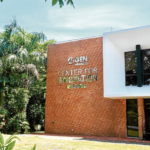
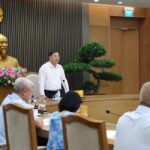
During a key official visit to Kuwait on November 18, the Prime Minister held a pivotal meeting with the Kuwait Petroleum Corporation (KPC), the primary international partner in the venture, where he strongly advocated for both the expansion of the existing refinery and the establishment of a strategic bonded fuel storage facility within Vietnam. He emphasized that the Nghi Son project, located in the Nghi Son Economic Zone of Thanh Hoa province, is not merely a commercial undertaking but a “key symbol of bilateral investment,” reflecting the deep and enduring economic ties between Vietnam and Kuwait.
He further encouraged KPC to work collaboratively with their Vietnamese counterparts to resolve any pending operational and Finance issues by adopting a framework based on “harmonised interests and shared risks,” ensuring a balanced approach to the project’s long-term sustainability. The call for expansion is directly tied to Vietnam’s strategic need to enhance its energy security and secure a stable supply of refined petroleum products for its rapidly growing Economy, making the successful resolution and advancement of this project a national priority.
Deepening Vietnam-Kuwait Energy Cooperation and Crude Supply
The Prime Minister’s discussions with the Kuwait Petroleum Corporation extended beyond the immediate concerns of the Nghi Son refinery, aiming to secure long-term, strategic energy cooperation. PM Chinh specifically called upon the Kuwaiti side to maintain a stable and reliable supply of crude oil to Vietnam, emphasizing the need for favorable pricing terms to support Vietnam’s downstream Businesses and national Economy.
He also encouraged KPC to explore new and collaborative Investment projects in the rapidly evolving sectors of green and environmentally friendly energy, aligning future bilateral cooperation with global sustainability trends. Separately, in a high-level meeting with Oil Minister Al-Roumi, PM Chinh proposed the formal creation of a joint task force dedicated specifically to resolving the remaining pending issues at the Nghi Son project.
Furthermore, the meeting outlined a roadmap for significantly expanding collaboration across the entire oil and gas value chain. This expanded scope of cooperation includes crucial areas such as upstream activities like exploration and production (E&P), securing stable crude supply, product trading and logistics, specialized maintenance and technical services, and human resource training to ensure a skilled Vietnamese workforce.
The existing $9-billion Nghi Son Refinery and Petrochemical LLC, which commenced commercial operations in late 2018, currently has a processing capacity of 200,000 barrels of crude oil per day (equivalent to 10 million tonnes per year), and primarily processes Kuwaiti crude oil, underscoring the deep interdependence of the two nations’ energy Finance sectors.
Joint Venture Structure and Strategic Expansion Rationale
The Nghi Son Refinery and Petrochemical LLC project operates under a complex joint venture structure, reflecting the significant international Investment required for a facility of this scale. The project’s ownership is distributed among several key players: PetroVietnam holds a 25.1 per cent stake, Kuwait Petroleum International and Japan’s Idemitsu Kosan each possess a substantial 35.1 per cent share, while Mitsui Chemicals holds the remaining 4.7 per cent.
This multi-national ownership requires meticulous coordination and shared strategic vision, which is why the Prime Minister’s insistence on a consolidated plan based on “harmonised interests” is so vital for future progress. The core strategic rationale behind the push for expansion and the proposed bonded fuel storage facility is two-fold: enhancing national energy security and transforming Vietnam’s position within the regional petrochemical supply chain.
The current phase, located in the Nghi Son Economic Zone, already contributes significantly to Vietnam’s domestic fuel demand, but the nation’s rapid Economy growth necessitates further capacity to meet rising consumption and reduce reliance on imported refined products. By expanding the refinery and establishing a strategic storage hub, Vietnam aims to establish a reliable source for its petroleum and petrochemical products, attracting further Investment in adjacent downstream industries and fostering technological expertise within the country’s energy Business sector.
This forward-looking approach ensures the longevity and strategic relevance of the initial $9-billion Investment for all partners involved.
Financial Analyst Commentary: Capital Commitment and Risk-Sharing Dynamics
The Prime Minister’s direct involvement in calling for a consolidated plan and urging KPC to proceed with expansion and new green energy cooperation signals a high-stakes, state-backed commitment to the Nghi Son project’s longevity. From a Finance perspective, the directive to base resolutions on “harmonised interests and shared risks” is a critical risk-sharing mechanism aimed at stabilizing the multi-billion dollar Investment that has historically faced operational and commercial challenges.
Given the substantial 35.1% stake held by both Kuwait Petroleum International and Idemitsu Kosan, any major capital expenditure for the Phase 2 expansion or the bonded fuel storage facility requires unanimous commitment from these key international partners. The push for a long-term, stable crude supply from Kuwait at “favorable prices” is essentially a government-level effort to de-risk the refinery’s operating expenditure (OPEX) by securing a preferential feedstock cost, thereby ensuring predictable margins and improving the project’s discounted cash flow (DCF) valuation for all shareholders, including Petrovietnam.
Furthermore, the suggestion of new green energy Investment serves as a strategic sweetener for KPC, allowing the Kuwaiti firm to diversify its energy portfolio and access Vietnam’s burgeoning renewable Economy, justifying its continued commitment to the traditional fossil fuel asset in Nghi Son. This integrated approach turns a bilateral Business problem into a synergistic, long-term Investment platform that benefits both national energy security goals and the international partners’ diversification strategies.
Regional Market Impact: Reshaping Southeast Asia’s Refined Product Flows
The strategic expansion of the Nghi Son refinery holds profound implications that extend beyond Vietnam’s borders, directly impacting the refined petroleum product flows and pricing dynamics across Southeast Asia. This aligns directly with Vietnam’s Resolution 70, which targets domestic refineries meeting at least 70 per cent of national fuel demand by 2030.
Currently, the region is highly dependent on product imports from refining hubs like Singapore, South Korea, and increasingly, China. An expanded Nghi Son facility, coupled with the proposed bonded fuel storage, positions Vietnam to transition from a net importer to a significant regional supplier of petroleum and petrochemical products, effectively increasing regional refining capacity and introducing a new, cost-competitive player.
This increased supply competition is likely to compress the crack spreads (the difference between the price of crude oil and petroleum products) in the regional spot market, benefiting downstream consumers and Businesses throughout ASEAN by stabilizing fuel prices. Recent data showing narrowing crack spreads at Pertamina refineries in Indonesia already highlights the regional sensitivity to supply fluctuations, making the extra capacity from Nghi Son a critical market balancer.
Crucially, the establishment of the bonded storage facility transforms Nghi Son into a regional trading and logistics hub, attracting international commodity traders and fostering the development of Vietnam’s Finance and shipping sectors around energy trading, similar to Singapore’s integrated model. This development serves as a strategic hedge for the Vietnamese Economy against global supply shocks and strengthens its negotiating position against existing major regional suppliers, ultimately solidifying its status as a critical node in the Asian energy security matrix and attracting substantial secondary Investment in related infrastructure and petrochemical manufacturing clusters.