Bumiputera Empowerment Through The Mutiara Line LRT Project
The regional mobility landscape in the Northern Region is undergoing a historic transformation as the LRT project establishes itself as a powerful engine for economic inclusivity and professional growth. Known officially as the Mutiara Line, this massive infrastructure undertaking has already awarded over one billion ringgit in construction contracts to Bumiputera firms within its initial implementation phase.
By prioritizing local participation, the government ensures that the transit system serves as more than just a transportation solution but as a foundation for wealth distribution and industry elevation. The project represents a significant shift in public infrastructure delivery by translating high-level policy into tangible financial outcomes for local operators. Currently, more than twenty contractors have been integrated into the system.
This reflects a robust demand for participation in national benchmark projects managed by MRT Corp. This initiative is carefully aligned with broader national goals to ensure that the wealth generated by large-scale public works reaches a diverse cross-section of the business community. By creating these opportunities, the state is effectively fostering a new generation of skilled professionals.
Professional Standards And Industrial Transformation Under PuTERA35
Participation in a high-stakes project like the Mutiara Line LRT requires contractors to operate within a tightly regulated and performance-based environment that meets international benchmarks. This exposure is crucial for local firms as it introduces them to the same levels of discipline and professionalism required for major national rail projects.
Through the Bumiputera development program, the project implements a special allocation policy known as a carve-out, which is strictly aligned with the goals of the Bumiputera Economic Transformation Plan 2035. Under this specific framework, a substantial portion of the total contract value is reserved for eligible firms, ensuring that the local industry remains competitive and resilient.
The structured nature of these contracts forces companies to enhance their internal reporting, safety protocols, and quality control measures to match the requirements of large-scale public works. For many small and medium enterprises, this represents a major turning point in their business journey, allowing them to scale their operations and gain invaluable experience in a specialized field.
Social Impact And Long Term Connectivity Goals
The human element of the LRT construction is highlighted by the success of young entrepreneurs and women who are breaking barriers in the traditionally male-dominated field of rail engineering. Success stories from third-generation family businesses show that the project is inspiring a new wave of inclusivity, where capability and adherence to standards are the primary drivers of success.
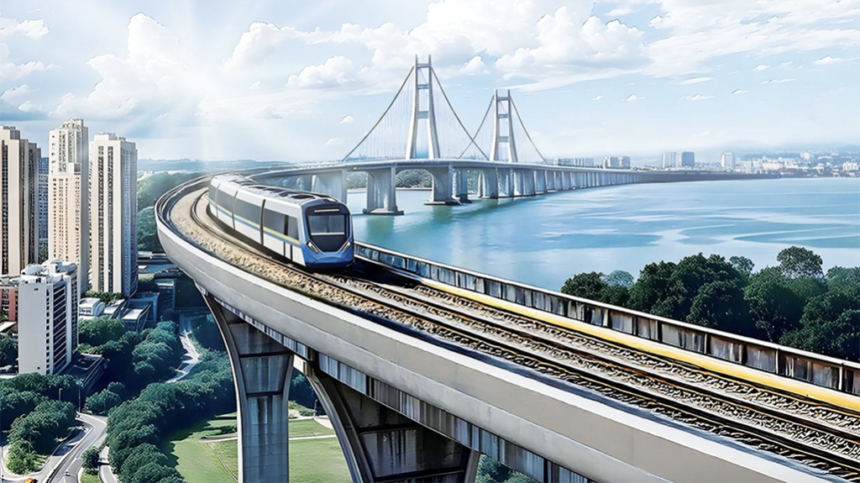
Beyond the immediate economic benefits to contractors, the project aims to solve long-standing urban challenges by constructing a line spanning nearly thirty kilometers with twenty-one strategic stations. This network is designed to enhance the physical connectivity between Penang Island and the mainland, which has historically been a bottleneck for regional productivity.
By providing a reliable alternative to road travel, the transit system will significantly ease traffic congestion and improve daily accessibility for thousands of commuters. The long-term vision involves creating a seamless travel experience that supports the modern lifestyle of a digital-centric workforce while preserving the environmental integrity of the region.
Infrastructure Multipliers and Regional Growth
From a professional financial and analytical perspective, the capital allocation for the Mutiara Line represents a significant fiscal multiplier that will stimulate the Northern Region economy through both direct and indirect channels. We interpret the three billion ringgit carve-out as a strategic investment in local supply chain resilience, which mitigates the risks associated with over-reliance on international tier-one contractors.
By distributing work packages to smaller firms, the government is effectively injecting liquidity into the local ecosystem, supporting job creation and secondary service industries. This granular distribution of contracts ensures that the economic benefits of the project are felt by a broader range of stakeholders. We observe that the emphasis on safety and structured reporting acts as a non-financial form of capital.
The focus on connectivity between the island and the mainland is also expected to have a profound impact on real estate valuations and labor mobility within the region. We project that areas surrounding the twenty-one strategic stations will see a marked increase in commercial activity and residential demand, as the commute time between the mainland and industrial zones is reduced.
Furthermore, the integration of local contractors into a performance-based environment aligns with national goals of moving up the value chain toward high-income status. By providing a stable pipeline of work, the project allows firms to invest in better equipment and more specialized talent, which in turn raises the productivity floor for the entire construction sector.
The successful execution of this project serves as a critical case study for how large-scale public infrastructure can be used to balance fiscal objectives with social equity goals. In the long term, the improved accessibility will likely attract higher-value investments in the manufacturing and service sectors of Penang, as the ease of movement reduces the operational costs associated with logistical delays.
We anticipate that the regional gross domestic product will see a sustained uplift as the construction phase transitions into an operational phase, creating long-term maintenance and management roles. This systemic upgrade to the regional transport network is a vital component in maintaining the competitiveness of the Northern Region against other emerging industrial hubs in Southeast Asia.