


Economic Foundations And Digital Infrastructure Growth In Việt Nam
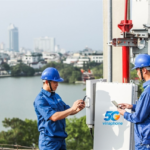
The rapid expansion of telecommunications infrastructure in Việt Nam has established a robust foundation for future economic activities, including the potential for digital borrowing and lending services to thrive. By early 2026, the nation successfully deployed over 4,000 base transceiver stations, ensuring that 90% of the population is now reached by high speed connectivity. This significant achievement has propelled the country into the upper echelon of regional leaders in broadband infrastructure, a status driven by aggressive 5G deployment and strategic spectrum management policies. With nearly 23 million 5G subscribers already active, the average download speeds have reached 188 Mbps, placing the country 14th on a global scale. Furthermore, the fixed broadband sector has seen even more impressive gains, with speeds hitting 288 Mbps and ranking ninth worldwide.
Over 23.8 million households are now connected via fiber optic networks, which facilitates a seamless environment for digital financial transactions and corporate operations. This widespread access is critical for modernization, as it allows for the integration of advanced technologies into the daily lives of citizens and the operational frameworks of businesses. The government’s proactive stance on licensing and planning has created a reliable ecosystem that supports everything from basic internet needs to complex industrial applications. As more people enter the digital economy, the infrastructure serves as the primary engine for social equity and national growth. The current trajectory suggests that the digital economy will continue to expand, providing a stable platform for innovative services that rely on real time data and high speed access across every province.
Technological Innovations And The Path Toward 6G Connectivity
As the current network architecture matures, the focus is shifting toward the transition from 5G Advanced to the eventual realization of 6G, which will unlock transformative applications across multiple industries. This evolution is essential for supporting virtual reality in sectors like healthcare and education, as well as the large scale Internet of Things connectivity required for smart cities and autonomous vehicles. To facilitate this level of innovation, the Ministry of Science and Technology anticipates a sharp rise in spectrum demand, noting that operators may soon require up to 400 MHz of bandwidth. The Vietnam Telecommunications Authority has already developed a comprehensive roadmap that includes high frequency bands like the mmWave range to ensure sufficient capacity.
Another key trend is the integration of terrestrial networks with satellite systems, which is vital for extending high quality coverage to remote and rural areas that were previously underserved. This hybrid approach ensures that the benefits of the digital revolution are not restricted to urban centers but are distributed throughout the national landscape. By planning for these future requirements today, the authorities are ensuring that the digital environment remains resilient and capable of handling the massive data loads expected in a hyper connected society. This strategic foresight reduces the risk of network congestion and allows for a smoother transition as more industrial and consumer devices come online. The commitment to maintaining a leading position in telecommunications infrastructure ensures that the country remains a competitive destination for international tech investment.
Strategic Research Initiatives And Global Market Leadership Goals
The journey toward 6G commercialization is already well underway, with the establishment of steering committees and research tasks assigned to universities and major enterprises to ensure readiness by 2028. This proactive research is designed to keep the nation at the forefront of global developments, rather than simply adopting technology from international markets after it has been standardized. By engaging in early stage development, local innovators can optimize spectrum usage and improve the energy efficiency of the next generation of base stations. These efforts are essential for maintaining a competitive edge and ensuring that the national broadband infrastructure can support the next wave of industrial automation and smart grid management.
The transition to these future technologies represents a long term commitment to digital sovereignty, allowing the nation to keep pace with the most advanced economies in the world. As the focus remains on building a secure and inclusive network, the integration of domestic expertise with global technical standards is expected to yield a sustainable digital ecosystem. This leadership status forces other regional economies to accelerate their own digital roadmaps, effectively raising the technical bar for the entire Southeast Asian corridor. For market analysts, the telecommunications sector remains a lead indicator of broader macroeconomic health, as the ongoing capital expenditures in network density suggest a very positive long term outlook for the national economy.
Capital Markets And Regional Connectivity Analysis
From an investment banking perspective, the rapid densification of telecommunications assets across the Mekong region serves as a fundamental catalyst for credit market evolution and institutional capital inflows. The high performance network coverage enables a sophisticated layer of fintech services where digital borrowing and micro-lending can scale without the traditional friction of physical branch infrastructure. This digital maturity allows for more accurate credit scoring models based on real-time data consumption patterns, which in turn reduces the risk premiums associated with emerging market debt. As regional connectivity achieves 90% penetration, we observe a direct correlation with the expansion of the addressable market for digital wealth management and retail trading platforms, attracting significant venture capital from both domestic and international sources.
The regional market impact extends to the competitive dynamics of the ASEAN economic community, where digital leadership is increasingly synonymous with industrial productivity. The ability to support low-latency 5G applications positions local manufacturing hubs as preferred destinations for high-tech supply chain diversification, particularly for firms seeking to integrate advanced robotics and cloud-synchronized logistics. This technical superiority creates a widening gap between leaders and laggards in the region, potentially leading to a concentration of specialized digital labor and high-value research and development centers in the most connected jurisdictions. Consequently, we anticipate a surge in localized cloud infrastructure spending as regional enterprises shift toward hyper-connected operational models to leverage the available bandwidth.
Looking at the broader macroeconomic horizon, the move toward 6G testing by 2028 suggests that the telecommunications sector will act as a primary driver for national GDP growth over the next decade. The integration of satellite and terrestrial networks will likely unlock economic productivity in agricultural and remote mining zones, fostering a more balanced geographic distribution of wealth. For financial analysts, these infrastructure milestones represent a significant reduction in the equity risk premium for the local tech sector, as the government demonstrates a clear long-term commitment to maintaining a world-class digital environment. This sustained capital investment into fiber and spectrum assets provides the necessary liquidity and technical foundation for the next generation of artificial intelligence and machine learning applications to thrive within the regional ecosystem.