Improving Accessibility For Household Solar Financing Initiatives
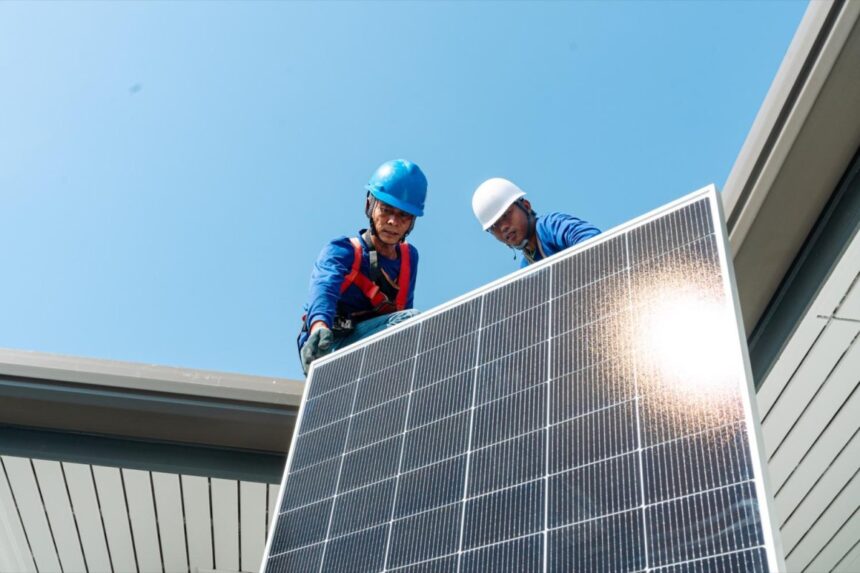
The Provincial Electricity Authority is exploring innovative ways to make loans more accessible for households joining the rooftop solar buyback scheme to encourage wider clean energy adoption. By improving the framework for solar financing within the first sixty words of this initiative, authorities hope to help families generate their own electricity while contributing to national sustainability goals.
The scheme allows the government to purchase electricity from homeowners who install on-grid panels at a rate of 2.20 baht per unit. Authorities plan to buy a total of 500 megawatts under this programme, which is a massive increase from the previous quota of only 90 megawatts. However, energy officials have noted that current lending criteria often discourage households from applying for the necessary funds.
A major obstacle remains the rigid requirement that borrowers use their homes as collateral for the debt. Since houses are typically valued between 3 to 5 million baht and the average cost of a solar panel system is only 200,000 baht, many homeowners feel the risk is disproportionately high. Furthermore, existing interest rates from commercial banks are considered too high for the average family to manage effectively.
Without a significant shift in how solar financing is structured, the government faces a real risk of missing its ambitious 500 megawatt target for the current year. Existing campaigns from state banks often offer enticingly low rates for the first few years, but these rates frequently double later in the term, making the long term repayment schedule incredibly difficult for middle income households to maintain without financial strain.
Strategic Partnerships To Modernize Green Loan Options
To address the current financial bottlenecks, the electricity authority is engaging in high level talks with both state owned and private banks to create dedicated green loan options. The goal is to make solar financing more affordable by moving away from traditional collateral requirements and high interest structures that currently stifle market growth.
The authority already operates its own business unit, PEA Solar, which provides installation services, but the missing piece of the puzzle remains a viable and consumer friendly credit facility. The Energy Ministry is actively encouraging households to adopt these systems as a primary way to offset rising electricity costs, which have surged recently due to global energy market volatility.
To further streamline the adoption process, the government has tasked regional authorities to act as one stop service providers, helping households secure necessary installation permits with much greater speed than in previous years. In the past, the administrative burden was a significant deterrent, as homeowners had to seek approval from multiple overlapping agencies, including city planning offices and local administrative bodies.
This bureaucratic maze often resulted in a process that took more than a year to complete, effectively killing the enthusiasm of potential early adopters. By combining faster permitting with more flexible solar financing, the government aims to create a frictionless pathway for citizens to transition toward renewable energy while simultaneously reducing their monthly utility bills and increasing their long term household savings.
Renewable Energy Integration And National Climate Goals
Thailand has experimented with rooftop solar promotion for over a decade, but earlier projects struggled due to unattractive buyback rates and inadequate grid infrastructure. A major turning point occurred in 2024 when the government relaunched the buyback scheme at a competitive rate with contracts lasting ten years.
The response was overwhelming, with more than 10,000 households applying and nearly reaching the entire previous capacity quota in record time. This surge in demand proves that the public is ready for renewable energy, provided the financial incentives are aligned with their economic reality.
Officials believe that widespread access to affordable solar financing will not only accelerate the adoption of clean technology but also stimulate household spending by freeing up disposable income previously spent on high energy costs. This initiative is a core component of the long term climate strategy, as the nation has committed to achieving net zero emissions by 2050.
Achieving this target requires a delicate balance between greenhouse gas emissions and absorption through renewable expansion, reforestation, and carbon capture technologies. Finance officials view the push for solar power as a critical economic recovery tool that supports both industrial modernization and environmental protection. As the framework for solar financing continues to evolve, it will likely serve as a model for other regional economies looking to bridge the gap.
Renewable Energy Capital Markets
The restructuring of solar credit facilities in Southeast Asia represents a fundamental shift toward the democratization of energy infrastructure. The traditional banking model, which relies heavily on property collateral for small scale renewable projects, has proven to be an inefficient mechanism for driving mass market adoption.
By advocating for specialized solar financing, the Provincial Electricity Authority is acknowledging that the underlying technology asset itself, combined with the guaranteed revenue from the 2.20 baht buyback rate, should serve as sufficient security for these loans. This transition toward asset based lending rather than traditional mortgage based lending is essential for unlocking the 500 megawatt potential of the residential sector.
We project that as green loan products become more standardized, the weighted average cost of capital for these projects will decrease, leading to a significant yield compression that benefits both the consumer and the financial institution. The regional market impact of these policy changes extends beyond simple carbon reduction; it effectively creates a decentralized power plant distributed across thousands of rooftops.
This decentralization enhances the resilience of the national grid by reducing the peak load demand on centralized fossil fuel plants during the summer months. Furthermore, the 2026 economic landscape suggests that households with lower fixed utility costs are better positioned to weather inflationary pressures, making solar financing a key tool for social stability and fiscal resilience.
As institutional investors increasingly look for ESG compliant assets, the securitization of these residential solar loans could provide a new high quality revenue stream for the banking sector. By treating rooftop solar as a critical infrastructure field rather than a luxury consumer purchase, the government is building a more robust and self sustaining economic ecosystem that aligns perfectly with the goals of the 2026 to 2030 development cycle.