Bilateral Framework For Enhanced Aviation Cooperation And Safety
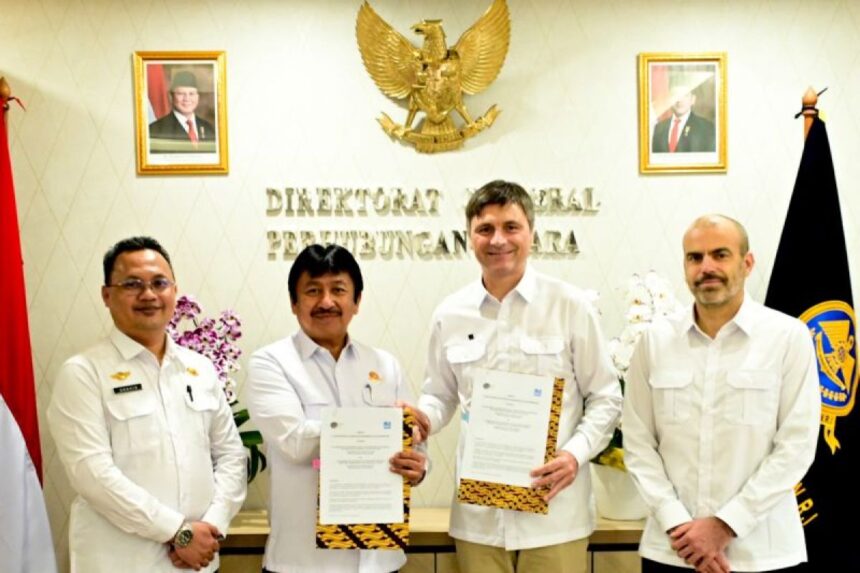
The Indonesian Ministry of Transportation has officially confirmed a strategic advancement in international relations by signing Annex V of its bilateral framework with France. This milestone in aviation cooperation represents a critical update to the existing technical partnership designed to address the rapidly evolving requirements of the modern civil aviation landscape.
By reinforcing this framework, both nations aim to solidify their commitment to maintaining the highest levels of safety and security within their respective airspace and infrastructure. The signing process was completed through a circular method, with the Indonesian Director General of Civil Aviation formalizing the document in Jakarta in early December.
This new agreement serves as a specialized implementation tool derived from the foundational 2019 Technical Cooperation Agreement, replacing previous protocols that are no longer sufficient. The transition to Annex V ensures that both countries are operating under the most relevant and up-to-date guidelines available, eliminating older and potentially outdated practices.
Capacity Building And Human Resource Development In Civil Aviation
A significant portion of this renewed partnership is dedicated to the comprehensive development of human resources and the exchange of professional expertise across borders. By facilitating programs that improve the competence of aviation personnel, the agreement ensures that the workforce is equipped with the latest knowledge and best practices.
The exchange of expertise is not limited to theoretical knowledge but extends to practical applications and the sharing of real-world experiences in managing complex aviation systems. This collaborative approach helps bridge the gap between different regulatory environments, allowing for a more unified application of global standards within the region.
The focus on training and competency is particularly important as the industry faces a growing demand for highly skilled technicians, pilots, and administrative oversight officials. Through joint workshops and technical programs, personnel can gain exposure to innovative safety management systems and advanced security protocols utilized in more mature markets.
Global Compliance And Future Prospects For Regional Connectivity
Implementing the standards and recommended practices of the International Civil Aviation Organization remains the primary objective of this technical collaboration between Indonesia and France. The agreement is expected to significantly improve the performance and overall competitiveness of the Indonesian civil aviation sector by ensuring full compliance with international security norms.
This alignment with global benchmarks is vital for attracting foreign investment and expanding international flight routes, which are essential for economic growth and regional connectivity. The validity of the current annex is set for an initial six-month period, with the possibility of extensions based on the mutual agreement of the civil aviation authorities.
As the cooperation matures, it is likely to pave the way for more integrated transport solutions and potentially lead to larger-scale infrastructure projects involving French aerospace technology. By adhering to the ICAO framework, Indonesia demonstrates its readiness to participate more fully in the international aviation community as a compliant and reliable partner.
Strategic Macro-Economic Synthesis Of Transcontinental Aviation Synergy
From a professional financial and structural perspective, the formalization of Annex V signifies a critical de-risking of the Indonesian aviation sector for global institutional investors. By aligning technical oversight with French regulatory standards, Indonesia is effectively lowering the sovereign risk profile associated with its air transport infrastructure and logistics.
This aviation cooperation serves as a non-tariff catalyst for enhanced capital inflows, as compliant safety frameworks are a prerequisite for major aerospace leasing and insurance contracts. We observe that the integration of French technical expertise creates a high-entry barrier for substandard operators while simultaneously elevating the valuation of domestic flag carriers.
Furthermore, the focus on human capital development acts as a long-term hedge against the rising operational costs associated with technical skill shortages in the ASEAN region. The strategic proximity of this partnership to ICAO benchmarks ensures that Indonesia can maintain its status as a primary regional hub without facing the threat of international safety downgrades.
Ultimately, the synergy between European technical methodology and Indonesian market scale provides a robust framework for sustained sectoral growth and enhanced connectivity. Investors should view this agreement as a foundational pillar that will support the next cycle of fleet expansions and airport privatizations across the Indonesian archipelago.