Strategic Financial Planning For Budget 2027
Prime Minister Datuk Seri Anwar Ibrahim has officially ordered all ministries to identify potential areas where expenses can be reduced for the upcoming Budget 2027 in light of the ongoing West Asia conflict. While the government remains proactive in addressing the potential economic repercussions of global instability, the Prime Minister has provided firm assurances that critical spending on national education will remain fully protected. He has directed all cabinet ministers, secretaries-general, and senior government officials to diligently identify areas for potential savings and to focus on significantly improving overall administrative efficiency.
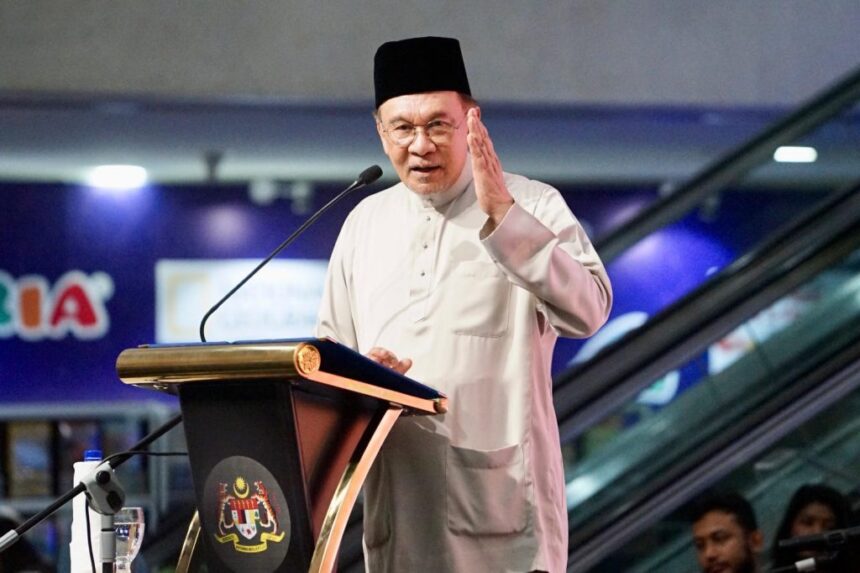
During his opening speech at the Kuala Lumpur International Book Fair 2026, which took place on May 29, Anwar emphasized that even within large departmental allocations, spending can be streamlined through better management and increased accountability. He explicitly urged all ministry leaders to avoid silo thinking when managing public finances, advocating for a more cohesive, cross-departmental approach to fiscal responsibility. The Prime Minister noted that Malaysia was among the best-performing economies in both the Asean region and the wider Asian market throughout the previous year and the first quarter of this current year.
However, he cautioned that the ongoing conflict has inevitably impacted the national economy, and therefore the administration must not be complacent. By prioritizing the most essential services while trimming non-essential expenditures, the government aims to navigate these challenging global times without sacrificing the long-term progress of the nation. This disciplined approach ensures that the country maintains its fiscal health while continuing to support its citizens through targeted investments that foster sustainable growth and development despite the prevailing external economic uncertainties.
Prioritizing Education And Knowledge Access
Despite the necessary fiscal constraints and the cautious approach mandated for Budget 2027, the government has reaffirmed its unwavering commitment to maintaining books, reading, and educational accessibility as a top national priority. Prime Minister Anwar Ibrahim highlighted that a robust reading culture is absolutely essential in building a knowledgeable and civilized society, which is why he announced that all eligible school and university students under the Ministry of Education and the Ministry of Higher Education will continue receiving the RM100 book voucher.
These vouchers are linked directly to authorized book purchases, enabling students to obtain vital learning materials at discounted prices, thereby lowering the barrier to knowledge for the youth of the nation. This specific program highlights how the government intends to balance the austerity measures required by the current Budget 2027 with the vital need to invest in the human capital of the country. By shielding education from spending cuts, the administration is making a clear statement about what it values most in its long-term strategic vision for Malaysia.
The dedication to student development ensures that even when the broader economic landscape faces pressure, the next generation remains empowered with the necessary tools for personal and academic success. This consistent support for the intellectual growth of the populace serves as a cornerstone of the national development strategy, demonstrating that fiscal prudence does not have to come at the expense of social and cultural investment. The government remains focused on ensuring that every student has the opportunity to thrive academically, which is vital for maintaining the high standards of education and professional capability.
Advancements At The Kuala Lumpur International Book Fair
The Kuala Lumpur International Book Fair 2026, currently being held at the World Trade Centre Kuala Lumpur until June 7, continues to be a vibrant testament to the success of national educational initiatives. Organizing chairman Mohd Khair Ngadiron noted that Malaysia’s accessibility for books has reached a record high, with children in remote areas like Sabah and Sarawak now able to obtain the same diverse titles as those residing in major urban centers. This success story reflects the government’s broader commitment to equity and inclusivity.
The event has embraced rapid digitalization, introducing the world’s first automated outdoor booking system, known as Book Capital, and expanding its reach through a sophisticated hybrid format. This technological integration enables readers nationwide to enjoy the diverse book fair promotions online, regardless of their physical location. Furthermore, the event features exciting new programs such as the National Leader’s Reading Gallery and a dedicated Children’s Literature Festival, which further promote an enduring engagement with literature.
As the government continues to refine the details of the Budget 2027, events like this showcase the positive impact of sustained educational funding and institutional support. By automating the allocation of resources and maximizing hybrid access, the fair successfully adapts to the needs of a modern, digital-first audience while maintaining the cultural spirit of the nation. These efforts represent a significant achievement in democratizing access to knowledge, ensuring that the benefits of a knowledgeable society are shared by all citizens.
Regional Market Impact And Strategic Economic Analysis
The directive to streamline public spending ahead of Budget 2027 serves as a calibrated response to the heightened geopolitical risk premium currently attached to West Asian volatility. From an analytical perspective, Malaysia’s proactive fiscal consolidation is an attempt to insulate the domestic economy from potential supply-chain disruptions and energy price spikes that often accompany regional instability. By mandating administrative efficiency, the administration is effectively creating the fiscal space necessary to sustain social safety nets without ballooning the national deficit.
For regional investors, this pivot toward cautious fiscal management signals a shift from aggressive expansionary policy to one of structural resilience. The decision to ring-fence education expenditures indicates that the government views human capital development as a non-negotiable hedge against long-term macroeconomic volatility. Such strategic alignment is crucial for maintaining Malaysia’s investment grade status in an era where global capital is increasingly sensitive to the fiscal health of emerging markets. Analysts should monitor the upcoming budget announcements for signs of continued commitment to structural reforms, particularly regarding the rationalization of subsidies.
However, the efficacy of this approach hinges on the ability of the civil service to execute these directives without stalling essential public service delivery. Should the streamlining efforts result in a slowdown of project implementation, particularly in critical infrastructure or digital transformation initiatives, it could temper private investment confidence. Moving forward, the balance between fiscal discipline and maintaining growth momentum will define Malaysia’s economic trajectory. If successful, this fiscal tightening could provide a stable foundation that shields the domestic market from external shocks while positioning the nation for sustained growth within the Asean context.