Strengthening Economic Ties And Bilateral Strategic Commitments
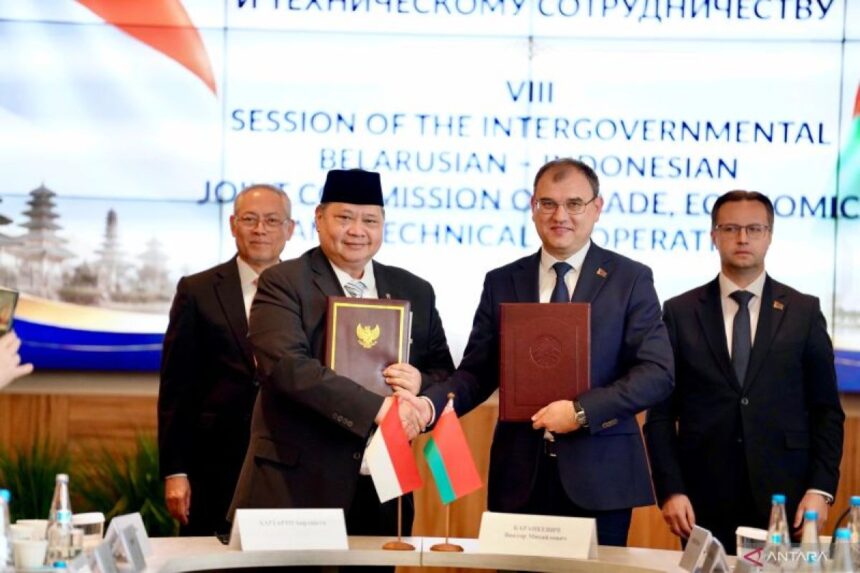
The global economic landscape continues to witness expanding trade corridors as prominent corporate players from Indonesia and Belarus recently solidified their bilateral commercial relationships. During the high level eighth session of the joint commission meeting held in the capital city of Minsk, representatives from both nations formalized their economic commitments by executing five major trade agreements. These strategic partnerships carry an aggregate financial valuation of approximately 7 trillion IDR, which translates to roughly 397.6 million US dollars in new cross border transaction volume.
The comprehensive package of understanding was officially signed alongside the agreed minutes of the economic cooperation framework, which received direct ministerial endorsements from the Indonesian coordinating minister for economic affairs and the Belarusian deputy prime minister. Key operational entities involved in this diplomatic milestone include state owned fertilizer firms alongside various private sector distribution enterprises. According to official ministerial communications released in Jakarta shortly after the event, government leadership emphasized that these strategic frameworks must be rapidly translated into concrete operational milestones to directly enhance the long term commercial links between the two trading partners.
The successful realization of these initial trade pacts establishes a reliable roadmap for future corporate engagement and investment. By anchoring the collaboration in key industrial and commodity sectors, the participating enterprises are laying down institutional foundations that reduce long term operational uncertainty. This diplomatic milestone signals to international markets that both countries are actively looking to diversify their geopolitical risk exposure through targeted, high value bilateral commercial alliances.
Diversified Industrial Portfolios And Sectoral Synergy Frameworks
The specific corporate agreements reached during the recent Minsk summit highlight a deep desire to cultivate highly diversified trade portfolios that address mutual economic vulnerabilities. Key commercial pillars within the new agreement cover critical logistics and production networks, including large scale collaborations between fertilizer industry leaders and mineral extraction firms like Nedra Nezhin. Additionally, the agreements look to optimize food security systems through newly formed supply chains linking specialized distribution enterprises with the Minsk Dairy Plant Number One.
Beyond the traditional agriculture and dairy sectors, industrial engineering frameworks were established alongside major technical components involving corporations like Energi Complekt and Dolomite. These varied initiatives reflect a broad based approach to economic integration that spans far beyond simple commodity trading. During the extensive ministerial sessions, delegations from both regions thoroughly evaluated a wide array of potential development opportunities including forestry management, banking integration, healthcare technology transfers, and advanced scientific research programs.
This multifaceted approach ensures that the broader bilateral relationship remains highly resilient against localized sector downturns while creating numerous touchpoints for public and private enterprise growth. By creating complex cross sectoral links, the joint framework minimizes the systemic risks associated with single commodity dependence, thereby offering a more stable path toward mutual macroeconomic integration.
Expanding Investment Horizons And Future Technological Collaboration
Looking toward the future implementation phase of these cross border trade initiatives, the executive leadership of Belarus has strongly reaffirmed its sovereign commitment to deepening industrial integration with emerging Southeast Asian markets. The administration highlighted that the current macroeconomic environment presents a perfect opportunity to upgrade technical cooperation, particularly through the sharing of agricultural mechanization tools and advanced manufacturing systems. This strategic direction aligns perfectly with the ongoing industrial modernization programs being implemented across major regional economies.
By creating structured investment platforms, the joint commission aims to lower barriers to entry for smaller corporate entities seeking to establish a commercial presence in northern Europe. Furthermore, the inclusion of cultural, educational, and tourism exchanges within the broader diplomatic framework is intended to build strong socio economic foundations that support the primary financial investments. As global supply chains continue to realign, the establishment of robust trade channels with non traditional partners provides essential market diversification for exporting enterprises.
The successful execution of these five major agreements marks the beginning of an intensified era of commercial engagement that will be closely monitored by global trade analysts throughout the remainder of the fiscal year. This comprehensive structural framework sets the stage for deep corporate integration, creating localized hubs of innovation that can better withstand unexpected shifts in international trade policy.
Macroeconomic Impact On Regional Supply Chains And Fertilizer Security
The execution of 397.6 million US dollars in bilateral trade agreements represents a calculated diversification strategy for both participating sovereign economies. For the Southeast Asian manufacturing sector, securing long term raw material inputs through partnerships with prominent Eastern European mineral extractors is a vital geopolitical hedge against ongoing agricultural supply chain disruptions. The collaborative framework involving major state owned fertilizer entities is particularly significant for regional food security metrics, as it guarantees a stable inflow of potassium and essential compounds required to sustain high volume domestic agricultural yields.
By structuring these agreements through specialized local distribution channels, the participating enterprises are effectively insulating their corporate supply lines from sudden maritime tariff fluctuations and volatile international commodity trading spikes. This structural arrangement provides critical price stability that will ultimately benefit downstream consumer markets and agricultural processors across the region. Furthermore, this bilateral expansion serves as an important case study in how middle power economies can leverage targeted industrial diplomacy to bypass traditional multilateral trade bottlenecks.
For the industrial sectors in Northern Europe, establishing deep commercial roots within the fast growing ASEAN trade ecosystem offers a crucial export outlet for heavy machinery, dairy production technology, and industrial engineering services. Financial analysts should view the 7 trillion IDR commitment as a baseline liquidity injection that will likely catalyze secondary service sector investments, particularly in maritime logistics, trade financing insurance, and cross border banking operations. The decision to integrate educational and scientific technology transfers directly into the commercial framework suggests that both nations are aiming for structural economic alignment rather than simple transactional commodity swaps. Moving forward, equity markets will evaluate the success of this joint commission based on the speed of regulatory implementation and the capacity of the newly formed corporate alliances to meet their stated procurement timelines amid shifting global transport realities.