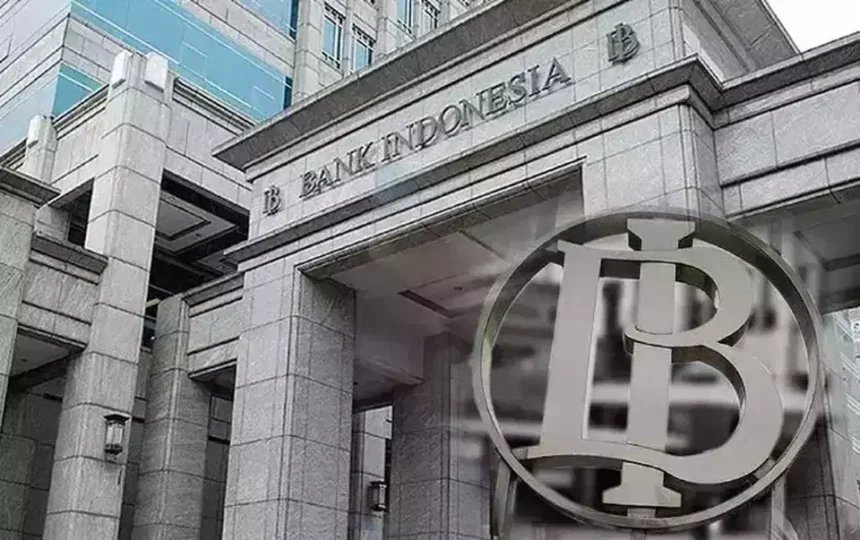
Monetary Stability Amidst Shifting Interest Rates and Geopolitical Tension
The current global economic landscape is increasingly defined by uncertainty, forcing policymakers to reconsider the trajectory of benchmark interest rates to ensure national financial resilience. As escalating Middle East tensions heighten global inflation risks, prominent economists are urging Bank Indonesia to maintain its key policy rate at 4.75% to safeguard the rupiah and mitigate the threat of imported price pressures. Teuku Riefky, a senior researcher from the Institute for Economic and Social Research at the University of Indonesia, emphasized that holding the BI Rate steady is a crucial defensive maneuver against the rising volatility linked to the ongoing Iran–Israel conflict. This geopolitical friction, which has now drawn in the United States, creates a ripple effect that touches every corner of the domestic economy, from fuel costs to the price of basic consumer goods.
By prioritizing stability over aggressive easing, the central bank can provide a necessary anchor for the currency market during a period where global energy prices are prone to sudden and dramatic spikes. Furthermore, the timing of these external shocks coincides with seasonal demand spikes during Ramadan, which typically exert upward pressure on food and transportation services. In this environment, a cautious approach to interest rates serves as a vital tool to control the cost of living for the average citizen while maintaining a competitive edge in the regional financial sector. The objective remains to create a predictable monetary environment that discourages speculative capital outflows and rewards long-term institutional investment in Indonesian assets.
The current policy environment necessitates a strategic pause in monetary easing, as the central bank balances the need for domestic growth with the mechanical necessity of protecting the capital account. Historical data suggests that Indonesia is particularly sensitive to fluctuations in the Federal Reserve’s own rate-setting path, making the current 4.75% benchmark a critical line of defense. By maintaining this level, Bank Indonesia signals to the international community that it is prepared to prioritize macroeconomic stability over short-term political gains, thereby reinforcing the nation’s status as a top-tier emerging market destination.
Currency Depreciation and the Dynamics of Exchange Rate Defense
Maintaining the current gap in global interest rates is essential for defending the rupiah against a strengthening US dollar, which often acts as a primary beneficiary of flight-to-safety investor behavior. By midday Tuesday, the local currency had already slipped to Rp 16,985 per US dollar, reflecting a complex mix of external geopolitical anxiety and internal fiscal scrutiny. Riefky warns that any premature cut in borrowing costs could narrow Indonesia’s interest rate differential with other major economies, effectively reducing the incentive for foreign investors to hold rupiah-denominated bonds. This potential narrowing of the spread would likely intensify downward pressure on the exchange rate, making imported goods more expensive and fueling a cycle of domestic inflation.
To counter this, Bank Indonesia must utilize its policy rates to signal institutional strength and a commitment to currency stability. The depreciation of the currency is not merely a numerical change but a reflection of market confidence in the country’s fiscal credibility. Investors are currently paying close attention to whether the government will maintain the 3% budget deficit cap, as any perceived weakness in fiscal discipline could trigger further sell-offs. Therefore, the central bank’s role extends beyond simple mathematics; it must act as a guardian of the nation’s reputation for prudence. Strengthening coordination between monetary and fiscal authorities is paramount to ensure that the message sent to global markets is one of unified and consistent economic management.
The technical resistance levels for the rupiah near the Rp 17,000 mark represent a significant psychological and economic threshold for the regional market. A breach of this level without a corresponding monetary response could lead to increased hedging costs for local corporations that carry significant dollar-denominated debt. By anchoring the rate at 4.75%, the central bank provides these entities with a clearer horizon for their financial planning, reducing the likelihood of systemic defaults. This defensive positioning is a necessary trade-off in an era where global reserve currencies are increasingly volatile and sensitive to geopolitical shifts.
Institutional Independence and Future Inflationary Outlook
Looking ahead, the effectiveness of Indonesian monetary policy will depend on the central bank’s ability to demonstrate institutional independence while managing the long-term outlook for national inflation rates. As global commodity markets remain on edge, the risk of energy-led price increases continues to loom over the 2026 fiscal year. Bank Indonesia’s decision to stay prudent is a calculated response to the reality that monetary policy takes time to filter through the real economy. By resisting the urge to lower rates in the face of temporary political or social pressures, the bank preserves its ability to act decisively if a true crisis emerges.
Riefky notes that the central bank needs to continue its high-level coordination with the government to ensure that fiscal spending does not counteract the tightening effects of monetary policy. This synergy is particularly important when managing the supply-side shocks that often characterize the Indonesian market, such as disruptions in the logistics chain or fluctuations in the global oil supply. A stable and independent central bank provides the bedrock upon which sustainable growth can be built, offering a shield against the erratic nature of modern global politics. As the conflict in the Middle East evolves, the strategy of maintaining high-quality reserves and a competitive interest rate structure will remain the primary defense against systemic contagion.
Ultimately, the goal is to successfully navigate this period of heightened risk without compromising the purchasing power of the Indonesian people or the long-term credibility of the nation’s financial institutions. The interplay between domestic consumer price indices and international producer prices requires a delicate touch, as the central bank aims to keep inflation within its target range of 2% to 4%. Success in this endeavor will verify Indonesia’s maturity as a diversified economy capable of transforming global liabilities into localized stability, providing a foundation for sustainable consumption and private investment throughout the remainder of the decade.
Macroeconomic Displacement and Institutional Capital Allocation Analysis
The 2026 monetary policy landscape in Indonesia represents a critical inflection point in the Southeast Asian market landscape, signaling a shift toward defensive positioning as global liquidity conditions tighten. We analyze that the recommendation to hold the benchmark at 4.75% is a direct response to the interest rate parity challenge, where the central bank must maintain a sufficient premium over global reserve currencies to prevent a destructive cycle of capital flight. From a professional financial perspective, this decision is not merely about domestic pricing; it is a sophisticated attempt to manage the sovereign risk premium during a period of extreme geopolitical volatility. The recent slide of the rupiah toward the Rp 17,000 level serves as a market-driven warning that any deviation from fiscal or monetary discipline will be met with immediate institutional de-risking.
Furthermore, we project that the convergence of Middle Eastern energy shocks and domestic seasonal demand will act as a localized catalyst for a re-valuation of Indonesia’s inflation-hedging strategies. For institutional investors, the central bank’s commitment to its current policy stance provides a necessary safeguard against the erosion of real yields. By anchoring the policy benchmark, the authorities are effectively de-risking the nation’s credit profile in an environment where many emerging markets are struggling to maintain currency stability. We observe that the market is already beginning to price in a prudence premium for Indonesian assets, as the state demonstrates its ability to resolve the tension between growth aspirations and the mechanical necessity of a stable exchange rate.
The long-term impact on the regional market will manifest as a structural stabilization of the Indonesian project pipeline, as the government gains the financial precision required to protect strategic energy assets from external price shocks. This transition toward a more resilient and domestically-anchored monetary model reduces sovereign risk and provides a more stable environment for equity markets related to the consumer and industrial sectors. As institutional independence is reinforced through disciplined policy execution, we expect a narrowing of the risk spread for Indonesian corporate debt. The proactive stance taken by the central bank today sets a new regional standard for how a middle-income economy can transform global uncertainty into localized stability, ensuring a cohesive and prosperous national economic trajectory through 2027.