Portfolio Optimization And Asset Liquidation Strategies
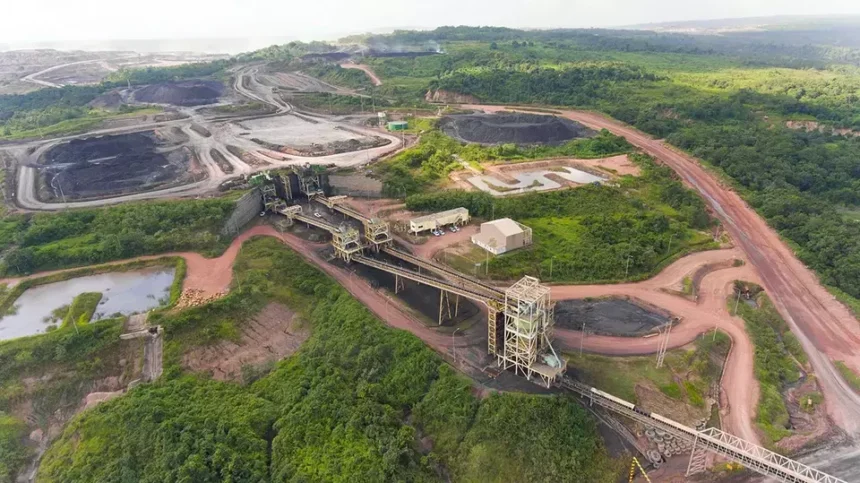
The corporate leadership of Jakarta-based infrastructure firm Astrindo Nusantara Infrastruktur, trading under the stock code BIPI, has formally announced a major strategic realignment aimed at optimizing its broader business portfolio. This decisive corporate restructuring involves the planned divestment of nearly all its equity holdings in its prominent coal mining subsidiary, Sintesa Bara Gemilang, to strengthen the group’s long-term capital framework and mitigate lingering macroeconomic exposures.
By offloading these substantial extractive assets, management aims to significantly lower its overall financial risks and reallocate resources toward sustainable operational infrastructure projects. According to official regulatory disclosures submitted to the Indonesia Stock Exchange, the transaction involves the transfer of 4,995 individual corporate shares, which effectively represents a 99.9% controlling ownership stake in the subsidiary.
The buying entity has been identified as Indo Panca Borneo, an independent non-affiliated party, ensuring a completely arm-length commercial transaction valued at Rp 1.79 trillion, or $100 million. Both participating corporate parties officially signed a conditional agreement on May 21, targeting completion by the end of this year, subject to approval at the Extraordinary General Meeting of Shareholders on June 30.
Regulatory Compliance And Material Financial Impacts
In an official public disclosure document released on Monday, the executive management of BIPI explicitly stated that the board firmly believes the proposed asset transaction will deliver an overwhelmingly positive impact on the parent organization’s foundational financial condition while simultaneously supporting future business development initiatives. This massive structural overhaul has become a primary focus for market analysts tracking the regional energy and mining logistics sectors.
From a regulatory perspective, this multi-trillion rupiah divestment officially qualifies as a material transaction under the strict guidelines set forth by the Financial Services Authority Regulation, specifically known as POJK No. 17/2020. This statutory classification is automatically triggered because the underlying assets, annual revenue streams, and operational cash flows of the coal mining subsidiary contribute significantly to the parent entity’s consolidated bookkeeping, accounting for well over 20% of the entire corporate group’s aggregate financial metrics.
Analysts note that executing such a material transaction allows corporations to quickly generate liquidity, which can then be utilized by BIPI to pay down expensive credit facilities or fund higher-margin infrastructure developments that offer predictable long-term returns in a changing economic landscape. This approach provides a necessary buffer against immediate cyclical market downturns while maintaining clear compliance with national oversight bodies.
Macroeconomic Headwinds And Future Liquidity Rebuilding
The strategic urgency behind this dramatic divestment plan comes at a time when the parent enterprise, widely known as BIPI, is actively navigating a period of considerably weaker financial performance across its primary commercial operations throughout the 2025 fiscal year. Detailed corporate data reveals that consolidated revenue experienced a sharp contraction, tumbling down to $235.1 million from the much more robust baseline of $563 million recorded during the 2024 calendar period.
This severe top-line compression inevitably trickled down to affect profitability metrics, with net profit declining sharply to just $1.5 million from a healthy $10.4 million posted the previous year, while gross profit shrunk to $34.6 million. Compounding these severe operational margin compressions, annual financing costs remained stubbornly elevated at $69.1 million in 2025, even though this debt servicing requirement was marginally lower than the $84.6 million documented in 2024.
This high interest rate environment severely impacted corporate liquidity reserves, causing total cash and cash equivalents to dwindle to roughly $30.9 million by the end of 2025, representing a steep drop from the $69.3 million available a year earlier. Although the corporate board of BIPI has yet to disclose the precise allocation of the massive liquidity proceeds expected from this planned transaction, market participants widely anticipate that the incoming capital will be aggressively deployed to restructure high-interest commercial bank loans.
Regional Energy Sector And Capital Market Analysis
From an advanced financial market perspective, this high-value divestment carries wider macroeconomic implications for the Indonesian energy sector and the broader regional infrastructure investment landscape. By extracting itself from a highly volatile extractive coal asset, the parent enterprise is signaling a crucial shift in defensive asset management that mirrors broader trends across Southeast Asian equity markets. Institutional capital is increasingly demanding that traditional infrastructure operators de-risk their portfolios from carbon-heavy exposure to secure lower refinancing rates from global debt syndicates.
Furthermore, the entry of independent non-affiliated capital into this mining asset underscores the persistent demand for fossil fuel infrastructure within localized industrial corridors, despite overarching energy transition goals. The transaction provides immediate valuation support for similar independent power producer chains and mining logistics operations across the domestic stock exchange, demonstrating that liquidity and transaction velocity remain accessible for well-structured assets.
For debt capital markets, this corporate restructuring represents a positive credit event, as it directly reduces debt-servicing strains and improves short-term interest coverage ratios across consolidated financial statements. Consequently, the transaction paves the way for optimized asset-liability management, allowing regional players to preserve core infrastructure margins while preparing for upcoming structural changes in national fuel tariff mechanisms and international commodity price shifts.