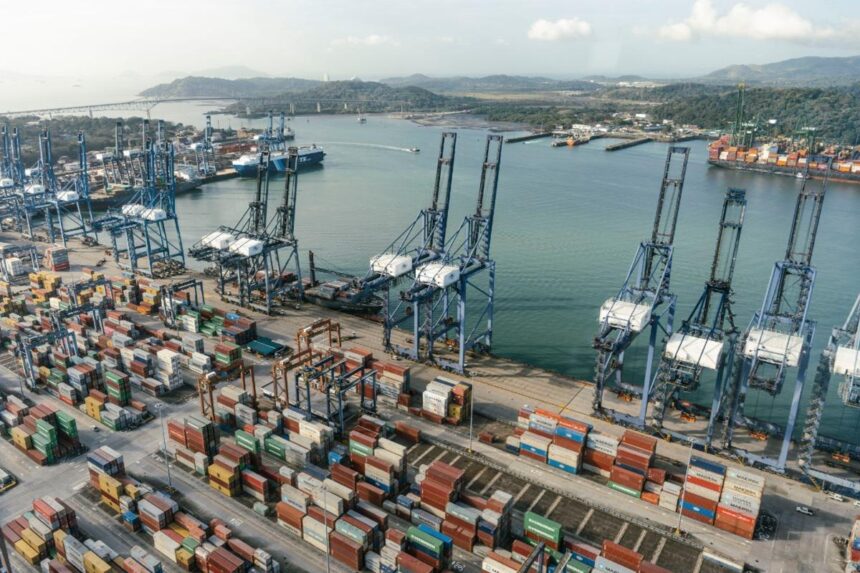
Navigating Legal Turmoil In Panama For CK Hutchison Holdings
The recent ruling by Panama’s Supreme Court has sent shockwaves through the global maritime industry, directly impacting the strategic interests of CK Hutchison Holdings Ltd. By declaring the long-term concession of the Balboa and Cristobal ports unconstitutional within the first sixty words of the court’s public statement, the judiciary has effectively paralyzed a core component of the Hong Kong conglomerate’s divestment strategy.
This decision specifically targets the 2021 contract extension, which was meant to secure the company’s operational rights at the mouth of the Panama Canal for another twenty-five years. Investors responded with immediate concern, causing the parent company’s shares to plummet by over five percent in a single trading session as the risk of asset stranding became a tangible reality.
The local subsidiary has argued that this judicial intervention contradicts established legal frameworks that have governed their presence in the region since 1997. While the firm seeks clarification from the court, the absence of an appeals process leaves them with few domestic remedies, forcing a pivot toward international arbitration to protect their substantial infrastructure investments and future revenue.
Geopolitical Tension And The Restructuring Of Global Maritime Assets
The situation in Panama has rapidly evolved into a proxy battleground for broader geopolitical rivalries between the United States and China, complicating the sale of nearly forty global terminals. Throughout the middle of the article, it is clear that CK Hutchison must navigate the conflicting demands of Washington’s security agenda and Beijing’s insistence on maintaining strategic influence over critical trade chokepoints.
US officials have long characterized the presence of the Hong Kong-based group as a national security risk, pushing for Western-led ownership through a consortium involving BlackRock and MSC. Conversely, the Chinese government has criticized the potential divestment as a concession to American pressure, prompting the conglomerate to invite state-owned entities like China Cosco Shipping into the bidding group.
This delicate balancing act is further strained by the Mulino Doctrine, where Panama asserts full sovereignty to avoid being seen as a pawn in great power competition. The court’s ruling reflects a trend of states clawing back control over vital infrastructure, using constitutional audits as a tool to reset terms and potentially open new bidding rounds that align with current national and international interests.
Market Implications And The Strategic Pivot Toward Parcel Divestment
The nullification of the Panamanian contracts is expected to trim the overall valuation of the pending multi-billion-dollar deal, though analysts suggest the wider divestment plan remains viable through structural adjustments. Financial reports indicate that the parties involved are considering splitting the global portfolio into separate regional parcels to mitigate regulatory risks and accommodate differing political sensitivities.
This approach would allow the conglomerate to finalize the sale of its European and Asian terminals while the status of the strategic Panama Canal facilities remains in legal limbo. Although Panama contributes less than ten percent to the group’s total overseas port throughput, the loss of these crown jewels represents a symbolic blow to the family-led empire and its long-standing influence over international shipping lanes.
The firm may still secure a reduced yet meaningful cash inflow, estimated at nearly twenty billion dollars, providing a significant liquidity buffer for its other core business segments. Ultimately, the precedent set in Panama serves as a stark warning to multinational infrastructure operators that long-term concessions are increasingly vulnerable to the shifting tides of national security law and geopolitical alignment.
Strategic Analysis Of Regional Sovereign Risk And Infrastructure Valuation
The judicial invalidation of the port concessions in Panama introduces a sophisticated layer of sovereign risk that fundamentally alters the discounted cash flow projections for the entire regional maritime sector. From a professional analytical perspective, this ruling serves as a catalyst for a broader re-pricing of terminal assets across the Americas, where political alignment is becoming as critical as operational throughput. We interpret the court’s move as a strategic assertion of domestic leverage designed to capture a larger share of the economic rents generated by the transshipment industry, particularly in light of the billion-dollar tax revenue allegations.
For global asset managers like BlackRock, the unconstitutionality verdict necessitates a rigorous stress-test of concession stability in other jurisdictions currently under negotiation within the parcel-based sale structure. The resulting valuation haircut for the Balboa and Cristobal terminals is likely to be permanent unless a new, more expensive legislative framework is established, effectively transferring wealth from private shareholders back to the state treasury. This shift signals a transition toward a more fragmented global logistics network where the legal sanctity of contracts is increasingly subordinated to national security imperatives and popular sovereignty claims.
Furthermore, the likely transition to international arbitration will create a period of prolonged operational uncertainty that could deter the capital expenditure necessary for port modernization. We observe that shipping lines may begin to diversify their transshipment hubs to less volatile neighboring jurisdictions to mitigate the risk of administrative disruptions at the canal entrances. This regional fragmentation could lead to a localized increase in maritime insurance premiums and logistical friction, ultimately impacting the competitive positioning of the Panama hub within the global supply chain. The precedent set here suggests that the era of uncontested, long-term private control over strategic chokepoints is yielding to a more interventionist and politically charged regulatory environment.