Scaling The Creative Economy As A National Growth Engine
The strategic development of Indonesia’s creative economy has officially transitioned into a primary driver of national prosperity under the latest policy framework established for 2025. According to recent statements from the Ministry of Creative Economy, the sector has already demonstrated its capacity to function as a robust engine of growth by delivering substantial contributions to the national gross domestic product within a remarkably short operational timeframe.
Minister Teuku Riefky Harsya noted that the performance metrics outlined in the National Medium-Term Development Plan have been surpassed, signaling a higher level of resilience and market appetite than originally projected by state economists. This surge is primarily attributed to a massive influx of investment and the rapid expansion of the labor market within creative fields.
Data from the Investment Coordinating Board reveals that capital commitments reached over 90 trillion rupiah in just the first half of the year, representing a significant portion of the annual target. Furthermore, the number of citizens employed in these sectors has grown to over 27 million, effectively outperforming government targets and providing a stable livelihood for a vast segment of the population.
Financial Innovation And Intellectual Property As Collateral
To sustain this momentum, the government is introducing pioneering financial mechanisms that recognize the unique nature of creative assets and intellectual property. Minister Riefky outlined an ambitious plan to expand the People’s Business Credit scheme, specifically targeting intellectual property-based industries with a massive funding ceiling of 10 trillion rupiah scheduled for the 2026 fiscal year.
This initiative represents a paradigm shift in how banking institutions perceive value within the creative economy, moving away from traditional physical assets like land or machinery toward intangible assets like copyrights and trademarks. Under this proposed framework, entrepreneurs will be able to access significant loans ranging from 100 million to 500 million rupiah by utilizing their creative works as supporting collateral.
This access to capital is designed to empower local players to scale their operations both nationally and globally, bridging the gap between local talent and international market standards. During recent high-level meetings, officials emphasized that while the nation possesses a strong cultural foundation, the targeted application of technology and innovation is necessary to help these creative players reach their full potential.
Addressing Constraints And Enhancing Global Market Presence
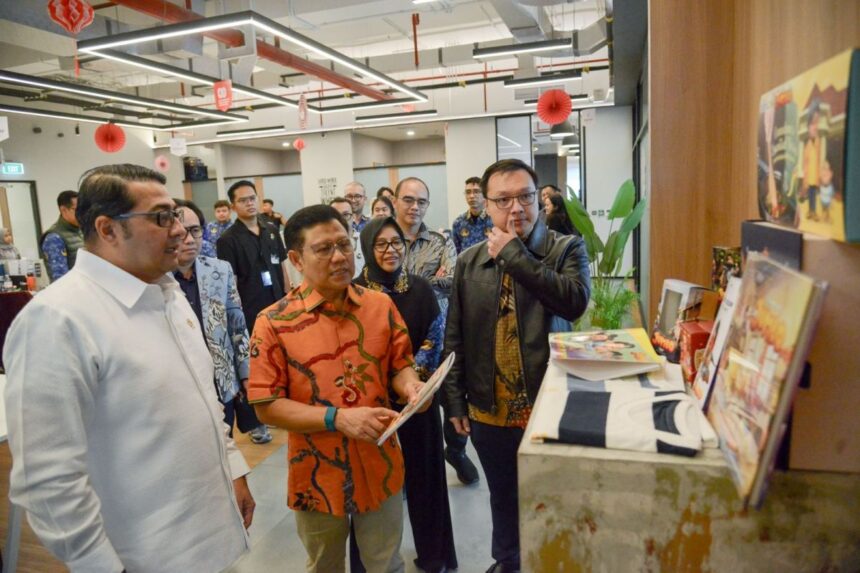
Despite the clear successes recorded in the current development cycle, the administration acknowledges that significant hurdles remain, particularly regarding budget constraints and the need for broader government intervention. Coordinating Minister for Community Empowerment Muhaimin Iskandar has been actively involved in discussions to secure more diverse funding sources, recognizing that state budgets alone cannot satisfy the growing needs of a burgeoning global sector.
The objective is to foster an environment where local intellectual property can compete on a level playing field with international giants, necessitating a shift in how infrastructure and support systems are built. Efforts are underway to ensure that the creative economy receives the structural backing it needs to move beyond a domestic success story and into a global powerhouse.
This includes enhancing the digital infrastructure required for content distribution and providing better legal protection for creators to ensure their work is not exploited. As the ministry moves forward, the focus remains on transforming the current engine of growth into a sustainable long-term pillar of the Indonesian economy. The collaboration between different government departments highlights a unified approach to community empowerment through creativity.
Strategic Analysis Of Sectoral Growth And Market Resilience
The current trajectory of Indonesia’s creative sector suggests a significant structural realignment of the national economy toward higher value-added services. From a professional analytical perspective, the shift toward intellectual property-based lending is the most critical development in this 2025 plan, as it effectively monetizes the nation’s cultural capital in a way that traditional sectors cannot.
We interpret the 66 percent achievement of investment targets in the first half of the year as a sign of high investor confidence in the sector’s long-term viability, particularly in digital media, fashion, and culinary arts. This growth is not merely a post-pandemic recovery but a fundamental expansion of the market’s capacity to absorb labor, as evidenced by the employment figures exceeding 27 million workers.
The strategic use of the People’s Business Credit scheme to back intangible assets will likely lower the barrier to entry for micro, small, and medium enterprises, which are the backbone of the Indonesian economy. This democratizes access to growth capital and reduces the reliance on informal lending, thereby formalizing a large portion of the creative workforce and fostering a more resilient financial ecosystem.
Furthermore, the integration of the creative economy into the National Medium-Term Development Plan provides a level of policy certainty that is essential for attracting foreign direct investment. However, the budget constraints mentioned by Coordinating Minister Muhaimin Iskandar highlight a potential bottleneck; for the sector to achieve its global ambitions, private sector participation through venture capital will be essential.
We observe that the regional market impact is particularly strong, as Indonesia positions itself as a leader in Southeast Asian cultural exports. The ability to scale local intellectual property globally will depend on the government’s ability to navigate international trade agreements and strengthen domestic copyright enforcement. This transition from a peripheral industry to a primary growth engine represents a sophisticated adaptation to the global digital landscape.
If the financing ceiling of 10 trillion rupiah is effectively utilized, we project that the creative sector could account for a significantly higher portion of the national GDP by the end of the decade. This would provide a resilient buffer against the volatility of the global commodities market, transforming the nation’s economic profile from one dependent on raw exports to one driven by high-value innovation and cultural intellectual property.