Enhancing Hajj Services Through Strategic Danantara Partnerships
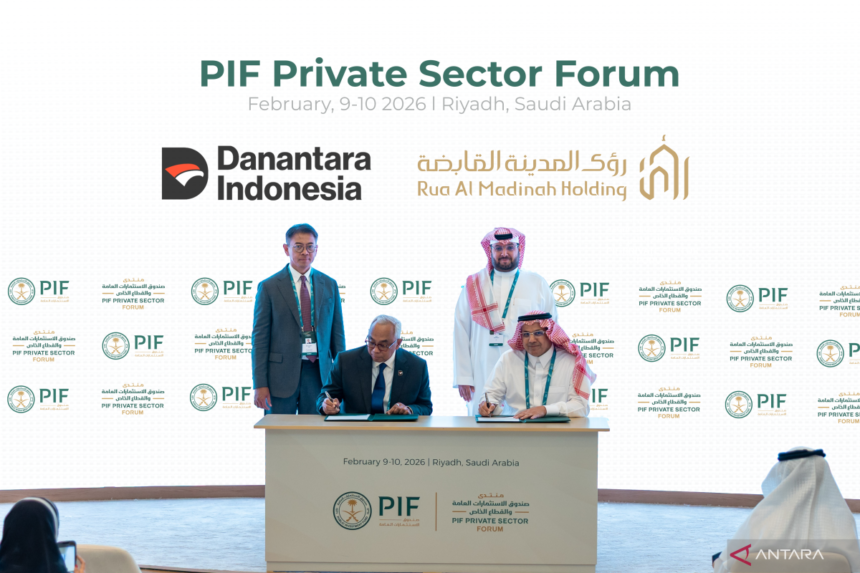
The landscape of Indonesian sovereign investment is undergoing a significant transformation as Danantara actively seeks a strategic partnership with the Public Investment Fund of Saudi Arabia to elevate the quality of Hajj and Umrah services. This landmark engagement was recently formalized through a memorandum of understanding signed between PT Danantara Investment Management and the Rua Al Madinah Holding during a major private sector forum held in Riyadh.
By initiating this collaboration, it becomes clear that the sovereign wealth fund is positioning itself as a primary architect for long-term improvements in the pilgrimage experience for millions of citizens. The managing director for finance emphasized that this agreement transcends a simple project, representing instead a national endeavor designed to integrate various service components across multiple generations.
As the nation with the world’s largest Muslim population, the pressure to provide seamless logistics, health support, and operational assistance is immense, and this new investment vehicle provides the necessary capital and governance structure to meet those demands. The focus is not merely on immediate logistical fixes but on building a sustainable ecosystem that can adapt to the evolving needs of pilgrims through professional management.
Strategic Infrastructure And The Rua Al Madinah Collaboration
The core of this partnership involves the development of a dedicated Indonesian Hajj complex in Saudi Arabia, a move that the Danantara leadership describes as a vital measure to foster an integrated ritual ecosystem. By working closely with Rua Al Madinah, a renowned property developer under the Saudi sovereign umbrella, the fund is tapping into world-class expertise to address both current capacity constraints and future growth projections.
This collaboration is essential for establishing modern facilities that combine health services, operational support, and pilgrim assistance within a single, high-efficiency environment. The chief executive of the Saudi holding company has characterized this agreement as a crucial step toward expanding international investment partnerships, signaling a mutual interest in long-term infrastructure stability. For Indonesia, the primary goal is to transition away from fragmented service models toward a unified platform.
Public trust remains the ultimate benchmark for success, and every strategic plan is directed toward delivering tangible benefits that can be felt on the ground by every pilgrim. By leveraging the financial strength of a sovereign wealth fund, the government can ensure that these projects are insulated from short-term market volatility and managed with an orientation toward long-term continuity. This approach not only improves the physical experience but also strengthens the broader bilateral economic ties.
Analysis Of Local And Regional Market Impacts
The emergence of a centralized investment body to manage the Hajj and Umrah ecosystem represents a fundamental shift in Indonesia’s regional economic strategy and social welfare management. From a professional analyst’s perspective, the utilization of a sovereign wealth fund to finance spiritual infrastructure creates a unique hybrid model that blends social objectives with rigorous financial oversight. This strategy effectively de-risks the massive capital expenditures required for overseas property development by placing them under a professional investment mandate.
We observe that the integration of pilgrimage services into a sovereign portfolio will likely stabilize the cost structures associated with Hajj travel, as the fund can negotiate long-term contracts and build equity in the physical assets used by its citizens. This move also serves as a critical signaling mechanism to global markets, demonstrating that the nation is ready to deploy its wealth into sophisticated, cross-border joint ventures. The regional impact is significant, as it sets a precedent for other nations with large pilgrim quotas to seek similar sovereign-to-sovereign partnerships.
Furthermore, the domestic financial sector stands to benefit from this centralization, as it provides a clearer framework for Islamic finance products and pilgrimage savings management. By ensuring that the infrastructure is managed professionally, the fund mitigates the governance risks that have historically plagued large-scale social projects. From a sovereign resilience standpoint, the ability to develop dedicated assets in Saudi Arabia provides a hedge against the rising costs of hospitality and logistics in the Middle East.
Our analysis suggests that as these projects reach maturity, the resulting efficiencies will contribute to a more stable consumer price index for travel-related services, thereby protecting the savings of millions of Indonesian families. Ultimately, the success of this strategic transition will be measured by its ability to turn a significant national expenditure into a sustainable investment asset that yields both spiritual and financial dividends. This forward-looking model ensures that the nation remains at the forefront of global Islamic economy trends while providing a reliable path to fulfilling religious obligations.
Financial Market Commentary And Regional Synthesis
Danantara mandate represents a pivotal evolution in how Southeast Asian economies leverage sovereign wealth for social impact without compromising fiscal prudence. This initiative signals a departure from traditional state-funded models toward a capital-efficient structure that emphasizes asset ownership over rental expenditures. By acquiring and developing property in the Madinah region, the fund effectively internalizes profits that were previously captured by foreign hospitality conglomerates, creating a direct value transfer back to the Indonesian domestic economy.
The regional market impact is profound, particularly as it creates a competitive advantage for Indonesian pilgrims in the face of escalating global demand for high-tier pilgrimage services. This strategic move anticipates a future where access to the Holy Cities becomes a scarcer commodity, thus securing long-term positioning through equity-backed infrastructure. Financial analysts note that the fund’s transparency and professional management are designed to attract secondary private sector investment, potentially creating a multi-billion dollar ecosystem for ancillary services such as travel insurance, specialized healthcare, and fintech payment solutions tailored for the Hajj season.
Moreover, this partnership serves as a cornerstone for deeper economic integration between the ASEAN region and the Gulf Cooperation Council. As the fund successfully deploys capital in Saudi Arabia, it paves the way for reciprocal investments from the Public Investment Fund into Indonesia’s emerging technology and green energy sectors. This bilateral financial bridge enhances the sovereign credit profile of the nation by diversifying its international asset base and demonstrating an advanced capability in managing complex cross-border real estate portfolios. Ultimately, the integration of spiritual services into a globalized investment framework represents the pinnacle of modern Islamic financial engineering, ensuring social welfare through institutional excellence.