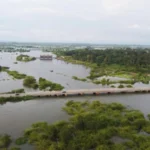
Government Mobilizes to Combat Economic Impact of Sumatra Floods
Coordinating Minister for Economic Affairs Airlangga Hartarto has announced decisive measures aimed at halting the impending economic decline across the northern Sumatra provinces severely affected by major floods and debilitating landslides since the previous week. Speaking to the media on Thursday, the senior minister underscored the critical threat posed by the disaster in the three primary affected provinces—North Sumatra, Aceh, and West Sumatra—to the government’s ambitious national economic growth target of 5.6 per cent.
Hartarto confirmed that the economic growth projections “will decline” in these disaster-stricken areas. To counteract and swiftly halt this economic contraction, he stated that the government is prepared to immediately provide economic relaxation measures and make necessary adjustments across the affected regions.
A central component of this strategy involves credit restructuring for the vital micro, small, and medium enterprises (MSMEs) sector, which often suffers the most immediate financial damage from such widespread natural disasters. The minister emphasized that this relaxation for MSMEs is not a new bureaucratic process but an activation of existing regulations, stating, “We already have the regulations, and they will be activated automatically.”
This immediate activation is designed to provide rapid financial relief, including provisions for debt restructuring and the elimination of bad debts specifically tied to the disaster’s direct impact. This proactive Finance approach is crucial for preventing a liquidity crisis among small businesses, which form the backbone of the regional Economy, and ensuring they have a viable path toward recovery following the devastating Sumatra floods.
Infrastructure Rehabilitation and Humanitarian Aid Priorities
Beyond immediate financial relief for the local Business community, Coordinating Minister Airlangga Hartarto also confirmed that an extensive infrastructure rehabilitation program will be urgently implemented across the three provinces of North Sumatra, Aceh, and West Sumatra. The minister expressed deep concern over the ongoing humanitarian and logistical crisis, stating, “We are concerned by the ongoing situation. We also have programs to improve and rehabilitate infrastructures there.”
The destruction of key roads, bridges, and essential utilities caused by the floods and landslides has not only isolated communities but has also severely crippled the local supply chain and hindered initial relief efforts. According to the National Disaster Mitigation Agency (BNPB), the scale of the human tragedy is immense; as of December 4, the combined disasters have tragically claimed 776 lives, left 564 people missing, and directly impacted a staggering 3.2 million residents.
The government’s focus on infrastructure Investment is a dual strategy: first, to quickly restore humanitarian and emergency access; and second, to lay the groundwork for long-term economic recovery by ensuring robust logistical connectivity. President Prabowo Subianto’s recent visit to the disaster-affected areas on Monday highlighted the immediate challenge of reaching isolated locations where ground access remains cut off due to the landslides and damage caused by the intense rainfall that triggered the Sumatra Floods.
The President confirmed that the government would deploy airlifts to deliver essential supplies to these stranded communities, demonstrating a coordinated effort to address both the immediate humanitarian crisis and the fundamental infrastructure failures that impede both aid and economic activity.
Mitigating National Economic Risk and Regional Stability
The government’s rapid and multi-faceted response to the Sumatra floods reflects a critical understanding of the potential domino effect this regional disaster could have on the broader national Economy. While the direct physical damage is contained to the provinces of North Sumatra, Aceh, and West Sumatra, any prolonged economic paralysis in these areas could introduce significant drag on the nation’s 5.6 per cent growth target, particularly given North Sumatra’s position as a major contributor to Indonesian trade and Investment.
The economic relaxation measures, which include debt restructuring and the elimination of bad debts for MSMEs, are designed to stabilize the regional financial system and prevent the disaster’s localized credit shock from transmitting to national banks and financial institutions. By automatically activating these relief regulations, the government aims to inject stability and restore confidence in the regional Finance sector with minimal bureaucratic delay, allowing small businesses to quickly restart operations.
This proactive stance on regional stabilization is an example of strong governmental Management intended to secure the overall economic outlook. Furthermore, the commitment to infrastructure rehabilitation is an essential long-term measure for strengthening the regional Economy against future climate-related risks, improving business continuity, and ensuring that the vital trade and industrial activities in the region—which include palm oil, natural rubber, and mining—can quickly return to full capacity.
The strategic and coordinated humanitarian and economic relief operations underscore the government’s determination to manage the crisis efficiently and minimize the national economic fallout from the widespread destruction caused by the floods and landslides in this key Indonesian region.
Financial and Supply Chain Contagion Risk Analysis
The localized disaster in northern Sumatra poses a distinct, multi-layered risk to the national Economy and warrants a detailed Finance-centric analysis, moving beyond mere growth forecasts. The immediate credit restructuring and bad debt elimination for MSMEs function as a preventative measure against a potential Non-Performing Loan (NPL) spiral, especially among regional development banks and microfinance institutions heavily exposed to the primary sectors (Agriculture, Plantations) dominating North Sumatra and Aceh’s Business landscape.
If the destruction of plantation assets (e.g., palm oil, rubber, coffee) is extensive, the decline in export commodity volume will directly impact Indonesia’s trade balance and foreign exchange earnings in Q4 2025 and Q1 2026, creating a minor headwind for the Rupiah’s stability, though mitigated by Indonesia’s diversified national Economy. The critical long-term impact lies in supply chain disruption: North Sumatra’s key role as a logistics hub connecting Western Indonesia (via Belawan Port) means prolonged road and rail closures will increase inter-island shipping costs (logistics beta) for downstream manufacturers nationally.
This rise in logistical overhead could trigger a temporary, localized inflation spike (cost-push inflation) for goods reliant on inputs or distribution from the affected areas, requiring Bank Indonesia to carefully monitor core inflation metrics. From an Investment perspective, the event will likely prompt a short-term risk premium adjustment for publicly listed companies with significant operational footprints in the region (e.g., plantation or cement firms), shifting investor focus towards their disaster resilience and insurance coverage metrics, which will become a new due diligence standard for regional fund managers.