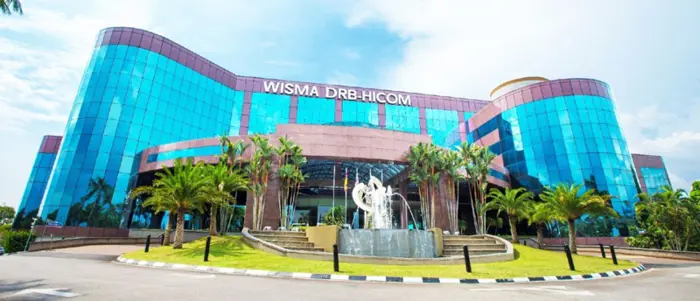
DRB-HICOM Prioritizes Digitalization and Operational Efficiency Amid Moderate Outlook
DRB-HICOM Bhd announced its unwavering commitment to accelerating its digitalization journey, a key strategic priority aimed at optimizing operations and strengthening efficiency across its diverse segments, despite navigating a challenging Business environment. In a filing with Bursa Malaysia, the conglomerate, which encompasses automotive, properties, banking, and services, acknowledged the prevailing market headwinds but maintained its focus on internal restructuring and technological adoption.
The group anticipates that the financial year ending December 31, 2025, will see a moderate outlook, suggesting cautious optimism balanced against global and local Economy pressures. This commitment to digitalization, which involves integrating advanced technologies across its complex organizational structure, is seen as essential for future resilience.
For the third quarter ended September 30, 2025, DRB-HICOM reported a widening of its net loss to 15.2 million, compared with a net loss of 5.29 million in the previous corresponding period. Concurrently, however, the conglomerate experienced a healthy growth in revenue, which increased to 4.49 billion from 4.13 billion a year earlier.
This improved revenue figure was a direct result of higher sales volumes and increased contributions across almost all core Business sectors—namely the automotive, properties, aerospace and defence, banking, postal, and services divisions—underscoring the diversified nature of the DRB-HICOM portfolio in mitigating sectoral risks, even as profitability faced short-term pressures.
Revenue Growth Across Core Segments Signals Operational Strength
Despite the third-quarter net loss widening, an analysis of the first nine months ended September 30, 2025, provides a clearer view of the DRB-HICOM group’s operational momentum. For this nine-month period, the net profit saw a slight decline to 60.62 million from 69.17 million previously, yet total revenue continued its upward trajectory, rising to 12.74 billion from 12.23 billion in the prior corresponding period.
This sustained top-line growth across multiple segments demonstrates the underlying health of the group’s diverse Business units. The properties division was a standout performer, reporting a robust 51% revenue increase to 197.68 million, primarily driven by steady progress on its property concession development projects, which translates directly into higher recognized earnings.
Similarly, the services segment posted a respectable 13% revenue rise to 158.57 million, largely attributable to a significant increase in the number of commercial vehicles utilizing the group’s inspection services. The automotive segment, which remains a cornerstone of DRB-HICOM’s operations, saw its revenue grow by 4.6% to 8.84 billion.
This growth was fundamentally supported by higher sales volume from Proton, boosted by a favorable sales mix that included higher-margin models, and increased contributions from the group’s various automotive distribution companies. The banking segment also contributed positively, with revenue increasing by 4% to 1.65 billion, underpinned by higher financing income resulting from sustained Business growth and an expanding customer base within its specialized Finance services arm.
Automotive Electrification and Strategic Aerospace Expansion Drive Future Value
The DRB-HICOM group is strategically positioning its key segments for long-term value creation, particularly within the automotive and aerospace sectors. The automotive segment continues to demonstrate strong market traction, fueled by its electrification strategy under the Proton brand.
The recent launch of the e.MAS 5 has already surpassed 10,000 bookings, reflecting immense consumer demand and the successful pivot towards electric vehicles (EVs). Furthermore, the e.MAS 7 maintains its dominant market position as Malaysia’s best-selling EV, solidifying the group’s leadership in the rapidly evolving local automotive landscape.
This strong consumer confidence in the Proton EV brand is a critical factor reaffirming the group’s commitment to advancing its electrification roadmap, which is essential for capturing future market share and aligning with global sustainability trends. On the aerospace and defence front, while the segment’s revenue for the nine months declined by 6.7% to 544.88 million due to weaker airline demand and reduced deliveries of single-aisle aircraft components, the group is pursuing a major strategic Investment.
The planned acquisition of Spirit AeroSystems Malaysia Sdn Bhd is expected to significantly strengthen the core expertise of Composites Technology Research Malaysia, enhancing its role within global supply chains. This proposed acquisition, targeted for completion by year-end, is a key strategic move anticipated to accelerate growth, drive higher value creation, and reinforce Malaysia’s capabilities and competitive standing within the global aerospace Business and Economy.
The postal segment also saw a modest 1.5% revenue rise to 1.34 billion, primarily due to higher parcel volumes and growth in cargo and in-flight catering activities, partially offset by external factors like reduced ocean freight management and vessel dry-docking downtime.
Financial Analyst Commentary: Digitalization as a Margin Defense Strategy
The widening net loss in DRB-HICOM’s Q3 2025 results, despite strong revenue growth, underscores a critical Finance challenge common to conglomerates: the pressure on operating margins from persistent cost inflation and potential internal inefficiencies. The group’s explicit focus on digitalization should be interpreted not merely as a modernization effort, but as a defensive strategy aimed at Structural Cost Optimization.
In the automotive segment, digitalization is key to streamlining the complex supply chain for their rapidly growing EV line, Proton, reducing inventory costs and speeding up time-to-market. For the properties and services divisions, digital integration improves concession management and capacity utilization, directly impacting profitability per unit of service delivered.
The sustained revenue increase indicates robust demand (Business and Economy resilience), but the profitability lag suggests that the necessary capital expenditure (CapEx) for digitalization and EV development is currently a near-term drag on earnings. Analysts will look for an inflection point where the cost-saving benefits of this digitalization CapEx translate into improved bottom-line performance, confirming the long-term Investment thesis in DRB-HICOM as a diversified growth vehicle.
Regional Market Impact: Malaysia’s EV and Aerospace Dual-Pillar Strategy
DRB-HICOM’s strategic moves, particularly the success of Proton’s EVs and the significant Investment in aerospace through the Spirit AeroSystems Malaysia acquisition, directly align with and reinforce two critical, high-value pillars of the Malaysian national Economy strategy. The domestic EV dominance, driven by Proton, is key to Malaysia’s goal of becoming a regional EV manufacturing and assembly hub, potentially attracting further Foreign Direct Investment (FDI) into the local supply chain, particularly for batteries and components.
This automotive push by DRB-HICOM creates a competitive dynamic with neighboring Thailand, which has traditionally led the ASEAN automotive sector. Simultaneously, the aerospace acquisition leverages existing domestic expertise (like CTRM) and elevates Malaysia’s position in the global aerospace Business and Finance value chain, focusing on maintenance, repair, and overhaul (MRO) and component manufacturing, which are less susceptible to cyclical consumer demand than tourism.
By committing significant capital to both high-technology sectors, DRB-HICOM is serving as a major private sector engine, validating the government’s dual-pillar strategy and signalling to international Investment funds that Malaysia possesses scalable domestic champions capable of executing complex, long-term, technology-driven growth mandates across the ASEAN Economy.