Strengthening ASEAN Competitiveness Requires Structural Reforms and Enforcement
The ASEAN bloc must actively push for deep structural reforms to fundamentally strengthen its private capital markets and, critically, enhance the enforcement of rules designed to combat non-tariff barriers (NTBs) if the region is to maintain and improve its long-term global competitiveness.
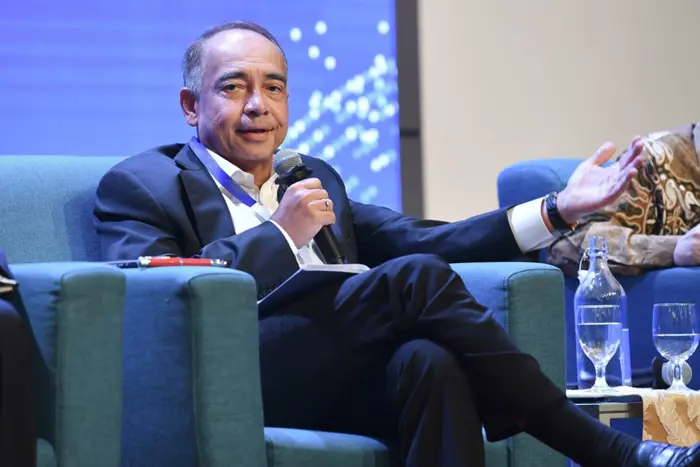
This urgent assessment comes from ASEAN-Business Advisory Council (ASEAN-BAC) chairman Tan Sri Nazir Razak.
He points out that the existing mechanisms established to deal with unfair trade practices, such as the regional ASEAN Assist portal, have unfortunately not proven effective in properly addressing parties engaging in unfair trade or those imposing illegitimate trade barriers.
A major reason for this ineffectiveness is that businesses across the region remain highly cautious about officially raising complaints, driven by a genuine fear of potential retaliation or victimization from counterparties or even governments.
Nazir stressed the need for direct action, stating to Bernama on the sidelines of the ASEAN Economic Ministers’ Meeting 2025 that “There’s no shortcut. It has to be enforcement, but the problem now is that ASEAN has no teeth.”
He made a specific call for comprehensive structural reforms to be implemented that would ensure complaints about NTBs can be swiftly and confidently acted upon without fear of reprisal, thereby fostering a genuinely fair and competitive trading environment.
The ability to enforce its own rules is paramount for the Association of Southeast Asian Nations to realize its goal of a unified economic community and to maximize the benefits of regional integration for all member states.
Underdeveloped Capital Markets Require Bold Regulatory Changes
The private capital markets within the ASEAN region are severely underdeveloped compared to global benchmarks, necessitating bold regulatory changes concerning ownership, investment flow, and exit strategies to unlock the region’s immense growth potential.
According to a joint, in-depth study conducted by ASEAN-BAC and global consultancy McKinsey, the private markets across the ASEAN region are significantly lagging, currently valued at only 0.5 percent of the combined Gross Domestic Product (GDP).
This figure stands in sharp contrast to the global average of 1.5 percent, indicating a vast amount of untapped private capital potential that is not being effectively deployed within the region.
Nazir Razak, who currently chairs the ASEAN Private Market Council— an entity established under an ASEAN-BAC initiative specifically to address these structural barriers—called for a series of targeted reforms.
These regulatory changes include reviewing current ownership rules, significantly improving the environment for investment exits, and providing substantial support for new regional initiatives such as a unified ASEAN Initial Public Offering prospectus.
He argued that these necessary reforms would make regional investments far more efficient, measurably improve the performance and attractiveness of fund managers operating in the region, and ultimately succeed in attracting much more capital from within the ASEAN region itself and from international investors seeking high-growth opportunities.
Nazir pointed out that major regional funds, such as Malaysia’s Employees Provident Fund and Singapore’s sovereign wealth fund Temasek, often deploy their substantial capital abroad rather than committing it to local growth projects across ASEAN, urging greater efforts to successfully channel this massive pool of regional savings into direct local economic development and job creation.
Beyond Investment: Talent Mobility and Global Competitiveness
While the ASEAN region remains a highly attractive destination for foreign direct investment (FDI), the primary challenge is not the rate of growth but ensuring the bloc remains competitive against other rapidly developing global regions by addressing talent shortages and enhancing internal operational freedoms.
The economic numbers are undeniably positive: the ASEAN bloc successfully attracted a total of US$226 billion in foreign direct investment (FDI) last year, representing a robust increase of 9.0 percent from the figure recorded in 2023.
However, Nazir Razak emphasized that the real, underlying challenge for the region is not merely achieving growth, but rather maintaining and improving its competitiveness relative to other global blocs.
He framed the issue succinctly: “The issue is not whether we are growing. It is whether we are as attractive as we can be compared with other regions,” highlighting the need for continuous improvement.
In addition to capital market reforms, he also stressed the fundamental importance of both retaining and attracting world-class talent to the ASEAN region.
He strongly backed the proposed ASEAN Business Entity framework, a system that would allow accredited firms to move their professional staff and seamlessly shift operational activities freely across the member nations, removing cumbersome bureaucratic hurdles.
Nazir also commented on Malaysia’s current ASEAN chairmanship, noting that the country has already demonstrated significant leadership on complex issues like tariffs, dispute resolution, and the successful convening of world leaders.
He concluded that the upcoming ASEAN Business and Investment Summit in October would serve as the “crescendo” of Malaysia’s successful term, aiming to solidify key agreements that propel the region toward greater integration.