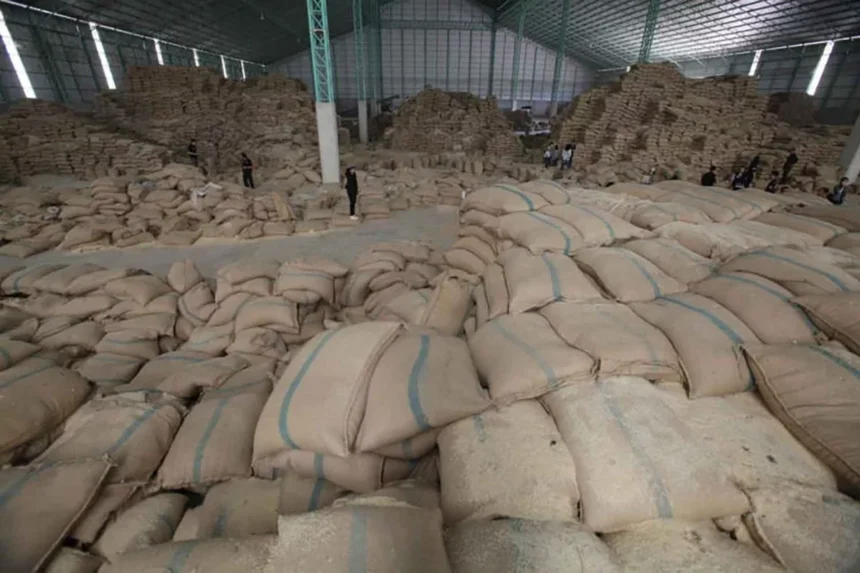
Strategic Food Security And National Rice Stockpiling Mandates
The Thai government decision to maintain a mandatory policy of rice stockpiling ensures that the nation remains a competitive global supplier while protecting domestic food security. Agricultural experts argue that requiring exporters to hold a minimum of one hundred tonnes of grain is a reasonable measure that prevents market volatility and safeguards the international reputation of the local industry.
This regulatory framework acts as a critical buffer during periods of high surplus, absorbing excess production to prevent farm gate prices from crashing too rapidly. By holding these reserves, exporters can avoid the trap of accepting orders without having physical inventory on hand, a practice that historically led to frequent cancellations and damaged trade relations.
Furthermore, the ability to oversee quality through stored grain allows the state to ensure that impurities or substandard products do not reach foreign buyers. Maintaining these stocks is essential because it provides a safety net for the entire supply chain, ensuring that even during global price fluctuations, there is a steady flow of high quality grain available for shipment.
Industry veterans point out that the cost associated with rice stockpiling is a natural component of standard trading operations for medium and large scale mills. In the past, the requirements were much more stringent, demanding at least five hundred tonnes of grain alongside financial deposits to discourage traders from abandoning their obligations when prices shifted unfavorably.
The current landscape has seen a reduction in these mandates to support the entry of smaller enterprises and cooperatives into the global trade arena. For instance, companies with registered capital between five and ten million baht are now only required to hold one hundred tonnes, while larger firms with more significant capital must maintain higher reserves.
This tiered approach is designed to balance the financial burden on entrepreneurs with the necessity of maintaining a national buffer stock. Even with these costs, having a physical inventory is seen as a badge of legitimacy that allows businesses to meet customer demands promptly. While some political voices argue that these requirements hinder small businesses, proponents insist that the fixed costs of logistics and operations make it inefficient to trade in volumes below these thresholds.
Economic Resilience And Competitive Challenges In Global Trade
The broader mission of rice stockpiling extends into macroeconomic stability, as these reserves act as a reservoir that helps manage domestic supply levels and reinforces the sovereign food safety net. Recent data suggests that export volumes may face pressure due to rising productivity in competing nations and the continued appreciation of the local currency.
Projections indicate a potential decline in total exports in the coming year, making it even more vital to maintain strict quality controls through inventory management. By encouraging exporters to hold stock, the government helps prevent a race to the bottom where low quality shipments could lead to mass rejections by international partners.
This is particularly relevant for mid sized businesses that are successfully exporting specialized organic varieties to high value markets. These successful models demonstrate that maintaining a consistent and certified stock of grain is the only way to build lasting relationships with sophisticated overseas buyers who demand transparency and reliability.
Professional financial analysts observe that the debate over abandoning these stockpiling mandates must be viewed through the lens of long term sovereign risk rather than immediate budgetary constraints. While the 100 tonne requirement may seem like a hurdle for a micro enterprise, it serves as a fundamental safeguard against the systemic risk of trade failures.
The ministry decision to reduce the mandate was a calculated move to lower the entry barrier while still requiring a baseline of commitment to the trade. We project that as the global appetite for traceable and high quality food sources grows, those entities that have invested in proper storage and inventory tracking will be the ones to capture the highest margins.
Ultimately, the persistence of these regulatory measures reflects a commitment to maturing the agricultural economy and ensuring that the country remains a pillar of global food stability. The synergy between government oversight and private sector inventory management creates a resilient ecosystem that can withstand both environmental challenges and the shifting tides of international commerce.
Professional Assessment Of Market Stability And Sovereign Impact
From a professional financial and analytical perspective, the current rice stockpiling regulations represent a vital defensive mechanism for the national sovereign credit profile. We interpret these mandates not as a bureaucratic hurdle, but as a strategic asset that stabilizes the domestic consumer price index by preventing sudden supply shocks.
When exporters are required to hold physical grain, they contribute to a decentralized national reserve that effectively lowers the volatility of the commodity price on the local exchange. This decentralized buffer is particularly important in an era of climate uncertainty, where harvest yields can vary significantly from year to year.
By forcing a level of physical liquidity into the market, the regulator is essentially de risking the agricultural sector and providing a clearer forecast for annual trade revenues. We observe that jurisdictions with similar commodity reserve mandates often experience fewer instances of extreme price inflation, which in turn supports broader social stability and helps maintain the purchasing power of the general populace.
Furthermore, the regional impact of these policies reinforces the country as a high compliance jurisdiction within the Asean trade bloc. By strictly enforcing quality and inventory standards, the state is effectively creating a premium for its exports, attracting institutional buyers who prioritize supply chain certainty over the lowest possible spot price.
We project that as global supply chains become more fragmented, the ability to guarantee immediate fulfillment from existing stocks will become a primary competitive differentiator. This shift from a just in time delivery model to a more resilient inventory based approach aligns with global trends in strategic resource management.
From an expert standpoint, the integration of small and medium enterprises into this framework through tiered requirements is a sophisticated method of fostering inclusive growth without compromising the integrity of the national food security apparatus. This regulatory clarity provides a predictable environment for financial institutions to extend credit to millers and exporters, as the physical collateral of the grain serves as a tangible anchor for trade financing.
Deep Analysis Of Regional Supply Dynamics And Trade Arbitrage
The enforcement of rice stockpiling mandates serves as a critical structural hedge against the increasing price volatility of the global cereal market. We interpret the maintenance of these 100 tonne reserves as a mechanism for price discovery that prevents the localized market from being overwhelmed by short term speculative capital.
By ensuring that exporters have skin in the game through physical inventory, the government successfully mitigates the risk of default during price spikes, which often plagues lower regulated regional markets. This creates a halo effect of reliability around the national export brand, allowing local traders to negotiate more favorable long term contracts with international state agencies.
From a regional market perspective, these stockpiles act as a secondary shock absorber for the Asean power grid of food security. We observe that when neighboring producers face climate induced crop failures, a nation with a robust, decentralized stockpile can engage in strategic trade arbitrage, capturing higher margins while stabilizing the regional supply chain.
This inventory based resilience is particularly valuable given the recent appreciation of the local currency, as it allows exporters to time their sales more effectively rather than being forced to sell at disadvantageous exchange rates due to a lack of storage capacity. The strategic accumulation of stock essentially transforms a perishable commodity into a form of physical currency that can be deployed for maximum economic leverage.
We project that the future of the local rice market will be defined by the integration of these physical stockpiles with digital warehouse receipt systems. This would allow small and medium enterprises to use their 100 tonne mandates as collateral for low interest working capital loans, effectively turning a regulatory cost into a financial asset.
Such a system would further insulate the agricultural sector from credit crunches and allow for more aggressive infrastructure investment at the mill level. Ultimately, the transition from a volume driven export model to a value based inventory model is a sign of an economy that is maturing beyond simple extraction and toward sophisticated commodity management and global leadership.