Strategic Long-Term Partnership and Operational Certainty for Freeport
The landmark agreement between the Indonesian government and the mining giant Freeport-McMoRan signals a pivotal shift in the nations approach to natural resource management and industrial sovereignty. By signing a memorandum of understanding to extend the operating rights of its subsidiary at the Grasberg district in Papua, the company has secured the operational certainty required to manage one of the most significant mineral deposits on the planet until its reserves are fully exhausted.
This alignment of the contract with the actual life of the resource is a strategic masterstroke that ensures the stability of global copper and gold supplies while providing a clear roadmap for the multi-decade development of the Papua region. Under this new framework, the government will formally amend the Special Mining Business License to reflect the extended period, effectively cementing the role of the mining operator as a primary partner in Indonesias economic future.
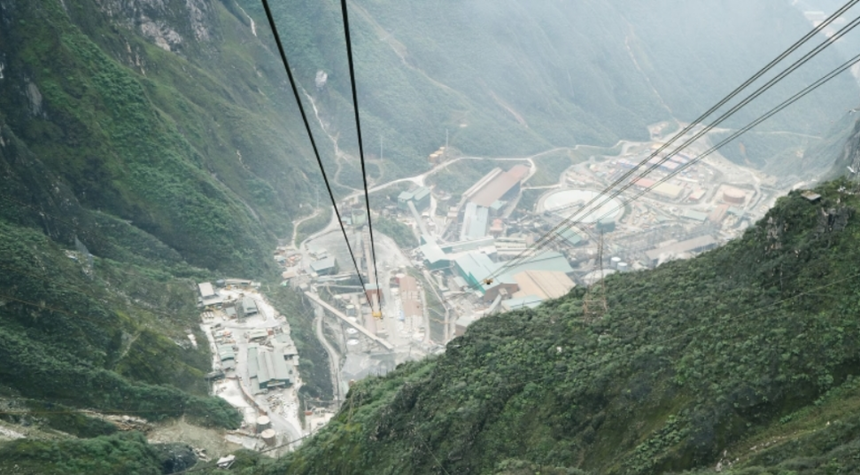
For the parent organization, this deal represents more than just a legal extension; it is a reaffirmation of a six-decade partnership that has seen the transformation of the Grasberg operations from a challenging open-pit site into one of the largest and most technically advanced underground mining complexes in the world. As the global demand for critical minerals continues to rise, the stability provided by this agreement allows for the kind of long-term capital expenditure and exploration investment that is necessary to maintain high production levels in such a demanding environment.
Equity Divestment and National Resource Sovereignty
The 2026 agreement introduces a significant evolution in the ownership structure of the mining operations, further strengthening Indonesias push for greater control over its extractive industries. In exchange for the guaranteed extension, the parent company has committed to a phased divestment process that will see an additional 12% stake transferred to the Indonesian government at no cost by the year 2041.
This strategic move ensures that by 2042, the domestic ownership of Freeport Indonesia will rise significantly, leaving the American-based firm with a minority interest of approximately 37% while Indonesian entities hold the majority. This transition reflects the growing maturity of the partnership between the state-owned mining holding company and its international collaborators, ensuring that the wealth generated from the Grasberg mineral district is more equitably distributed among the people of Indonesia.
Furthermore, the commitment to domestic downstreaming has been reaffirmed as a top priority, with the company pledging to prioritize local sales of refined copper, precious metals, and sulfuric acid to support the nations burgeoning electric vehicle and renewable energy industries. By locking in these future supplies, the government is not only securing its fiscal revenue but also providing the raw materials necessary to fuel its ambitious energy transition goals. This integrated approach to resource management demonstrates how large-scale mining can be harmonized with national development agendas to create sustainable value for all stakeholders involved.
Community Development and the Future of Papua
A cornerstone of the new memorandum is a significantly enhanced commitment to the social and economic well-being of the local communities residing in the highlands of Mimika. The management has pledged to increase its exploration spending while simultaneously stepping up its community development programs, which include the financing of a new hospital and two specialized health education facilities in Papua.
This focus on human capital and infrastructure is essential for ensuring that the benefits of the mining operations extend far beyond the life of the mine itself. The leadership of Freeport-McMoRan has expressed immense pride in the trust that has been built over the years, noting that the Grasberg operations have consistently provided substantial benefits to the local economy through job creation and business opportunities.
As the project transitions into this new phase of extended operations, the focus remains on maintaining high environmental and safety standards while fostering a spirit of mutual respect and cooperation with the people of Papua. The technical challenges of underground mining at such high altitudes require a highly skilled workforce, and the investments in education will help prepare future generations for these high-value roles. Ultimately, the 2026 deal represents a vision for the future where resource sovereignty, technological innovation, and community empowerment work in tandem to drive national prosperity.
Expert Analysis On Economic Sovereignty And Global Commodity Impacts
The successful negotiation between the Indonesian administration and the management of Freeport represents a profound structural evolution in the global mining landscape, specifically regarding the balance of power between host nations and multinational corporations. From a professional financial analyst’s perspective, the decision to extend operating rights until the total depletion of the Grasberg reserves is a move that mitigates the most significant risk associated with large-scale mining: regulatory uncertainty. By removing the sunset clauses that typically haunt such contracts, the partners have essentially created a perpetual cash flow machine that can be leveraged for the development of Indonesias downstream industrial base.
We observe that the 0% cost divestment scheduled for 2041 acts as a deferred dividend for the state, ensuring that the nation captures the peak value of the resource as production moves deeper into high-grade underground zones. This agreement effectively de-risks the Indonesian sovereign wealth position, as the guarantee of copper supply becomes a foundational pillar for the country’s aspiration to become a global hub for the electric vehicle battery industry.
On a regional level, the 2026 deal serves as a powerful signal to international investors that Indonesia is open for business, provided that partners are willing to align with its long-term vision of resource sovereignty. The displacement of the traditional minority-majority dynamic in favor of a 63% state-controlled stake by 2042 represents a template for other emerging markets to follow.
We anticipate that this stability will lead to a re-rating of mining-related equities on the Indonesian Stock Exchange, as the certainty of the Grasberg output provides a reliable baseline for the domestic manufacturing sector. Furthermore, the emphasis on local sales of refined metals suggests that the 2026-2030 period will see a massive expansion in domestic smelting and refining capacity. As global copper prices remain elevated due to the energy transition, the strategic control of this asset ensures that Indonesia will remain a price setter rather than a price taker in the regional commodity markets.
Ultimately, the synergy between the technical expertise of the operator and the sovereign goals of the state creates a resilient economic corridor that is well-prepared to handle the volatility of the global mineral trade for decades to come. This strategic alignment ensures that the national economy is not just a participant in the global trade system but a primary architect of a more resilient, bilateral-focused trade block.