




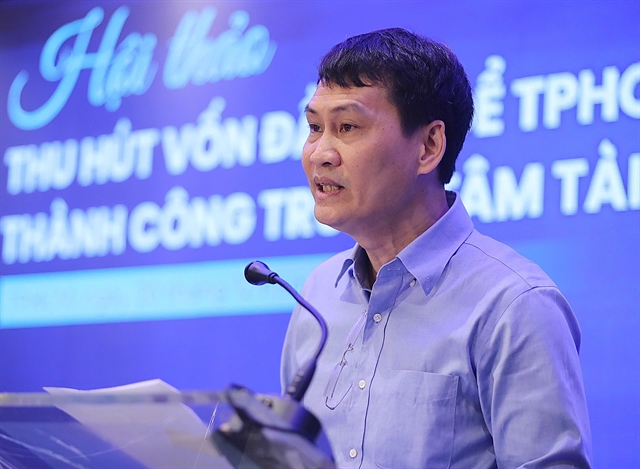
Strategizing The Global Position Of HCM City Financial Hub
The official establishment of an International Financial Centre in HCM City represents a monumental strategic move designed to elevate the standing of Vietnam on the global financial map. Within the first sixty words of this developmental report, it is clear that this ambitious project aims to integrate the historic Ben Thanh area with the modern Thu Thiem new urban zone.
Spanning nearly nine hundred hectares, the project reflects decades of dedication by the local leadership and the people to transform their urban landscape into a world class hub. Despite the prevailing global economic volatility, the economic indicators for the region in 2025 have remained remarkably stable, allowing it to maintain its critical role as the primary engine for national growth.
The city currently leads the country in registered foreign direct investment, with a specific focus on high technology and advanced financial services. A strong retail sector and growing consumer service market further reflect the immense purchasing power of its fourteen million residents, signaling a total readiness to transition from a regional hub to a truly international powerhouse.
However, experts at the recent conference emphasized that modern infrastructure and rapid growth are not the only requirements for long term success in this competitive field. Experience from established global centers like Singapore and Hong Kong suggests that the ultimate victory depends on the ability to attract and retain high quality international capital over several decades.
Core Pillars And Institutional Reforms For Sustainable Investment
A successful financial center cannot exist in a vacuum without the presence of multinational financial institutions and venture capital funds that operate with absolute confidence in market transparency. To build this trust, the leadership has outlined three core pillars that will define the value proposition of the new center in HCM City for years to come.
The first pillar involves the creation of an open and stable legal framework that aligns perfectly with international best practices and regulatory standards. The second pillar focuses on generating strong momentum from the capital market, underpinned by significant progress in the ongoing upgrade of the domestic stock market.
Finally, the third pillar centers on trust and transparency, which are essential for positioning the region as a destination for sustainable returns and low policy risk for foreign entities. Local authorities are committed to accelerating institutional reforms and improving the legal framework to meet global standards while developing integrated digital and urban infrastructure.
This requires a long term commitment from both the state and the private sector to ensure a safe and sustainable environment for all participants. Enhancing human resource quality is also a top priority, as the complex nature of global finance requires a highly skilled workforce capable of managing sophisticated asset management and fintech operations.
Economic Milestones And Future Roadmaps For Regional Growth
From a broader economic perspective, the plan for an International Financial Centre in HCM City is viewed as a milestone of historical significance for the national economy and financial system. Vietnam possesses several key advantages, including a strategic geographic location on global maritime and aviation routes and a gross product ranking thirty third worldwide.
While the banking sector has developed strongly over the past thirty years, challenges remain regarding the limited international footprint of domestic banks in major hubs like London or New York. Analysts suggest that the development of the center should occur in phases, initially focusing on serving Southeast Asia before gradually expanding to a more global presence.
Priority should be given to emerging sectors such as green finance, environmental social governance standards, and asset management supported by a clear roadmap. Effective operations will also require smart grade A plus office towers integrated with modern digital infrastructure to attract major global institutions.
The ongoing improvement of the sovereign credit rating is regarded as a prerequisite for attracting stronger international capital flows and laying a solid foundation for market development. By combining the establishment of this financial hub with a stock market upgrade, the country can encourage large firms to transition to the main exchange, thereby increasing market capitalization.
Analytical Commentary On Emerging Market Capital Convergence
From a professional financial perspective, the formalization of the HCM City hub marks a decisive pivot from a manufacturing led export economy toward a high value services architecture. This initiative functions as a critical mechanism to bridge the internal savings gap by providing a direct conduit for global pension and sovereign wealth funds to enter the markets.
The implementation of a regulatory sandbox and preferential tax regimes is specifically designed to target the burgeoning fintech sector, which has already seen significant venture capital interest.
By providing a secure environment for digital asset management and blockchain integration, the city is positioning itself to capture capital that is currently circulating in more mature markets.
Furthermore, the dual destination model with Da Nang suggests a diversified approach where risk can be distributed across different specializations, such as green finance and logistics centered wealth management. This structural arrangement is intended to reduce the systemic pressure on the primary urban center while creating a broader domestic ecosystem for financial services and international law.
Investors should note that the success of this hub will likely serve as a leading indicator for the broader emerging market status upgrade that the country has pursued for several years. If the governing council can maintain strict adherence to international anti money laundering standards, the influx of clean capital could lead to a permanent re rating of the domestic sector.
Ultimately, this project represents more than urban development; it is a strategic attempt to reclaim the status of the city as a premier regional gateway for trade and capital. As the global center of economic gravity continues its shift toward the Asia Pacific, the establishment of this hub ensures that the country remains a central node in the future of financial security.


