Vietnam’s ‘Plastic Reborn’ Initiative Drives Circular Economy and Worker Empowerment
The groundbreaking “Plastic Reborn” initiative has achieved truly remarkable success over its five-year span in Vietnam.
It focused intently on the critical collection of over 40,000 tonnes of plastic waste.
Simultaneously, it empowered thousands of historically informal workers through a rapidly expanding and highly effective circular economy model.
This pivotal milestone was celebrated on October 15, as Unilever Vietnam, in partnership with VietCycle—a pioneering business dedicated to establishing a modern, comprehensive circular waste ecosystem in the country—co-hosted a significant event.
The event was titled “Honouring the Green Warriors – From Invisible to Infinite” at the Mipec Palace Convention Centre in Hanoi.
The formal ceremony drew high-level attendance from diverse government bodies, including the Department of Environment and the influential Vietnam Women’s Union.
A representative from UNDP Vietnam, and critically, over 500 informal waste collectors, were also present.
These dedicated individuals were formally recognized and publicly celebrated as “green warriors” for their absolutely indispensable contributions to national sustainability efforts.
Over its five-year span, the project has successfully collected and actively recycled more than 40,000 tonnes of plastic waste, a massive volume which in turn has contributed to diminishing approximately 160 million tonnes of carbon emissions. This showcases a profound environmental benefit that runs parallel to its compelling social impact.
The initiative has also played a crucial, demonstrable role in improving the livelihoods, enhancing the quality of life, and improving access to essential policy benefits for approximately 3,000 informal waste collectors, making a tangible difference in their day-to-day existence and securing their future within the formal economy.
Elevating the Status and Livelihoods of Informal Waste Collectors
Beyond the immediately impressive statistics related to plastic waste collection, the Plastic Reborn initiative has thoughtfully implemented a wide array of vital and sustainable support programs.
These programs are specifically aimed at empowering informal workers and integrating them into the formal structure.
These comprehensive programs include the provision of essential protective equipment necessary for safe work, crucial access to social insurance benefits for security, and the systematic distribution of essential goods and personal hygiene products.
It even includes regular and supportive home care services.
This level of comprehensive support extends far beyond mere material assistance; it deeply and fundamentally symbolizes society’s growing recognition of the immense economic and environmental value created daily by waste collectors.
This is a job that historically remained largely invisible, highly precarious, and significantly undervalued by the general public.
In major urban centers like Hanoi, Ho Chi Minh City, and numerous other localities across the country, the project has also been instrumental in rigorously promoting the necessary practice of waste separation at the source.
This widespread effort is directly contributing to a foundational, lasting shift in public behavior and is significantly raising general awareness regarding the persistent, large-scale issue of plastic waste and its impact.
Hoang Duc Vuong, chairman of VietCycle, spoke passionately at the event, stating his pride not only in the considerable volume of plastic waste collected but, more importantly, in how the project has profoundly improved the material, emotional, and social well-being of over 3,000 collectors. He concluded by emphasizing that 2025 marks not an ending point but the commencement of a brand new phase focused on substantially expanding and actively amplifying the project’s proven positive impacts across the entire burgeoning circular economy.
Regeneration, Sustainability, and the Blueprint for a Closed-Loop Model
Representatives from both the crucial corporate sector and the regulatory government sectors strongly commended the initiative’s profound and multi-faceted impact on Vietnam’s sustainability goals.
Le Thi Hong Nhi, head of communications, corporate affairs, and sustainability for Unilever Vietnam, shared her perspective that the Plastic Reborn is fundamentally a “journey of regeneration.”
She emphasized the crucial and often overlooked role of women—the resilient and steadfast individuals—who are firmly at the heart of realizing a true, functioning circular economy on the ground.
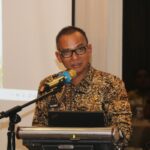
Ho Kien Trung, deputy director general of the Department of Environment, highly praised the project’s overall effectiveness, noting that its success must be measured not just in tonnes of plastic waste collected but equally in the significant transformation of public environmental awareness and community engagement.
He specifically highlighted that robust collection networks successfully established in key localities such as Da Nang and Cần Thơ have already laid the essential foundation for a truly sustainable circular economy specifically within the waste management sector.
To ensure this groundbreaking model’s long-term viability and replicability, Trung officially recommended the continued development of a meticulously designed closed-loop system for all critical plastic waste management stages.
This ranges from rigorous initial sorting and reliable collection to pre-processing, high-quality recycling, and the final production of new, valuable materials.
The Plastic Reborn initiative is now rightly recognized as a model of excellence, successfully transforming discarded waste into valuable resources and simultaneously elevating those once considered invisible into key, respected agents in the ongoing, national effort to build a greener, civil, and ultimately sustainable economy for the entire nation of Vietnam.