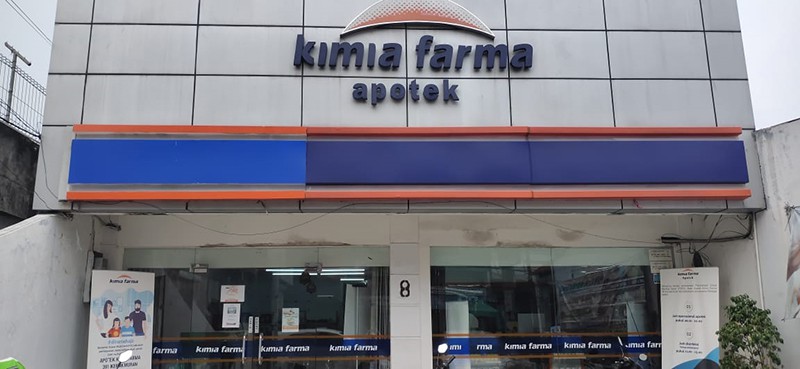
State-Owned Drugmakers Show Signs of Financial Recovery
Indonesia’s state-owned pharmaceutical firms, Kimia Farma and Indofarma, have managed to significantly cut their net losses during the first nine months of 2025, a positive trend that indicates early signs of financial recovery amidst the rigorous, ongoing efficiency measures being implemented by both drugmakers.
Kimia Farma (KAEF) reported a net loss attributable to owners of the parent amounting to Rp 179.73 billion, which translates to approximately $10.75 million, for the January–September 2025 period.
This figure marks a substantial narrowing from the much larger net loss of Rp 419.11 billion recorded during the same period a year earlier.
This crucial financial improvement was primarily fueled by the company’s successful efforts in reducing its cost of goods sold (COGS), which fell sharply from Rp 5.51 trillion to a more manageable Rp 4.56 trillion.
This strategic cost reduction proved effective in bolstering profitability, even in the face of a revenue challenge.
Despite experiencing a 10.77 percent decline in net sales, which totaled Rp 7.01 trillion for the nine-month period, Kimia Farma’s gross profit actually increased, rising to Rp 2.44 trillion ($145.98 million) from the Rp 2.35 trillion reported in the same period last year.
The company’s diverse sales structure was supported by Rp 2.27 trillion generated from its internal production and a greater Rp 4.73 trillion derived from third-party manufacturing activities.
Among its product portfolio, generic drugs remained the single largest contributor to sales, bringing in Rp 2.01 trillion, followed by over-the-counter (OTC) medicines with Rp 1.26 trillion in sales.
Indofarma’s Loss Trimming Driven By Tighter Cost Controls
Alongside its peer, Indofarma (INAF) also demonstrated a marked improvement in its financial health by successfully trimming its net losses during the same nine-month period, reducing the loss from Rp 166.48 billion to Rp 127.09 billion.
According to the company’s most recent financial report, this impressive improvement was directly achieved through the implementation of significantly tighter cost controls and extensive efficiency measures across its operations.
The management of this drugmaker was particularly effective in streamlining various cost categories.
The company managed to slightly reduce its cost of goods sold from Rp 149.67 billion to Rp 145.31 billion.
Even more dramatically, selling expenses were slashed from Rp 41.93 billion to a mere Rp 6.92 billion, representing a massive saving.
Further demonstrating its commitment to financial discipline, Indofarma cut its financial costs sharply, moving from Rp 37.50 billion down to just Rp 2.24 billion.
These reductions collectively contributed substantially to the narrowing of the net loss.
While its gross loss did slightly narrow to Rp 11.57 billion from Rp 11.80 billion a year earlier, Indofarma’s net sales for the nine months of 2025 slightly decreased by 2.99 percent to Rp 133.73 billion.
This sales drop was mainly attributed to weaker performance in the domestic market, where sales fell by 8.86 percent to Rp 117.50 billion.
The financial rehabilitation efforts of both state-owned drugmakers highlight the government’s drive to optimize the performance of its pharmaceutical assets and ensure long-term stability in the critical healthcare sector.
Improving Equity and Asset Management for Future Stability
The aggressive efficiency measures implemented by Indofarma have led to tangible improvements in its balance sheet structure, which is a key indicator of potential long-term stability for the pharmaceutical drugmaker.
As of September 2025, Indofarma’s total assets stood at Rp 581.55 billion, reflecting a decrease from Rp 618.15 billion recorded at the close of 2024.
This change suggests a deliberate strategy of asset rationalization or reduced capital expenditure.
Crucially, the company’s liabilities saw a significant reduction, decreasing from Rp 1.76 trillion to Rp 1.47 trillion.
This substantial reduction in debt obligations is a strong positive sign for its financial risk profile.
Furthermore, the company’s negative equity position improved considerably, moving from a deficit of minus Rp 1.14 trillion to a less severe minus Rp 890.93 billion.
This improvement in negative equity, alongside the substantial decrease in liabilities, indicates that Indofarma is on a clear trajectory towards stabilizing its financial structure after a challenging period.
For its counterpart, Kimia Farma, the successful reduction of COGS and the growth in gross profit, despite lower sales, strongly suggest that the company’s internal efficiency drives are yielding results and positioning the drugmaker for a more stable operating environment.
The concerted efforts by both state-owned drugmakers to manage their costs, streamline operations, and improve their balance sheets are essential steps toward converting their current trajectory of narrowed losses into a sustainable path to profitability, thereby enhancing the national capacity for pharmaceutical production and supply.