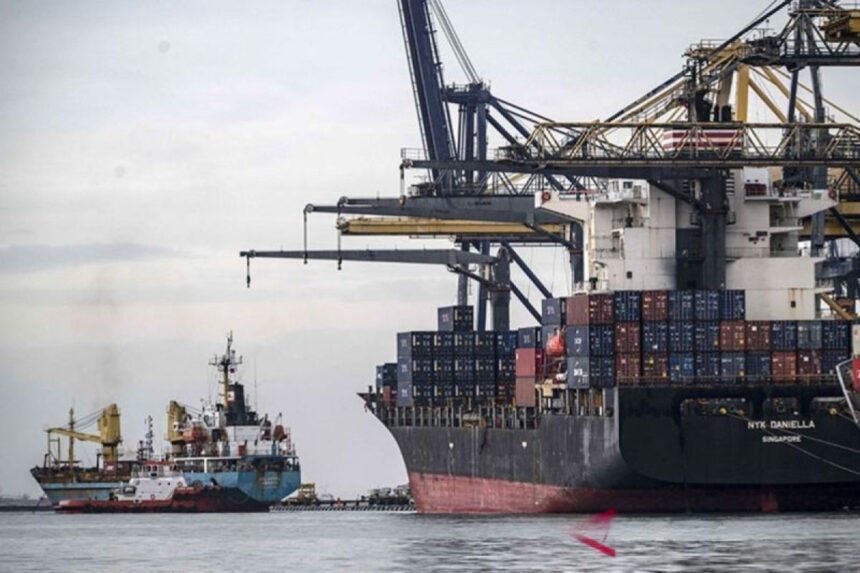
Persistent Economic Strength and the January Trade Surplus
Indonesia has successfully maintained its remarkable economic momentum by recording a US$0.95 billion trade surplus in January 2026, marking an incredible streak of sixty-nine consecutive months of positive trade balances. According to the latest data released by Statistics Indonesia on Monday, this achievement underscores the nation’s resilience in the face of shifting global demand and volatile energy prices.
While the overall figure remains positive, the underlying mechanics of this trade surplus reveal a sophisticated interplay between high-performing non-oil sectors and a widening deficit in the oil and gas category. Specifically, the non-oil and gas sector provided a substantial buffer with a US$3.22 billion surplus, which effectively neutralized the US$2.27 billion deficit incurred by the energy sector.
This consistent performance since May 2020 demonstrates a structural shift in the Indonesian economy toward high-value commodity exports and industrial base metals. The primary engines of this growth were animal and vegetable fats and oils, which contributed a staggering US$3.10 billion to the total, followed closely by mineral fuels and the burgeoning iron and steel industries.
Export Dynamics and the Surge in Industrial Raw Materials
The composition of Indonesia’s export profile in early 2026 shows a healthy diversification into critical industrial sectors, with total shipments reaching US$22.16 billion. This represents a 3.39% increase compared to the previous year, driven almost entirely by the non-oil and gas segment which rose by 4.38%.
A closer look at the data reveals that the trade surplus was heavily supported by a massive 46.05% surge in the export of animal and vegetable fats, alongside a 42.04% increase in nickel and related products. The latter is particularly significant as Indonesia positions itself as a global hub for the electric vehicle battery supply chain. Additionally, electrical machinery and equipment saw a double-digit growth of 16.27%, indicating that the country is moving up the technological value chain.
This growth in exports occurred despite a significant rise in imports, which climbed to US$21.21 billion. Interestingly, the spike in imports was largely concentrated in raw materials and capital goods, which jumped by 14.67% and 35.32% respectively. From a professional perspective, this is a positive indicator of domestic industrial expansion, as businesses are procuring the machinery and inputs needed to scale up production.
Fiscal Stimulus And Domestic Purchasing Power
From a professional financial analyst’s perspective, the geographic distribution of Indonesia’s trade reveals a complex web of strategic dependencies and emerging opportunities. The nation posted its most significant trade surplus with the United States at US$1.55 billion, followed by India at US$1.07 billion and the Philippines at US$0.69 billion.
Conversely, the largest deficits were recorded with China at US$2.47 billion and Australia at US$0.96 billion, reflecting a heavy reliance on Chinese manufactured goods and Australian industrial inputs. We observe that the 2026 fiscal outlook remains tethered to the health of these bilateral relationships, particularly as global trade tensions fluctuate.
We analyze that the sharp increase in oil and gas imports, which rose by 27.52% to reach US$3.17 billion, represents the primary systemic risk to the surplus streak. However, the current strategy of focusing on high-growth areas like nickel and processed fats appears to be providing an adequate hedge. Analysts should pay close attention to the 35.32% jump in capital goods imports, as this typically precedes a new cycle of industrial output.
Structural Transformation and Regional Market Equilibrium Analysis
The convergence of consistent surplus performance and a surge in capital goods imports signals a fundamental structural transformation within the ASEAN trade corridor, positioning Indonesia as a dominant industrial pivot for the 2026 fiscal year. We analyze that the sustained trade surplus is no longer merely a byproduct of high commodity prices but is increasingly driven by the successful integration of downstreaming policies in the mineral and agricultural sectors.
From a B.I.F.E. perspective, the 35.32% expansion in capital goods imports serves as a leading indicator for a secondary wave of manufacturing output, likely aimed at the burgeoning regional demand for renewable energy components and electric vehicle infrastructure. This investment cycle suggests that the local market is moving toward a more capital-intensive economic model, which will necessitate deeper liquidity in the domestic banking sector and more sophisticated trade finance instruments to support high-volume transactions with partners like the United States and India.
We observe that the persistent deficit in the oil and gas sector functions as a critical pressure point that could test the sustainability of the 69-month surplus streak if global energy volatility intensifies. However, the 42.04% growth in nickel exports provides a strategic counterbalance that leverages Indonesia’s unique position in the global energy transition. We project that as these capital imports are absorbed into the productive economy, the resulting efficiency gains will likely stabilize the trade surplus at a higher baseline, even as domestic consumption grows.
Ultimately, the regional market impact manifests as a rebalancing of power within Southeast Asia, where Indonesia’s ability to generate a trade surplus through industrial value-addition creates a competitive benchmark for neighboring economies. Investors should anticipate a strategic rotation into large-cap industrial and basic material stocks that are most sensitive to this export-led growth narrative. The successful navigation of 2026 will depend on the speed at which these new capital investments can transition from operational setup to full-scale export output, thereby reinforcing the nation’s role as a resilient hub in the global supply chain.