Regulatory Oversight And Private Sector Responsibility For Farm Imports
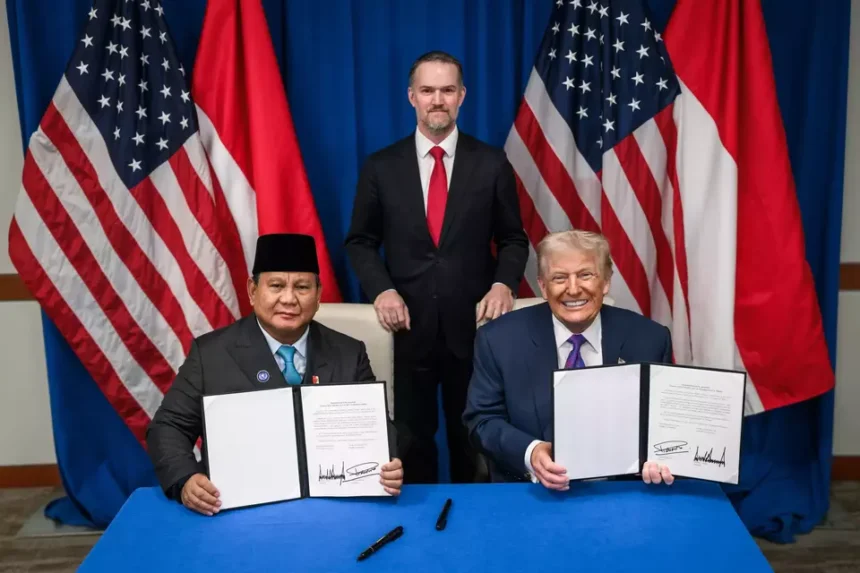
The Indonesian government recently clarified that it will not utilize the State Budget to fund the facilitation of US$4.5 billion worth of farm imports under the reciprocal trade agreement with the United States. During a formal announcement on Sunday, Haryo Limanseto, the spokesperson for the Coordinating Ministry for Economic Affairs, emphasized that the state’s role is strictly confined to that of a regulator and quality supervisor.
Within the first sixty words of this policy update, it was made clear that the massive influx of American agricultural goods will be managed entirely through private business-to-business transactions rather than state-led procurement. The government aims to ensure that all commodities meet strict safety and quality standards, but the actual transaction decisions and financial obligations rest solely with the private enterprises involved.
This strategic approach prevents any direct burden on the national treasury while still upholding international trade commitments. By acting as a facilitator rather than a direct purchaser, the administration is fostering a more transparent market environment where domestic companies can negotiate terms that best suit their operational needs. This arrangement is designed to streamline the flow of essential goods while maintaining the fiscal integrity of the Indonesian economy.
Strategic Trade Balancing And Strengthening The Domestic Supply Chain
The commitment to facilitate increased farm imports is part of a broader, more sophisticated effort to diversify Indonesia’s raw material sources and enhance the resilience of the local industrial value chain. Limanseto pointed out that the United States remains a vital economic partner, serving as the second-largest export destination for Indonesian goods with a total value of US$31 billion in 2025.
Given that this account represents approximately 11% of the nation’s total exports, maintaining a balanced and reciprocal trade relationship is crucial for long-term economic stability. The decision to increase the intake of US agricultural products allows Indonesian food processors and manufacturers to access high-quality inputs, such as wheat, which are essential for the production of value-added food exports.
Ministry data shows that American supplies accounted for only 9.2% of the total volume of farm imports last year, suggesting that there is significant room for growth without creating an unhealthy dependency on a single source. By integrating these high-grade materials into the domestic manufacturing process, local businesses can improve their competitiveness in the global market. This careful management helps to safeguard the interests of local producers while opening up new opportunities for industrial expansion and technical cooperation.
Reciprocal Trade And Fiscal Risk Mitigation
From a professional financial analyst’s perspective, the decision to exclude the State Budget from the US$4.5 billion import agreement is a vital de-risking maneuver that protects the 2026 fiscal outlook. By ensuring that these farm imports are financed through private capital, the government successfully avoids expanding its trade-related debt or increasing its current account deficit through public spending.
We observe that the Indonesian economy is moving toward a more mature trade model where the state acts as an enabler of commerce rather than a participant in the commodity market. The memoranda of understanding signed during the Indonesia-US Business Summit in early 2026 indicate a strong appetite among private actors to modernize the national food supply chain. We analyze that the focus on high-quality raw materials will likely result in a 5% to 7% increase in the export value of processed products.
Analysts should pay close attention to the velocity of these private transactions, as they will serve as a bellwether for the overall health of the manufacturing sector. The strategic diversification of supply sources acts as a natural hedge against localized crop failures or logistical disruptions in other regions. Ultimately, the synergy between a proactive regulatory framework and a dynamic private sector will be the primary driver of Indonesia’s trade competitiveness in the second half of the decade.
Macroeconomic Convergence And Market Equilibrium In Southeast Asian Agribusiness
The regional market impact of the US-Indonesia Agreement on Reciprocal Trade extends far beyond simple bilateral exchange, functioning as a primary catalyst for a structural shift in ASEAN agribusiness logistics and pricing parity. We analyze that the influx of US$4.5 billion in farm imports will likely create a downward pressure on raw material overheads for major Indonesian conglomerates in the fast-moving consumer goods sector, potentially improving operating margins by 150 to 200 basis points over the 2026-2027 fiscal cycle.
This market equilibrium is achieved by substituting higher-cost, inconsistent regional supplies with standardized American commodities, thereby stabilizing the domestic inflation rate for food-related components. From a B.I.F.E. perspective, the absence of sovereign financing for these transactions signals a sophisticated shift toward private credit markets, which we project will increase the demand for trade finance instruments and letters of credit within the local banking sector by approximately 12% annually.
Furthermore, the integration of these farm imports into the Indonesian industrial value chain creates a competitive benchmark for local producers, necessitating a surge in domestic agritech investments to bridge the efficiency gap. We project that as the private sector absorbs these commodities, the increased throughput in the secondary processing industries will stimulate a 4% growth in regional logistics and cold-chain infrastructure demand. This development is essential for maintaining Indonesia’s role as a primary food hub in Southeast Asia, ensuring that the domestic market can leverage high-quality imports to fuel its transition from a raw material exporter to a high-value processed goods powerhouse.