Minister Urges Action as Regional Revenue Decline Continues
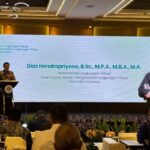
Indonesia’s total regional revenue stood at Rp 253.36 trillion ($15.27 billion) as of September 2025, reflecting a concerning drop of 10.86 percent compared to the previous year, a trend that is prompting immediate government action. Finance Minister Purbaya Yudhi Sadewa has issued a strong call for local administrations to fundamentally refocus their efforts on stimulating local economies to reverse this negative trend. The Minister emphasized that to effectively increase Local Own-Source Revenue (PAD), which is the financial lifeblood of local governance, there must be a significant acceleration in regional economic activity across the board. His mandate for local governments includes boosting productive sectors, fundamentally simplifying bureaucratic processes for business licensing, actively empowering Micro, Small, and Medium Enterprises (MSMEs), and ensuring that all public services operate with maximum efficiency. This multi-pronged approach is deemed essential to encourage investment and consumer spending, which will directly translate into higher local tax collections and a healthier overall regional revenue stream. The urgency of this directive was made clear during the 2025 Regional Inflation Control Coordination Meeting in Jakarta on Monday.
Local Taxes Decline Amidst Fee Removals and Fund Reclassification
The decline in overall regional revenue was primarily driven by a substantial drop in local taxes, which represent the largest component of the Local Own-Source Revenue (PAD). Local taxes fell by 10.24 percent to Rp 182.8 trillion, a decrease largely attributed to the central government’s policy decision to remove the vehicle title transfer fee specifically for second-hand car transactions. Interestingly, within the various revenue categories, only retribution income managed to post growth, rising by 4.6 percent to reach Rp 36.83 trillion, a positive development supported by the collection of higher healthcare service fees. Minister Purbaya noted that this specific increase “shows public service activity is still running well,” indicating a core level of continued function in essential services despite the broader economic slowdown. Conversely, revenue generated from regionally owned enterprises saw a fall of 8.96 percent to Rp 9.26 trillion, mainly due to a decline in dividend payouts to the regional governments. Furthermore, “other legitimate local revenues” experienced the sharpest plunge, dropping by 30.44 percent to Rp 24.47 trillion. This significant decrease was largely technical, resulting from the reclassification of income from Regional Public Service Agencies (BLUD), which is now fully recorded under the retribution category, affecting the comparative regional revenue figures.
Addressing Idle Funds to Reignite Economic Circulation
A major point of concern for the Finance Ministry is the staggering amount of idle regional funds, totaling Rp 254.3 trillion ($15.3 billion), that currently sits unspent in various bank accounts across the country. Minister Purbaya issued a strong warning that this slow pace of budget realization is effectively stalling the necessary circulation of money within the economy and, consequently, undermining local growth and development initiatives. He emphasized that neither the central nor local governments should retain excessive funds in banks, arguing that “Every rupiah must flow back into the economy through public projects, infrastructure, and social programs.” The failure to rapidly disburse allocated funds prevents money from reaching local contractors, suppliers, and workers, thereby stifling productivity and job creation. The Finance Ministry is therefore heavily banking on faster regional disbursements and stronger coordination between different levels of government to help quickly revive local productivity. This concerted effort is expected to play a critical role in supporting Indonesia’s broader economic resilience in the face of global uncertainties, ensuring that regional revenue stabilizes and begins to grow in the coming quarters.