Government Plans Debt Restructuring for the Whoosh High-Speed Rail
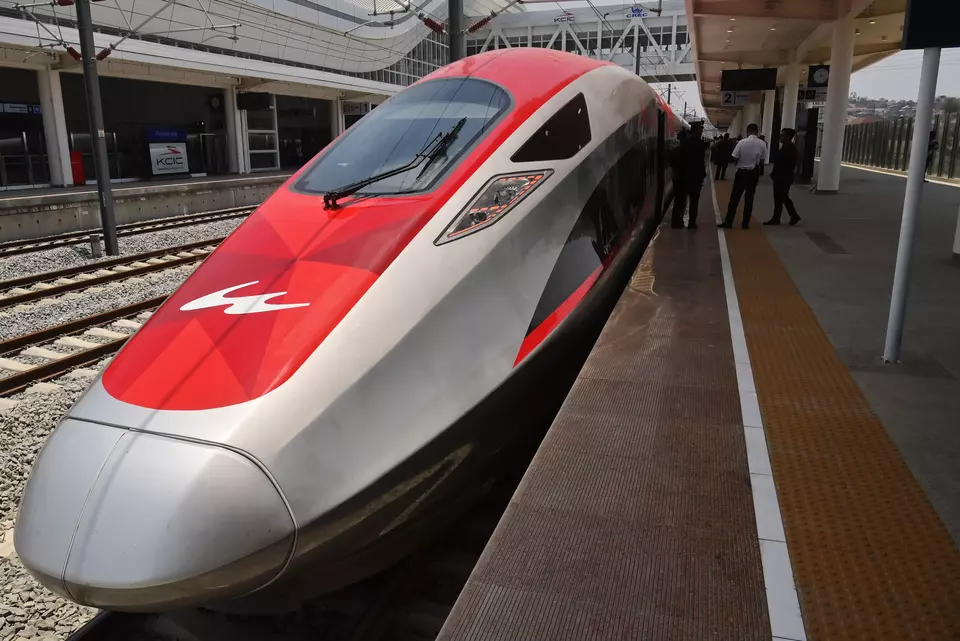
The Indonesian government is actively considering a major renegotiation of the debt associated with the Jakarta–Bandung high-speed rail project, better known as Whoosh, which has become a significant financial burden for the state railway operator, Kereta Api Indonesia (KAI).
State-Owned Enterprises Minister Erick Thohir confirmed this financial maneuver to reporters at the Parliament complex on Tuesday, explicitly stating that “Whoosh will have a (debt) renegotiation.”
This crucial move aims to alleviate the substantial financial pressure currently weighing on KAI.
Minister Thohir further detailed the government’s proposed restructuring plan, under which KAI would maintain management responsibility for the rolling stock—the trains themselves—while the state would assume responsibility for the infrastructure component, which includes the tracks and the stations.
This separation of assets and liabilities is intended to isolate and manage the project’s financial strain more effectively.
Although the government recently injected Rp 1.8 trillion (approximately $109.8 million) in state capital into KAI, the Minister clarified that these funds are entirely unrelated to the Whoosh debt refinancing.
Instead, this capital injection is earmarked for the necessary expansion of commuter rail services in the heavily populated Greater Jakarta area.
Despite its financial woes, the Whoosh line has fundamentally transformed travel between Indonesia’s capital and Bandung, cutting the 142-kilometer journey time down to a mere 45 minutes, a vast improvement over the nearly three hours previously required by car.
Financial Strain Persists Despite Whoosh’s Operational Success
Despite the service’s immense popularity and its successful operational performance in drastically reducing travel times, the financial structure of the Whoosh project continues to pose a severe and unsustainable debt headache for the Indonesian state-owned enterprises involved.
Between January and June of this year, the high-speed rail service demonstrated its public appeal by carrying a total of 2.9 million passengers, marking a 10 percent increase compared to the same period a year earlier.
The success of the train has even garnered international praise, notably during President Prabowo Subianto’s bilateral discussions with Chinese President Xi Jinping in Beijing last November, highlighting its symbolic and functional significance.
However, the project’s cost has been an ongoing issue.
The total cost of the Rp 119.6 trillion (approximately $7.3 billion) project was predominantly financed through a loan structure, with 75 percent sourced from the China Development Bank.
The initial borrowing secured a relatively low 2 percent annual interest rate, but unforeseen challenges, including significant disruptions caused by the pandemic and protracted land acquisition disputes, led to a substantial cost overrun of $1.2 billion.
This forced Indonesia to secure additional financing, unfortunately at a higher interest rate of 3.4 percent.
The cumulative financial effect of these issues is dire; KAI’s president director, Bobby Rasyidin, recently and dramatically described the high-speed rail venture as a potential “time bomb” due to the extreme financial pressure it continues to impose on the company.
KAI holds a majority stake in the operating consortium, KCIC, and consequently bears the majority of the resulting losses and liabilities.
Debt Resolution as Prerequisite for Future Rail Expansion
The Minister of State-Owned Enterprises has clearly stressed that resolving the existing debt issues related to the Whoosh line is an essential prerequisite that must be completed before the government can consider moving forward with any future major rail infrastructure projects, such as the planned Jakarta–Surabaya high-speed rail.
The financial data for the first half of 2025 illustrates the gravity of the situation, showing that KAI still booked Rp1.24 trillion (about $75 million) in losses directly linked to the high-speed line.
While this is an improvement from the Rp1.81 trillion loss reported in the same period of the previous year, it nevertheless represents a heavy, ongoing financial burden that saps the company’s resources.
Minister Erick Thohir’s insistence that the Whoosh debt issue must be thoroughly resolved before any planning proceeds on the ambitious Jakarta–Surabaya high-speed rail project is a firm demonstration of fiscal responsibility, signaling that the government will not risk repeating the same financial mistakes on future, even larger initiatives.
Separately, the government has already allocated a total of Rp 4.77 trillion (approximately $290.9 million) in state capital injection this year, distributed among three key state-owned enterprises: KAI, Pelayaran Indonesia (Pelni), and the train manufacturer Industri Kereta Api (Inka).
Minister Thohir clarified that the overarching purpose of these allocated funds is distinct from the debt issue and is instead focused on significantly improving public transport facilities and services across multiple sectors, confirming the government’s commitment to enhancing national infrastructure.